India's Iconic Monuments Explorer
Click on a monument to discover its architectural secrets and defining characteristics.
Select a monument from the list to view its details
Taj Mahal
The ultimate symbol of love and absolute symmetry.
White Marble
Pietra Dura Inlay
Qutub Minar
A towering victory monument marking the start of Muslim rule.
Red Sandstone/Marble
73m Tallest Brick Minaret
Red Fort
The power center of the Mughal Empire for two centuries.
Red Sandstone
Fortified Citadel
Konark Sun Temple
A celestial chariot crafted in stone for the sun god Surya.
Chlorite Rock
Sundial Wheels
Hampi Ruins
A sprawling open-air museum of the Vijayanagara Empire.
Granite
Musical Pillars
Quick Highlights
- Taj Mahal: The ultimate symbol of love and Mughal architecture.
- Qutub Minar: The tallest brick minaret in the world.
- Red Fort: The power center of the Mughal Empire for 200 years.
- Konark Sun Temple: A chariot-shaped marvel of Kalinga architecture.
- Hampi: The sprawling ruins of the Vijayanagara Empire.
When we talk about famous indian monuments, the conversation usually starts with the Mughals, but it's the blend of Persian, Islamic, and indigenous Indian styles that makes these places special. Let's look at the heavy hitters.
The Eternal Romance: Taj Mahal
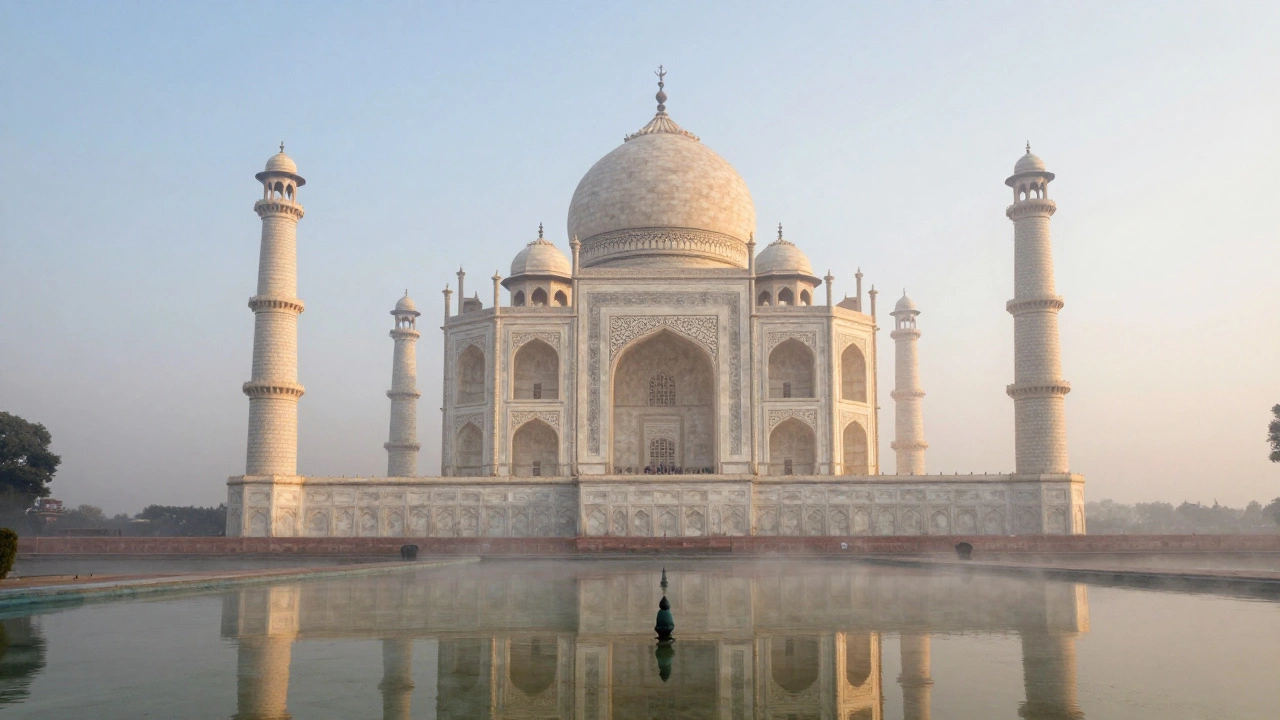
You've seen it on postcards, but nothing prepares you for the actual scale of the Taj Mahal is an ivory-white marble mausoleum on the right bank of the river Yamuna in Agra, India. Built by Emperor Shah Jahan in memory of his favorite wife, Mumtaz Mahal, it's more than just a tomb-it's a mathematical miracle. The symmetry is absolute. If you split the building down the middle, each side is a perfect mirror image of the other, except for the cenotaph of Shah Jahan himself, which was added later and broke that perfect balance.
The marble isn't just white; it's inlaid with 28 types of precious and semi-precious stones using a technique called pietra dura. If you visit during a full moon, the building takes on a ghostly, translucent glow that feels almost supernatural. Pro tip: Get there at 5:30 AM. Not only do you beat the crowds, but the morning mist over the Yamuna river makes the white marble look like it's floating.
The Tower of Victory: Qutub Minar
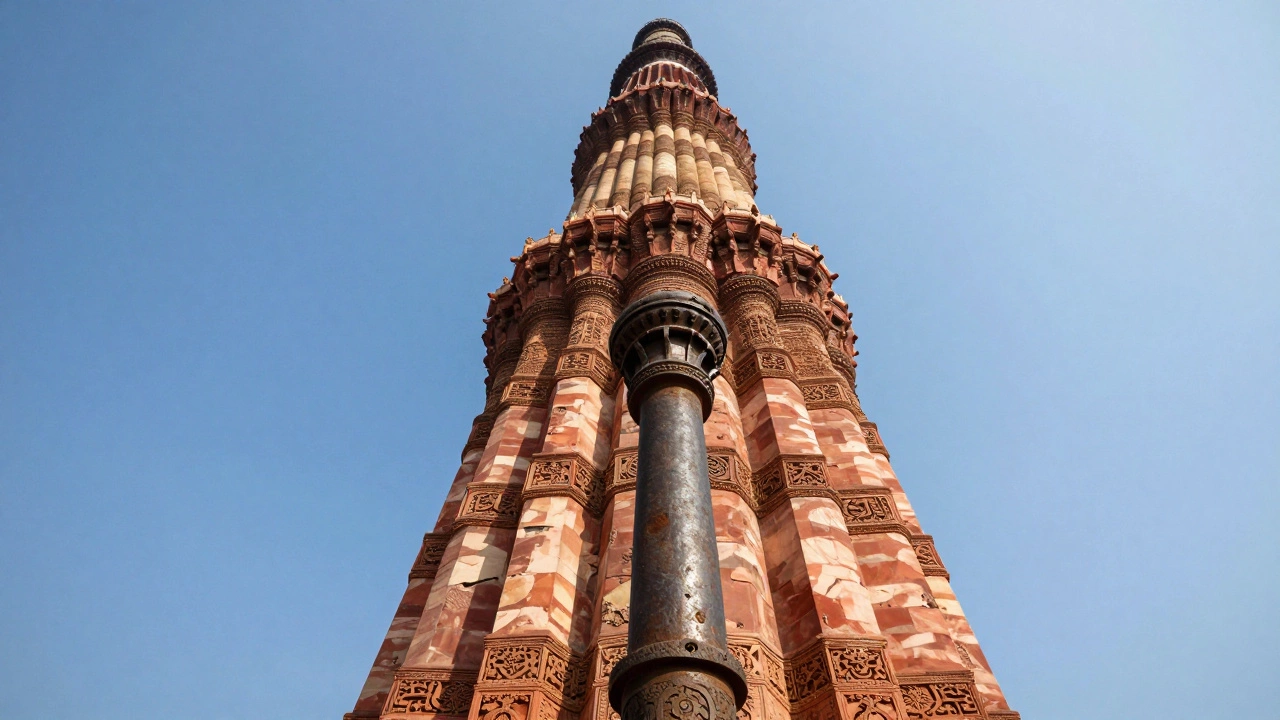
Moving to Delhi, you'll find the Qutub Minar is a 73-meter high victory tower and the tallest brick minaret in the world, located in the Mehrauli district of Delhi. It's a stark contrast to the Taj. Where the Taj is soft and romantic, the Qutub Minar is an exclamation point of power. Started by Qutb-ud-din Aibak in 1192, it marks the beginning of Muslim rule in India.
The tower is carved with intricate verses from the Quran and floral patterns. What's really fascinating is the surrounding complex, specifically the Iron Pillar. This 7-meter tall pillar has stood in the open air for over 1,600 years without rusting. Even modern metallurgists are still debating exactly how the ancient Indians achieved such high phosphorus content to create this protective layer. It's a reminder that ancient India was just as much about science as it was about art.
The Citadel of Power: Red Fort
Also in Delhi, the Red Fort is a historic fort made of red sandstone that served as the main residence of the Mughal Emperors for nearly two centuries. Walking through the Lahori Gate, you aren't just entering a fort; you're entering a planned city. The fort was designed to be a hub of administration, residence, and luxury.
Inside, the Diwan-i-Aam (Hall of Public Audience) is where the emperor sat on a throne to hear the grievances of the common people. Contrast that with the Diwan-i-Khas, the Hall of Private Audience, which was once adorned with silver ceilings and gold-plated walls. While much of the gold was looted during various invasions, the massive red sandstone walls still command a sense of awe. Every Independence Day on August 15, the Prime Minister of India hoists the national flag here, keeping the fort's role as a symbol of sovereignty alive.
| Monument | Primary Material | Architectural Style | Key Feature |
|---|---|---|---|
| Taj Mahal | White Marble | Mughal | Perfect Symmetry |
| Qutub Minar | Red Sandstone/Marble | Indo-Islamic | Height (73m) |
| Red Fort | Red Sandstone | Mughal | Fortified Walls |
| Konark Sun Temple | Chlorite Rock | Kalinga | Chariot Shape |
| Hampi Ruins | Granite | Vijayanagara | Boulder Landscapes |
The Chariot of the Sun: Konark Sun Temple
Leaving the north, we head to Odisha to see the Konark Sun Temple is a 13th-century temple dedicated to the sun god Surya, designed as a colossal chariot with 24 carved wheels. This isn't just a building; it's a piece of celestial machinery. The entire temple is shaped like a chariot pulled by seven horses, representing the seven days of the week.
The wheels of the chariot aren't just decorative-they are actually sundials. If you know how to read the shadows on the spokes, you can tell the exact time of day to within a few minutes. The level of erotic and social carvings on the walls is legendary, showing everything from royal courts to daily village life. It's a masterclass in Kalinga architecture, where the stone feels as fluid as fabric.
The Forgotten Empire: Hampi
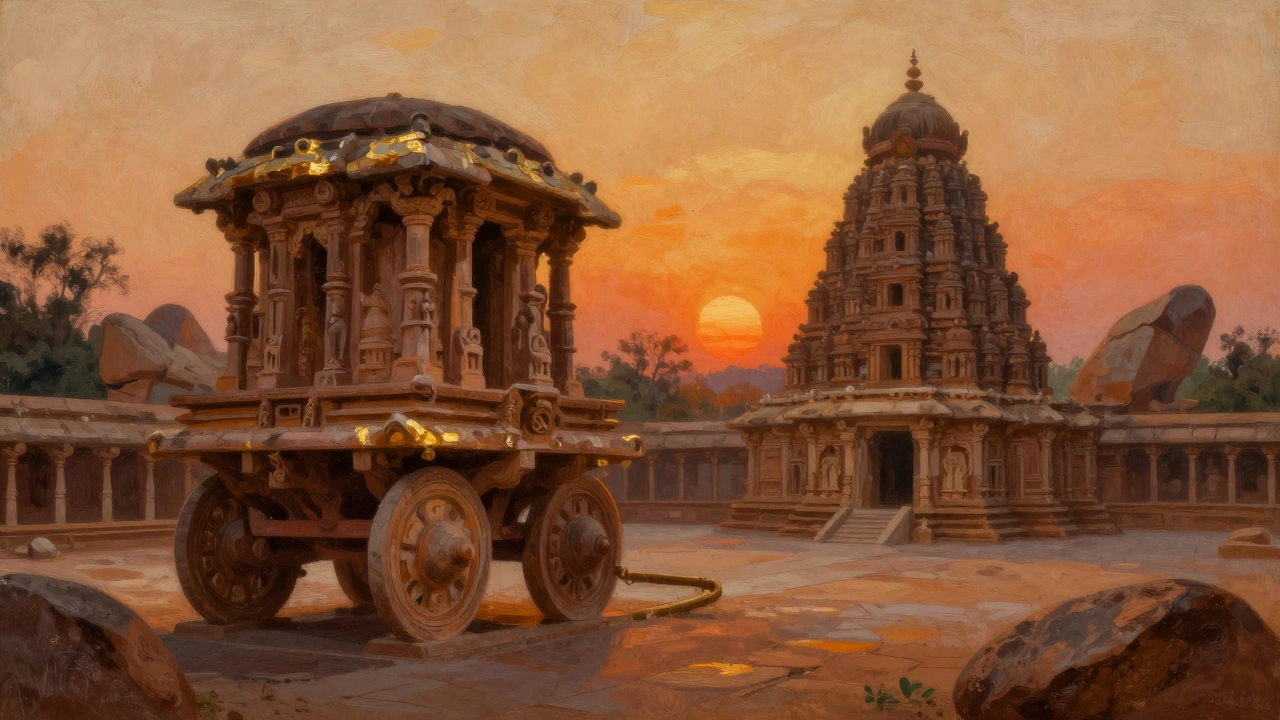
Finally, we visit Hampi is a UNESCO World Heritage site consisting of the ruins of the Vijayanagara Empire in Karnataka, set against a surreal landscape of giant boulders. Unlike the other monuments on this list, Hampi isn't a single building. It's a sprawling open-air museum of over 1,600 surviving monuments.
The Virupaksha Temple is the heart of the site and is still an active place of worship. But the real magic is in the Vitthala Temple, famous for its stone chariot and the "musical pillars." If you gently tap certain pillars in the hall, they produce different musical notes. The city was one of the richest in the world in the 15th century, where diamonds and rubies were reportedly sold in open street markets. Walking through the ruins today, you can almost hear the echoes of that vanished wealth.
Planning Your Visit: Practical Tips
If you're planning to hit these spots, don't just wing it. India is huge, and these sites are spread across the country. The Taj Mahal and Red Fort are relatively close, but getting to Hampi or Konark requires a different strategy.
- The Golden Triangle: If you're short on time, stick to Delhi, Agra, and Jaipur. This covers the Red Fort, Qutub Minar, and Taj Mahal in one go.
- Dress Code: While most these sites are secular, some (like Hampi's active temples) require modest clothing. Keep a scarf or shawl handy.
- Guided Tours: Be wary of "official" guides who approach you at the gate. Always check for government-approved ID cards to avoid getting overcharged.
- Timing: Avoid visiting these sites between May and June. The heat can reach 45°C (113°F), and you'll spend more time searching for shade than looking at the art.
Which of these monuments is the most expensive to visit?
The Taj Mahal generally has the highest entry fee, especially for foreign tourists. However, remember that prices vary depending on whether you want to enter the main mausoleum (the inner dome) or just the surrounding gardens.
Is it safe to visit these sites alone?
Generally, yes. These are high-traffic tourist areas with plenty of security. The biggest challenge isn't safety, but the persistent street vendors and touts. A polite but firm "No, thank you" usually works best.
How much time should I spend at Hampi?
Hampi is massive. While you can see the highlights in one day, you really need at least three days to explore both the temple side and the riverside side of the ruins.
Do I need to book tickets in advance?
For the Taj Mahal, booking online is highly recommended to avoid the massive ticket queues. For the others, on-site tickets are usually fine, though digital ticketing is becoming the norm across India.
Are these monuments accessible for wheelchairs?
Accessibility varies. The Taj Mahal has some ramps and designated paths, but Hampi and Konark are much more challenging due to the uneven rocky terrain and ancient steps.
What to do next?
Once you've checked these off your list, you might want to explore the forts of Rajasthan, like Amer Fort in Jaipur, or head south to see the Meenakshi Temple in Madurai. If you're interested in the spiritual side of Indian architecture, look into the Ajanta and Ellora caves, where entire monasteries were carved directly into the basalt cliffs.