South Indian Classical Dance Quiz
Loading question...
You might think there are dozens of ways to perform classical dance in South India. You’d be wrong. While the region is a powerhouse of artistic heritage, when people ask about the two classical dance forms of South India, they are usually referring to the most globally recognized pillars: Bharatanatyam from Tamil Nadu and Kuchipudi from Andhra Pradesh. These aren’t just dances; they are living archives of history, mythology, and rhythm that have survived centuries of political change and cultural shifts.
But here’s the twist: technically, South India has four major classical styles, not two. There’s also Mohiniyattam from Kerala and Kathakali, which is more of a dance-drama tradition. So why do so many lists stop at two? It’s because Bharatanatyam and Kuchipudi are often the entry points for beginners and the faces of international showcases. If you’re trying to understand the landscape, you need to know why these two stand out, how they differ, and what makes each one unique. Let’s break it down without the academic jargon.
The Big Misconception: Why "Two" Is Tricky
Before we get into the moves, let’s clear up the confusion. The Sangeet Natak Akademi, India’s national academy for music, dance, and drama, officially recognizes eight classical dance forms. Four of them originate in South India:
- Bharatanatyam (Tamil Nadu)
- Kuchipudi (Andhra Pradesh)
- Mohiniyattam (Kerala)
- Kathakali (Kerala - though often categorized separately as dance-drama)
So, if someone asks you for the "two" main ones, they are likely simplifying things for the sake of ease or focusing on the two most widely taught solo performance styles outside of India. Bharatanatyam is the oldest codified form, while Kuchipudi is known for its dramatic flair and spoken dialogue. Knowing this distinction helps you appreciate why these two are often paired together in discussions about South Indian classical arts.
Bharatanatyam: The Fire of Tamil Nadu
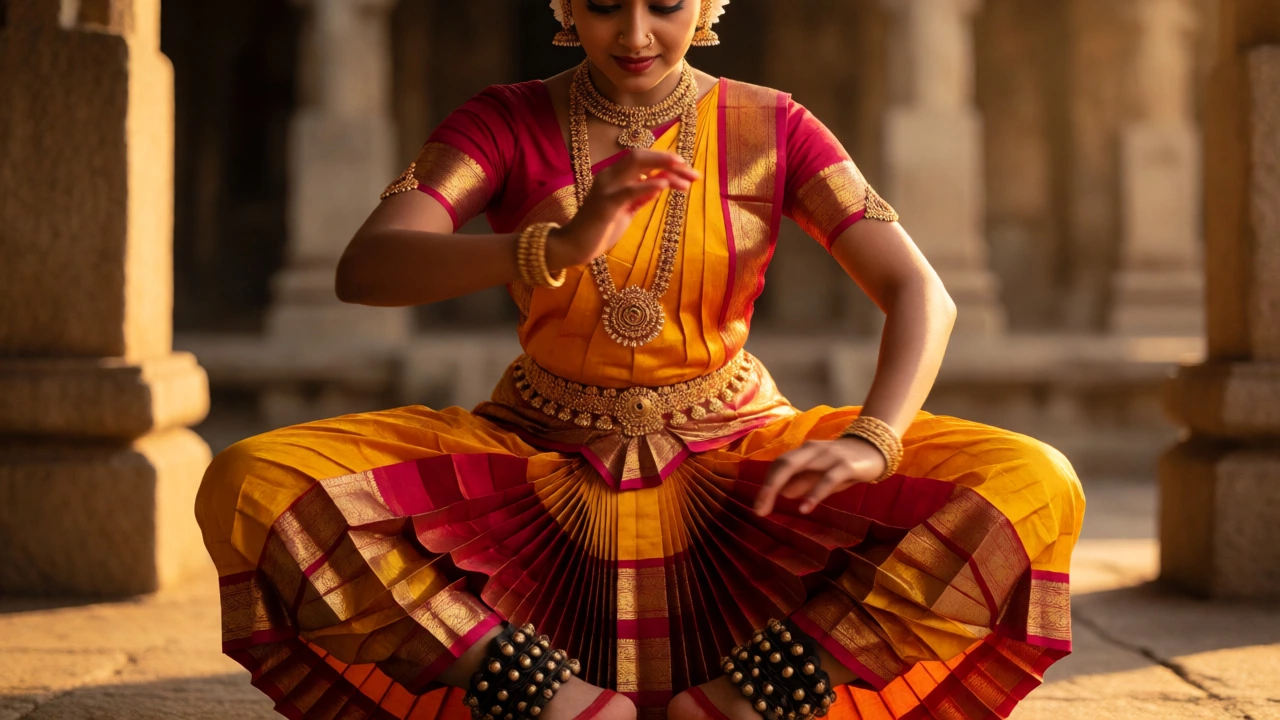
Bharatanatyam is a classical dance form originating from Tamil Nadu, characterized by fixed upper torso, bent legs, and specific hand gestures called mudras. Think of it as geometry in motion. The dancer maintains a half-seated position known as aramandi, creating a triangular base that allows for powerful footwork and balance.
What makes Bharatanatyam distinct is its structure. A traditional performance follows a strict sequence called the margam. It starts with an invocation to the gods (Alarippu), moves through rhythmic pure dance pieces (Jatiswaram), and culminates in expressive storytelling (Varnam) before ending with a devotional piece (Tillana). This isn’t just choreography; it’s a spiritual journey. The dancer uses their entire body-eyes, eyebrows, neck, hands, and feet-to communicate complex emotions without saying a word.
If you’ve ever seen a Bharatanatyam recital, you know the sound of the ghungroos (ankle bells) is deafeningly precise. The rhythm is driven by Carnatic music, a system of melodic frameworks called ragas. The connection between the drummer’s mridangam beats and the dancer’s footwork is so tight that even a millisecond delay breaks the illusion of magic.
Kuchipudi: The Drama of Andhra Pradesh
Now, let’s look at Kuchipudi, which is a classical dance-drama tradition from Andhra Pradesh that blends dance, mime, and acting, often including spoken dialogue. Unlike Bharatanatyam, which is primarily abstract and devotional, Kuchipudi started as a group performance telling stories from Hindu epics like the Mahabharata and Ramayana.
The biggest difference? Spoken words. In traditional Kuchipudi performances, dancers actually speak lines from the script. This adds a layer of theatricality that Bharatanatyam doesn’t typically have. While modern solo recitals have minimized the speaking parts to focus on dance, the DNA of Kuchipudi remains dramatic. It’s less about geometric precision and more about character portrayal. One moment you’re watching a fierce warrior, the next you’re seeing a shy maiden. The transitions are fluid and emotionally charged.
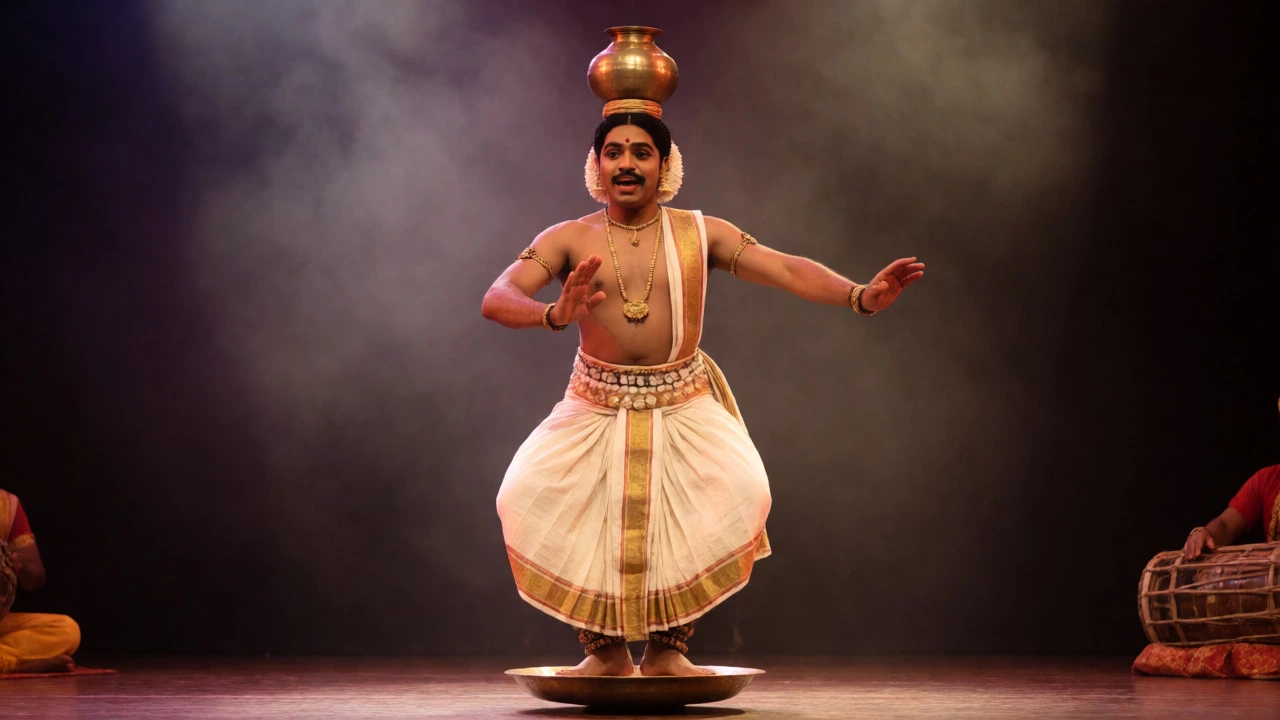
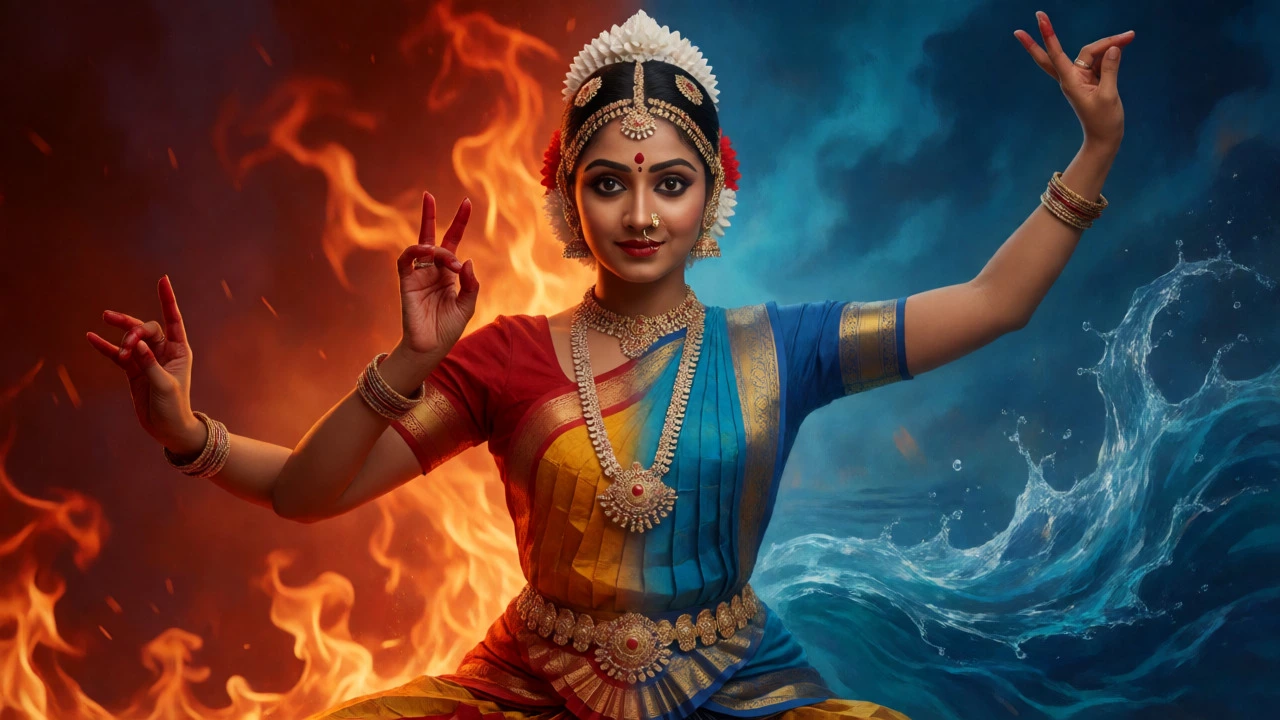
Kuchipudi also has a unique technical element called Tarangam, where the dancer performs on a brass plate while balancing a pot of water on their head. It’s a feat of strength and control that showcases the physical demands of the art form. If Bharatanatyam is fire and geometry, Kuchipudi is water and theater.
Head-to-Head Comparison
To help you visualize the differences, here’s a quick breakdown of the key attributes of these two giants.
| Feature | Bharatanatyam | Kuchipudi |
|---|---|---|
| Origin State | Tamil Nadu | Andhra Pradesh |
| Primary Style | Geometric, abstract, devotional | Dramatic, narrative, theatrical |
| Spoken Dialogue | Rarely used in solo performances | Frequently used in traditional group performances |
| Key Movement | Aramandi (half-seated stance) | Fluid transitions, Tarangam (plate dancing) |
| Costume | Silk sari stitched into fan-like pleats | Similar silk attire but often lighter for movement |
| Music Base | Carnatic classical music | Carnatic classical music with folk influences |
Why Do People Confuse Them?
It’s easy to mix them up if you’re new to Indian arts. Both use similar costumes, jewelry, and makeup. Both rely on Carnatic music. Both tell stories from Hindu mythology. But the vibe is completely different.
Bharatanatyam feels disciplined and structured. It’s like watching a math equation solve itself in real-time. Every angle matters. Kuchipudi feels organic and emotional. It’s like watching a play unfold. The dancer might suddenly switch from graceful movements to intense facial expressions to convey anger or love. If you enjoy precision and symmetry, Bharatanatyam will appeal to you. If you prefer storytelling and dramatic range, Kuchipudi might be your cup of tea.
Another point of confusion is the term "South Indian." Many assume all South Indian dances look alike. But regional pride runs deep. Tamils view Bharatanatyam as their cultural identity, while Telugus see Kuchipudi as a source of immense pride. Understanding this cultural context adds depth to your appreciation of the art forms.
How to Start Learning or Watching
Ready to dive deeper? Here’s how to engage with these traditions meaningfully.
For Beginners: Start with YouTube channels dedicated to Indian classical dance. Look for videos labeled "Arangetram" (debut performance) for Bharatanatyam and "Tarangam" clips for Kuchipudi. Pay attention to the footwork in Bharatanatyam and the facial expressions in Kuchipudi.
For Learners: If you want to learn, find a certified guru. Bharatanatyam requires years of practice to master the basic stance alone. Kuchipudi might feel more accessible initially because of its narrative nature, but the technical demands are equally high. Don’t rush. Both forms require patience and discipline.
For Audiences: Attend live performances whenever possible. Video recordings lose the energy of live interaction between the musician and the dancer. Notice how the singer cues the dancer with vocal syllables called sollukattus. That call-and-response dynamic is electric.
Common Pitfalls to Avoid
Don’t make these mistakes when discussing these dances:
- Ignoring Mohiniyattam: Remember, Kerala has its own beautiful style. Dismissing it because you only know two forms shows limited knowledge.
- Calling them "Folk Dances": These are classical forms with ancient texts governing their rules. Folk dances are community-based and informal; these are rigorous and codified.
- Overlooking the Music: The dance is only half the story. The Carnatic music accompanying it is equally complex. Learn to identify the mridangam, violin, and vocals.
Final Thoughts
While Bharatanatyam and Kuchipudi are often cited as the primary classical dance forms of South India, they are part of a richer tapestry that includes Mohiniyattam and Kathakali. Each form offers a unique window into the soul of the region. Whether you’re drawn to the fiery precision of Bharatanatyam or the dramatic grace of Kuchipudi, exploring these arts connects you to centuries of tradition. Next time someone asks about South Indian dance, you can educate them on the nuance-and maybe impress them with your knowledge of the tarangam.
Are Bharatanatyam and Kuchipudi the only classical dances of South India?
No, they are not the only ones. South India has four major classical dance forms: Bharatanatyam (Tamil Nadu), Kuchipudi (Andhra Pradesh), Mohiniyattam (Kerala), and Kathakali (Kerala). However, Bharatanatyam and Kuchipudi are often highlighted due to their global popularity and distinct solo performance styles.
What is the main difference between Bharatanatyam and Kuchipudi?
The main difference lies in their presentation style. Bharatanatyam focuses on geometric precision, abstract expression, and devotional themes with no spoken dialogue in solo performances. Kuchipudi is more dramatic, incorporates spoken dialogue in traditional group performances, and emphasizes character portrayal and theatrical elements.
Which state does Bharatanatyam come from?
Bharatanatyam originates from Tamil Nadu. It was traditionally performed by Devadasis (temple dancers) in temples across South India, particularly in Tamil Nadu.
Is Kuchipudi harder than Bharatanatyam?
Neither is inherently harder; they present different challenges. Bharatanatyam demands extreme physical endurance for maintaining the aramandi stance and executing rapid footwork. Kuchipudi requires strong acting skills, voice modulation for dialogue, and flexibility for dramatic poses. Difficulty depends on the individual's strengths.
Can men perform both Bharatanatyam and Kuchipudi?
Yes, both forms are performed by men and women. Historically, Bharatanatyam was performed by women (Devadasis) and men (Nattuvanars who directed and sometimes danced). Kuchipudi was originally an all-male tradition where men played female roles, though today it is widely performed by both genders.