Indian Modesty Checker
This tool helps you assess whether showing cleavage is appropriate for your specific situation in India based on location and occasion. Remember: India has no laws against cleavage, but cultural context matters significantly.
Your Result
When you walk into a busy market in Jaipur or a quiet temple courtyard in Varanasi, you’ll notice something: most women aren’t wearing tight tops or low-cut dresses. That’s not because they can’t afford them-it’s because modesty is woven into how people dress, not just as a rule, but as a shared understanding. So, can you show cleavage in India? The short answer: it’s not illegal, but it’s often seen as out of place-and sometimes risky.
What Modesty Really Means in Indian Dress
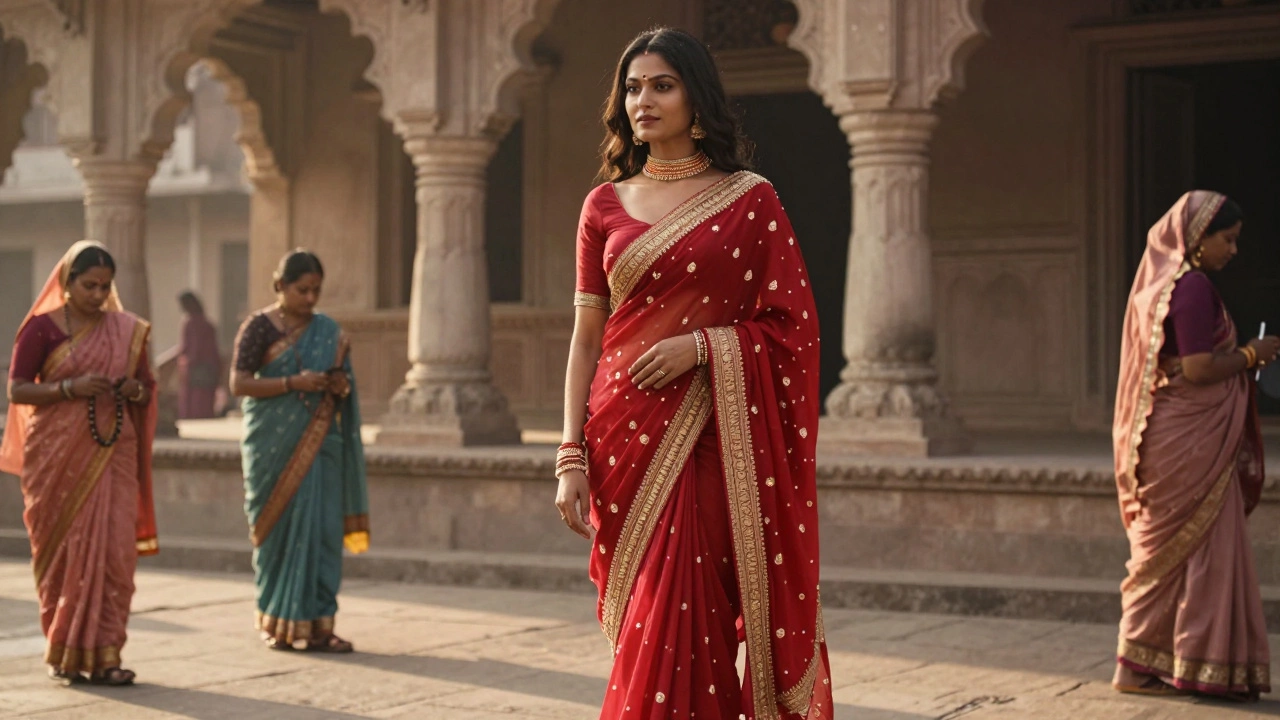
Modesty in India isn’t about hiding your body because it’s shameful. It’s about respect-for family, for community, for context. A woman wearing a saree with a snug blouse and a dupatta draped over one shoulder isn’t covering up because she’s forced to. She’s choosing how to present herself in a way that fits the space she’s in. In rural villages, even young girls wear kurtas that cover their shoulders and midriffs. In cities like Mumbai or Bengaluru, you’ll see women in crop tops and jeans-but rarely with exposed cleavage in public spaces.There’s a difference between fashion and cultural expectation. A Bollywood actress might wear a plunging neckline on screen, but when she steps out for dinner with her family, she swaps it for a high-necked kurta. That’s not hypocrisy-it’s code-switching. Indians, especially women, learn early how to adjust their clothing based on where they are: a temple, a wedding, a corporate office, or a beach.
Where Cleavage Might Be Accepted (and Where It Won’t Be)
If you’re thinking about wearing a low-cut top in India, location matters more than anything else.- Beaches in Goa: You’ll see tourists in bikinis and crop tops. Locals mostly stick to sarongs or cover-ups. You won’t get arrested, but you might get stares-or worse, unwanted attention.
- Urban nightclubs in Delhi or Mumbai: Some clubs have dress codes that allow fitted dresses. But even there, cleavage is rarely the focus. Women wear elegant, high-slung necklines or off-shoulder styles that hint at skin without exposing it.
- Religious sites: Temples, gurudwaras, and mosques require covered shoulders and knees. In many, women are given shawls to wear over their clothes. Showing cleavage here isn’t just rude-it’s disrespectful.
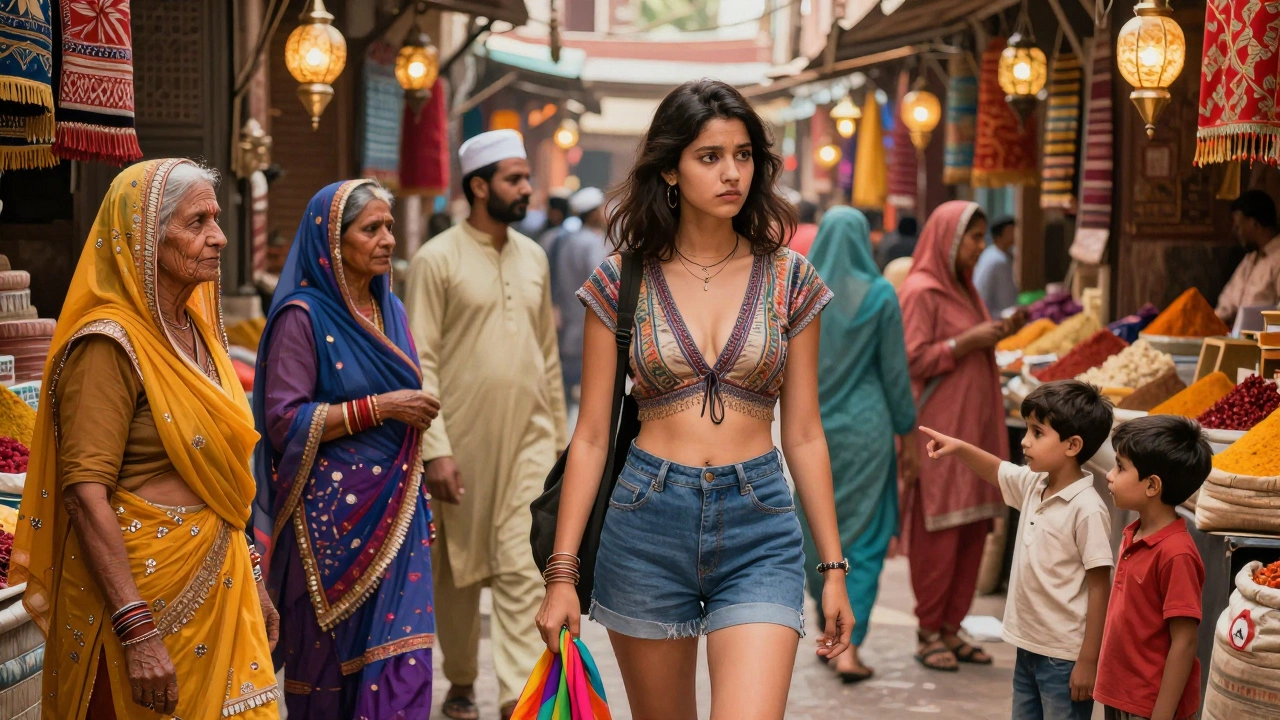
- Small towns and villages: You’ll stand out. Not because people are angry, but because it’s simply not how anyone dresses. Children might point. Elderly women might look away. It’s not about judgment-it’s about unfamiliarity.
- Corporate offices: Even in multinational companies, conservative dress is the norm. A V-neck blouse is fine. A deep plunge? You’ll be asked to change-or at least get side-eye from colleagues.
Traditional Clothing Doesn’t Hide the Body-It Honors It
Many people assume traditional Indian clothing is about covering up. But look closer. A well-draped saree hugs the curves of the body. A fitted churidar or lehenga highlights the waist. A choli blouse can be tight, but it ends just below the bust. These styles celebrate the female form without exposing it.Indian textiles are designed to flow, drape, and move with the body. The beauty isn’t in what’s revealed-it’s in how the fabric catches the light, how the embroidery tells a story, how the colors match the occasion. A woman in a red Banarasi silk saree with gold zari work doesn’t need cleavage to look elegant. Her jewelry, her posture, her confidence do that.
There’s a reason why the saree has survived for 5,000 years. It’s not because women were forced to wear it. It’s because it works-for heat, for movement, for dignity.
The Double Standard: Men vs. Women
You’ll rarely see an Indian man wearing a tank top with exposed chest in a temple or market. But if he does, no one calls him immodest. Women, however, are policed for their clothing in ways men never are. A man in a sleeveless shirt is seen as casual. A woman in the same top is seen as provocative.This isn’t fair. But it’s real. And if you’re visiting India, understanding this imbalance helps you avoid unintentional offense. It’s not about policing your body-it’s about respecting the social contract you’re stepping into.
What Happens If You Do Show Cleavage?
Let’s be clear: no one will arrest you. India doesn’t have laws banning cleavage. But social consequences are real.Some women report being followed, catcalled, or asked invasive questions like, “Why dress like that?” Others say they’ve been denied entry to family gatherings or religious events. In extreme cases, women have been harassed or assaulted after being perceived as “immodest.”
These aren’t universal experiences. Many young Indian women now wear crop tops and high-waisted pants without issue in metro cities. But the risk isn’t just about what happens to you-it’s about what you might unintentionally cause. A foreigner wearing a low-cut top might trigger discomfort in someone who’s been taught that a woman’s body is a source of shame, not celebration.
It’s not your fault. But it’s your responsibility to know the context.
How to Dress Respectfully Without Losing Style
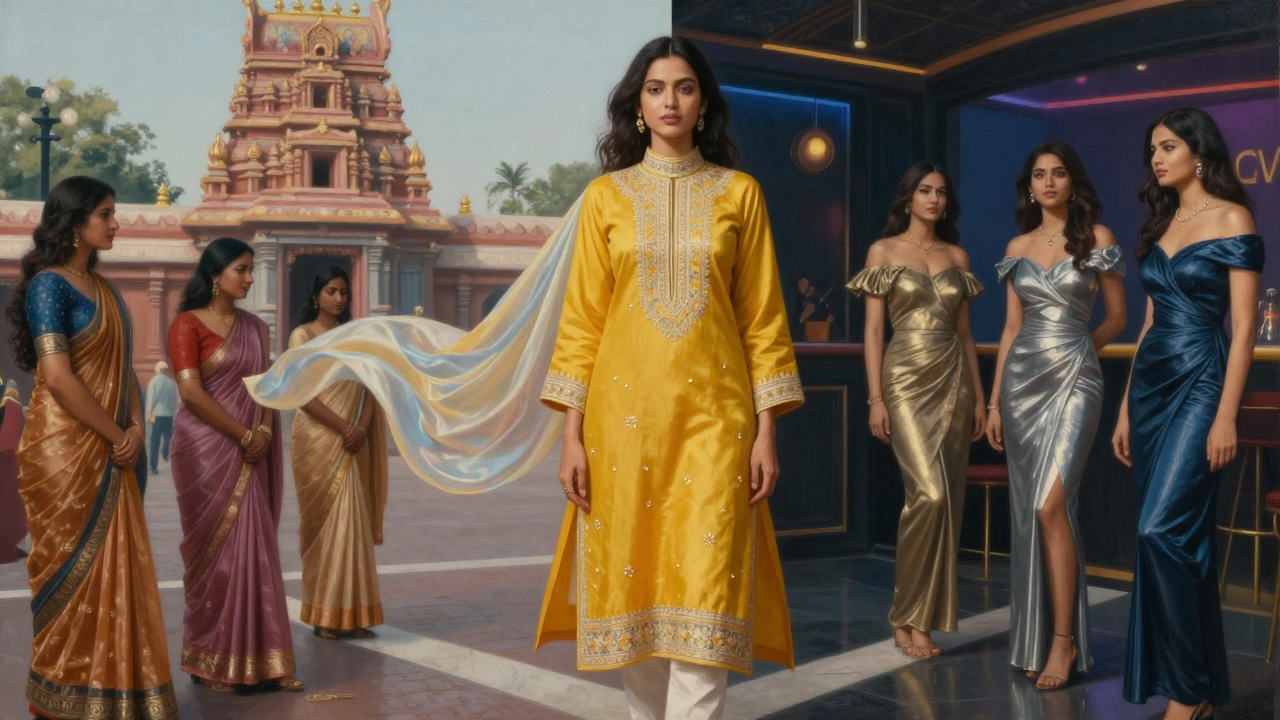
You don’t have to wear a burqa to be respectful. You just need to know where to draw the line.- Choose tops with modest necklines: boat necks, round necks, or high V-necks work well.
- Pair crop tops with high-waisted pants or skirts that cover the midriff.
- Carry a lightweight scarf or shawl. It’s easy to drape over your shoulders if you enter a temple or meet elders.
- Opt for fabrics that drape well-cotton, silk, chiffon. They’re breathable, elegant, and naturally flattering.
- Avoid sheer materials unless you’re wearing a lining. Transparency is often mistaken for exposure.
Many Indian designers now make fusion wear-western cuts with Indian modesty. Brands like Biba, FabIndia, and Manyavar have lines designed for global travelers who want to look stylish without standing out for the wrong reasons.
Why This Matters Beyond Clothing
Clothing is never just about fabric. It’s about belonging. When you dress in a way that matches the culture around you, you’re saying: I see you. I respect you. I’m here to learn, not to change you.India is a country of 1.4 billion people with hundreds of languages, religions, and traditions. What’s normal in one state might be shocking in another. But the thread that ties them together is a deep-rooted sense of context. Dressing modestly isn’t about giving up your identity. It’s about expanding it-learning how to move through the world with awareness.
When you choose to cover your shoulders in a temple, you’re not surrendering your freedom. You’re exercising it-by choosing to honor a space that’s sacred to others.
Final Thought: It’s Not About Right or Wrong
There’s no global rulebook for cleavage. But there are local rules-and they matter. India doesn’t ask you to change who you are. It asks you to be mindful of where you are.If you want to wear a low-cut top, go ahead. Just know that in most places, it won’t be seen as fashion. It’ll be seen as a signal. And that signal might say: I don’t care about your rules. And that’s a message you might not want to send.
Modesty isn’t repression. It’s a form of grace. And sometimes, the most powerful thing you can wear isn’t what you show-but what you choose to hold back.
Is it illegal to show cleavage in India?
No, it’s not illegal. India has no law banning low-cut clothing. But social norms vary widely, and showing cleavage in public spaces-especially religious or conservative areas-can lead to unwanted attention, discomfort, or even harassment. While you won’t be arrested, you might be asked to leave or face judgment.
Can tourists wear crop tops in India?
Yes, but with caution. In major cities like Mumbai, Bangalore, or Goa, crop tops are common among young locals and tourists. But they’re usually paired with high-waisted bottoms to cover the midriff. Avoid wearing them in temples, small towns, or during religious festivals. Always carry a scarf to cover up when needed.
Why do Indian women cover their heads in temples?
Covering the head in temples is a sign of respect, not a requirement based on gender. In Hindu, Sikh, and Muslim traditions, covering the head shows humility before the divine. Many temples provide shawls for visitors. Even if you’re not religious, following this custom helps you blend in and avoid offending others.
Do Indian women ever wear revealing clothes?
Yes, especially in urban areas. Young women in cities wear fitted dresses, off-shoulder tops, and high-slit skirts. But cleavage is rarely the focus. The style leans toward elegance-exposing shoulders, back, or legs, but keeping the chest covered. It’s about balance, not exposure.
What should I wear to an Indian wedding?
Wear something colorful and modest. A long dress with sleeves, a kurta with palazzo pants, or a saree are all great choices. Avoid white (it’s for mourning) and black (it’s considered unlucky). Keep shoulders and knees covered. If you’re unsure, bring a shawl. Weddings are family events-modesty is expected, even if others are dressed up.