Indian Dining Etiquette Simulator
Test your cultural awareness! Choose the most appropriate action for each social scenario based on the article's guidelines.
Loading scenario...
Quick Guide to Dining Etiquette in India
- The Golden Rule: Use your right hand for eating, passing food, and greeting.
- The Left Hand's Role: Reserved for personal hygiene and "unclean" tasks.
- The Exception: Left-handed people are generally understood, but the social preference remains the right hand.
- The Goal: Respecting the sanctity of food and the health of the group.
The Practical Root: Hygiene and Health
To understand why this is a thing, we have to look at how people lived before the era of modern plumbing and hand sanitizers. For centuries, the left hand has been designated for personal cleaning, specifically for using the toilet. In a culture where eating with your fingers is the norm, separating the "cleaning hand" from the "eating hand" wasn't just a social preference-it was a critical public health measure. By strictly assigning the right hand to handle food and the left hand to handle waste, people created a biological firewall. If you used the same hand for both, you'd risk transferring bacteria and parasites into the meal. This distinction became so ingrained that it evolved from a practical health tip into a rigid social taboo. Even today, in rural villages where water sources might be limited, this boundary helps prevent the spread of gastrointestinal infections.The Spiritual Side: Purity and Impurity
Beyond the physical germs, there's a deeper layer involving Dharma and the concept of purity. In many Indian traditions, food isn't just fuel; it's considered Prasadam (a blessed offering) or a gift from nature. Because of this, the act of eating is treated with a level of reverence. Using the hand associated with waste to touch a sacred meal is seen as a contradiction. It’s similar to how some cultures view the head as sacred and the feet as lowly. In the Indian context, the right side of the body is often associated with purity, strength, and auspiciousness, while the left is linked to the mundane or the impure. This isn't about being "judgmental" toward the left hand, but rather about maintaining a mental and spiritual boundary between the clean and the unclean.How Dining Works in Real Life
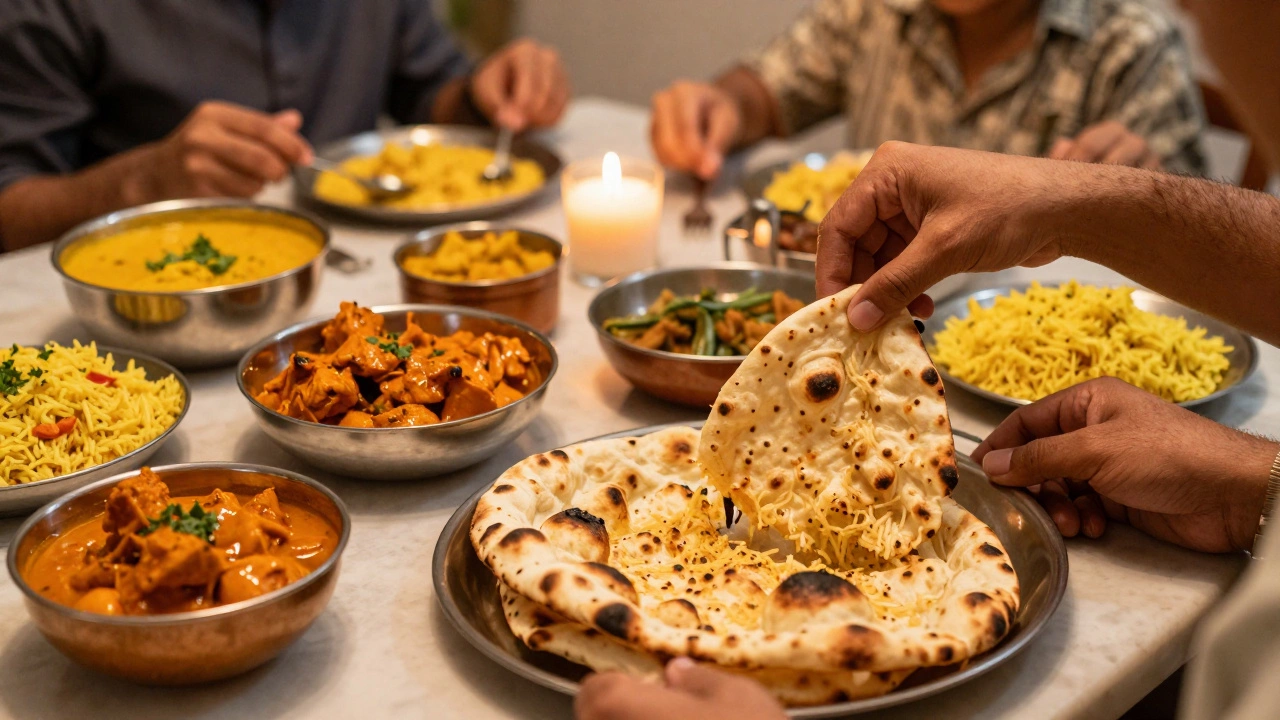
If you're visiting India or eating at an authentic restaurant, you'll notice that the right hand does all the heavy lifting. You use it to tear the bread, scoop up the dal, and pop the food into your mouth. But what about the left hand? It isn't just sitting there doing nothing. Usually, the left hand is used to hold the plate or the bowl steady. If you need to use your left hand for something-say, you're holding a glass of water-that's usually acceptable. However, passing a dish to someone else with your left hand is often seen as a slight. It’s a small gesture, but it signals a lack of awareness of the other person's boundaries.| Action | Right Hand | Left Hand |
|---|---|---|
| Eating Food | Primary Tool | Avoided |
| Passing Items | Preferred/Respectful | Considered Impolite |
| Personal Hygiene | Avoided | Primary Tool |
| Holding the Plate | Occasional | Commonly Used |
What Happens if You're Naturally Left-Handed?
This is the part where a lot of travelers get nervous. "What if I'm a southpaw?" For the most part, modern India is very accommodating. People understand that biology differs. If you are naturally left-handed, most hosts won't be offended if you eat with your left hand, especially in urban areas like Mumbai or Bangalore. However, if you find yourself in a very traditional household or a remote village, you might notice a bit of discomfort. A pro tip for lefties: if you can, try to use your right hand for the most visible actions, like handing over money or passing a salt shaker. This small effort shows that you respect the local customs, even if you can't fully adhere to them while eating. Most Indians will appreciate the gesture more than the actual act.The Role of Water and Washing
To make this system work, the act of washing hands becomes a ritual. You'll often see a hand-washing ceremony before a meal, where a basin and pitcher are brought to the table. This isn't just about cleanliness; it's a transition. It marks the moment you move from the "outside world" into the sacred space of the meal. In traditional settings, this washing is thorough. Since the right hand is the only one touching the food, it must be impeccably clean. This is why you'll see people washing their hands multiple times. If you're at a home, don't be surprised if your host insists you wash your hands again right before the food hits the table.Comparing Traditional vs. Modern Perspectives
As India evolves, these norms are shifting. In high-end hotels or corporate settings, cutlery is common, and the "left-hand rule" is less strictly enforced. Younger generations in cities might not even think about it. Yet, the habit persists because it's tied to identity and family tradition. Even people who use forks and spoons often revert to using their right hand when eating traditional foods like Dosa or Idli. There is a sensory connection to the food that cutlery just can't provide. Touching the food allows you to feel the temperature and texture, which is believed to stimulate the digestive enzymes in the stomach-a concept often mentioned in Ayurveda.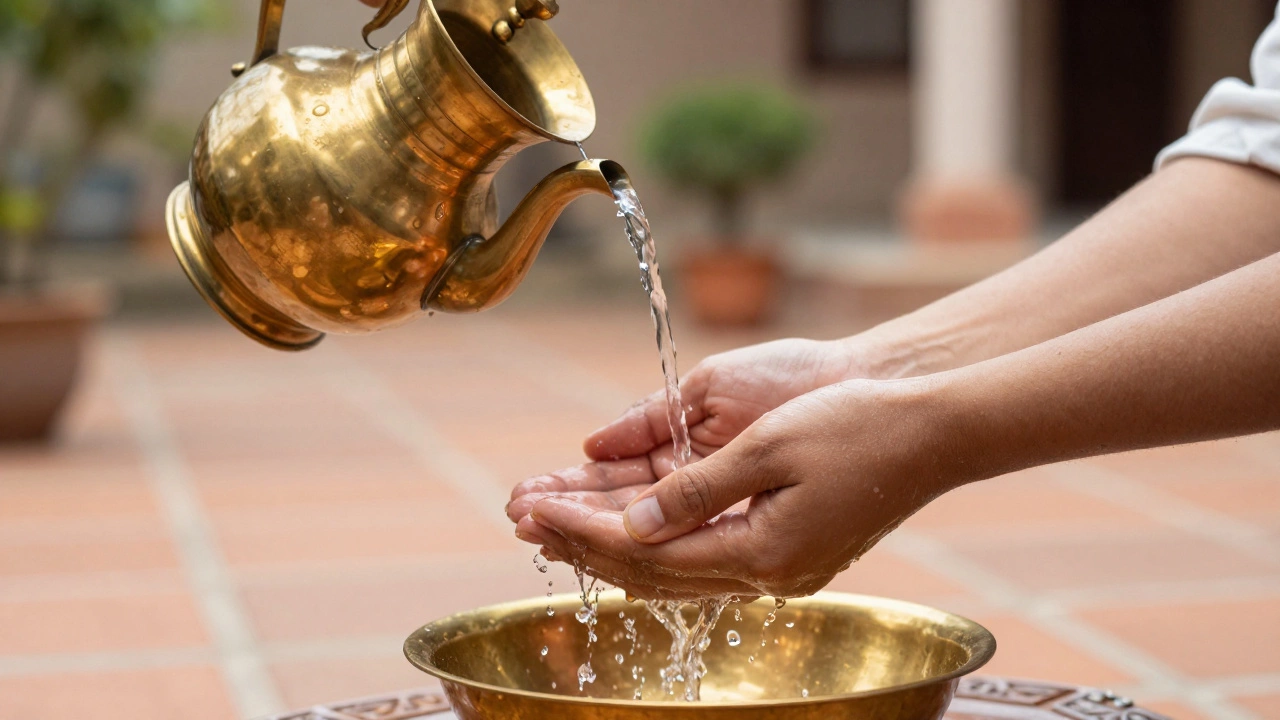
Avoiding Common Social Blunders
If you want to navigate an Indian dinner party without any awkwardness, keep these a few rules of thumb in mind:- The Handshake: Always shake hands with your right hand. Using the left can be interpreted as a sign of disrespect or a lack of hygiene.
- Giving and Receiving: Whether it's a business card, a gift, or a plate of snacks, use your right hand. If the object is heavy, use your left hand to support the right one, but let the right hand be the primary point of contact.
- The Napkin: If you're using a napkin to wipe your mouth, using either hand is fine, but avoid using the napkin you used for "other things" to touch the table where food is placed.
- Asking for Help: If you're unsure, just ask! Most Indians are incredibly proud of their culture and are happy to explain the nuances to a guest.
The Broader Context of South Asian Customs
It's worth noting that this isn't unique to India. You'll find similar patterns in Pakistan, Bangladesh, and parts of the Middle East. The common thread is the historical lack of toilet paper, replaced by water and the left hand. This shared regional history created a standardized social code across different religions and languages. Whether it's a Hindu home in Gujarat or a Muslim home in Lahore, the left hand is generally off-limits for food.Is it a sin to eat with the left hand in India?
No, it's not a "sin" in a religious sense for most people, but it is considered a significant social faux pas. It's seen as unhygienic and disrespectful to the food and the people you are eating with. In very traditional or spiritual settings, it may be viewed as spiritually impure, but in daily life, it's more about manners and health.
What if I am left-handed? Will people be angry?
Generally, no. Most Indians are aware that some people are naturally left-handed. While they might find it unusual, they won't be angry. However, if you're in a very conservative rural area, you might get a few curious looks. The best approach is to use your right hand for social interactions (like shaking hands) to show respect for the culture.
Can I use my left hand to hold the water glass?
Yes, that is usually perfectly acceptable. The strict taboo is primarily against using the left hand to touch the food itself or to pass food to others. Holding a glass or a plate is not considered a breach of etiquette.
Why do Indians eat with their hands at all?
Eating with hands is a tradition that emphasizes a sensory connection to the meal. Many believe it improves digestion by alerting the stomach to the texture and temperature of the food. It also creates a communal, grounding experience that cutlery can't replicate.
Does this rule apply to eating with a spoon?
If you are using a spoon or fork, the rule is much more relaxed. However, it is still traditional to hold the utensil in your right hand. Using a spoon with your left hand is less "shocking" than eating with your bare left hand, but the right hand remains the preferred choice for all dining activities.