Gender Roles in India: Reality Check Quiz
How well do you understand the shifting landscape of gender expectations in India? Answer these questions based on sociological trends and current realities.
You might think you know what it means to be a man or a woman in India. Maybe you picture the strict patriarchal family from a Bollywood movie, where the father rules and the mother serves silently. Or perhaps you see the image of the independent IT professional in Bangalore who ignores those old scripts entirely. The truth? It’s messy, contradictory, and rapidly changing. Gender roles in India aren’t a single rulebook; they’re a shifting landscape shaped by caste, class, religion, and region.
If you’re trying to understand how people actually live here-whether you’re planning to move, do business, or just satisfy your curiosity-you need to look past the stereotypes. This isn’t about judging whether these roles are "good" or "bad." It’s about understanding the machinery that keeps families running and the cracks that are starting to show. Let’s break down what’s really happening with gender expectations in modern India.
The Traditional Framework: What Was Expected?
For centuries, the dominant social structure in India has been patrilineal. This means lineage, property, and identity flowed through the male line. In this system, men were expected to be the providers and protectors. Their worth was often tied to their ability to earn money, maintain honor, and control the household decisions. Women, conversely, were largely confined to the domestic sphere. Their primary value was seen in their ability to bear children, manage the home, and uphold family traditions.
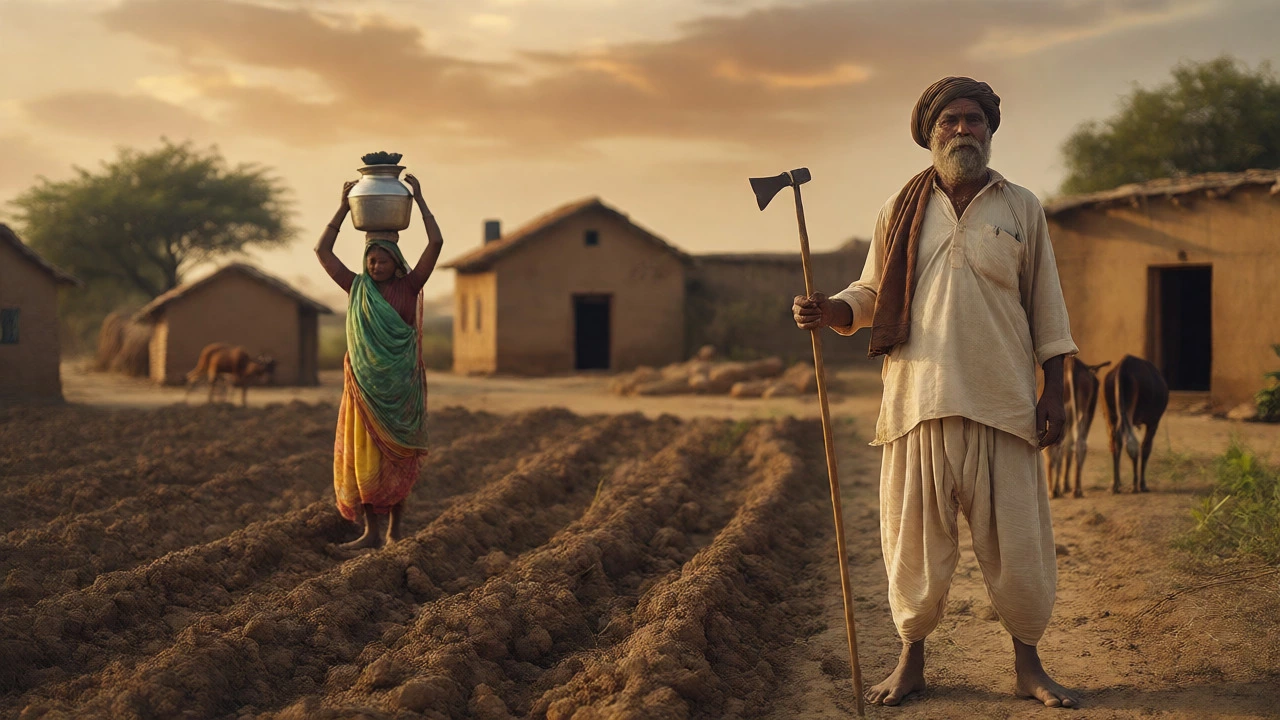
This wasn’t just a cultural preference; it was reinforced by religious texts, local customs, and economic necessity. In agrarian societies, for example, men handled plowing and market sales, while women managed livestock, water collection, and cooking. These divisions weren’t arbitrary-they were practical adaptations to labor needs. But over time, these practical divisions hardened into rigid moral codes. A "good" wife was defined by her obedience and sacrifice. A "responsible" husband was defined by his authority and provision.
It’s crucial to note that this traditional model wasn’t uniform across the country. In some tribal communities and matrilineal societies like the Nairs of Kerala or the Khasis of Meghalaya, women held significant property rights and decision-making power. However, as mainstream Hindu nationalism and colonial legal systems standardized laws, the northern, Brahminical model of patriarchy became the de facto national norm in many public discussions.
The Modern Shift: Education and Urbanization
Walk into a corporate office in Gurgaon or a startup hub in Hyderabad today, and the scene looks different. More than 40% of graduates in Indian universities are now women. This educational boom has fundamentally altered the script. When women earn degrees, they gain leverage. They delay marriage. They negotiate household chores. They demand a say in financial decisions.
Urbanization acts as an accelerant for this change. In cities, the joint family structure is breaking down. Nuclear families are more common, which reduces the pressure from in-laws to conform to traditional servitude. If you’re a young couple living in a small apartment in Mumbai, you don’t have an aunt hovering over your shoulder telling you how to cook dal. You figure it out together. This isolation, ironically, creates freedom.
But here’s the catch: education doesn’t automatically erase deep-seated biases. Studies from the National Family Health Survey (NFHS-5) show that while literacy rates among women have risen sharply, attitudes toward gender equality lag behind. Many educated men still expect their wives to handle all domestic duties after working full-time shifts. This phenomenon is often called the "second shift," where women work professionally and then come home to perform unpaid domestic labor. The gap between aspiration and reality is where most of the tension lives.
Men Under Pressure: The Silent Crisis
We talk a lot about women’s struggles, but let’s be honest about men too. The traditional role of the "provider" is becoming impossible for many. With rising costs of living, housing prices, and the expectation to fund weddings and dowries (even if legally banned), the pressure on Indian men is immense. Failure to provide isn’t just seen as a financial setback; it’s viewed as a failure of masculinity.
This leads to a specific type of stress that often goes unspoken. Men are discouraged from showing vulnerability. Asking for help with mental health issues is still stigmatized in many circles. Instead, you see high rates of substance abuse and emotional withdrawal. The idea that "boys don’t cry" isn’t just a cliché; it’s a behavioral mandate that limits emotional range. As women become more financially independent, some men feel their traditional source of power-economic control-is slipping away, leading to insecurity rather than partnership.

Regional and Caste Variations: Not One Size Fits All
You cannot discuss gender roles in India without talking about caste and geography. The experience of a Dalit woman in rural Uttar Pradesh is vastly different from that of a Brahmin woman in urban Delhi. For lower-caste women, work outside the home is often a necessity, not a choice. They work in fields, construction sites, and factories. While this gives them some economic agency, it also exposes them to higher risks of exploitation and violence.
In contrast, upper-caste, middle-class norms often emphasize female seclusion or restricted mobility. Here, a woman’s honor is tied to her modesty and limited interaction with other men. Paradoxically, the wealthy can afford to keep women "out of sight," while the poor must put them "in sight" to survive. This economic divide shapes how gender roles are enforced. In poorer households, everyone works, so boundaries blur. In wealthier ones, clear distinctions are maintained to signal status.
Geography matters too. Southern states like Kerala and Tamil Nadu consistently rank higher on gender development indices compared to northern states like Haryana and Bihar. Literacy rates, healthcare access, and political participation vary wildly. Assuming a uniform "Indian" experience misses these critical nuances.
Marriage and Family Dynamics
Marriage remains the central institution defining gender roles in India. Despite rising divorce rates in metros, arranged marriages still account for nearly 90% of unions. This system inherently places certain expectations on both partners. Traditionally, the groom’s family holds more bargaining power. The bride is expected to adapt to her new family’s rules, often moving into her husband’s parents’ home.
However, the dynamics are shifting. "Love-cum-arranged" marriages are becoming common, where couples meet online or through friends before seeking parental approval. This hybrid model allows for more personal compatibility. Furthermore, the concept of "living-in relationships" is gaining traction among the urban elite, challenging the sanctity of formal marriage as the only path to cohabitation.
Parenting styles are also evolving. Fathers are increasingly involved in childcare, especially in dual-income households. You’ll see dads dropping kids at school in posh neighborhoods, something unthinkable two decades ago. Yet, the burden of child-rearing still disproportionately falls on mothers. Grandmothers often step in to help, reinforcing intergenerational transmission of traditional values. Breaking this cycle requires conscious effort from both parents.

The Digital Influence and Social Media
Don’t underestimate the role of smartphones. Access to global content via Instagram, Netflix, and YouTube has exposed Indians to alternative lifestyles. Young people see Western models of dating, career-focused women, and emotionally available fathers. This exposure creates a cognitive dissonance when they return to conservative family dinners.
Social media also amplifies activism. Movements like #MeToo found strong resonance in India, particularly in workplaces and entertainment industries. Women used digital platforms to share stories of harassment, forcing institutions to take action. This visibility empowers individuals to challenge norms publicly. However, it also invites backlash. Online trolls often mock women who defy traditional roles, labeling them "Westernized" or "too aggressive." The digital space is thus a battleground where traditional and modern values clash daily.
| Aspect | Traditional Expectation | Emerging Trend |
|---|---|---|
| Decision Making | Patriarchal (Father/Husband decides) | Collaborative (Joint discussion) |
| Career Priority | Male breadwinner; Female homemaker | Dual income; Shared career goals |
| Domestic Labor | Exclusively female duty | Shared responsibility (increasingly) |
| Childcare | Mother-led; Father distant | Active fatherhood; Shared parenting |
| Social Mobility | Restricted for women; Free for men | Greater freedom for women in metros |
Challenges and Future Outlook
So, where is India headed? The trajectory points toward gradual liberalization, but resistance is fierce. Legal reforms, such as the Supreme Court’s decriminalization of Section 377 and rulings on triple talaq, signal state support for individual rights over community norms. Yet, implementation lags. Police stations still hesitate to register complaints from women against husbands. Courts remain backlogged.
Economic independence is the strongest driver of change. When a woman earns her own money, she gains autonomy. Microfinance initiatives and self-help groups have empowered millions of rural women, giving them collective bargaining power. These groups often tackle issues beyond finance, like alcoholism in men or domestic violence, creating community-led solutions.
Ultimately, gender roles in India are in flux. We are witnessing a renegotiation of contracts within families and society. It’s not a clean break from tradition but a complex blending. The ideal emerging seems to be one of mutual respect rather than rigid hierarchy. Men are learning to share the load; women are claiming their space. It’s imperfect, slow, and often frustrating, but the direction is clear: toward greater equality, driven by education, economy, and undeniable human will.
Are gender roles in India strictly religious?
No, they are primarily socio-economic. While religion provides justification for many norms, caste, class, and regional culture play equally significant roles. For instance, matrilineal practices exist in parts of South India despite Hindu dominance, showing that culture often overrides religious prescription.
How does the caste system affect gender roles?
Caste dictates labor division and social mobility. Upper-caste norms often restrict women’s public visibility to preserve "honor," while lower-caste women frequently engage in visible manual labor due to economic necessity. Intersectionality means a Dalit woman faces distinct challenges compared to an upper-caste woman.
Is dowry still common in India?
Yes, despite being illegal since 1961. Dowry persists in various forms, often disguised as gifts or cash transfers. It reinforces the notion that women are a financial burden, affecting their perceived value in marriage negotiations.
Do men face discrimination in India?
Yes, though different in nature. Men face immense pressure to succeed financially, lack of legal protection in domestic violence cases (historically), and societal stigma around emotional vulnerability. The rigidity of masculine roles harms men’s mental health significantly.
How is urbanization changing gender norms?
Urbanization promotes nuclear families, reducing in-law interference. It offers job opportunities for women, fostering financial independence. Exposure to diverse cultures in cities encourages questioning of traditional taboos regarding dress, dating, and career choices.