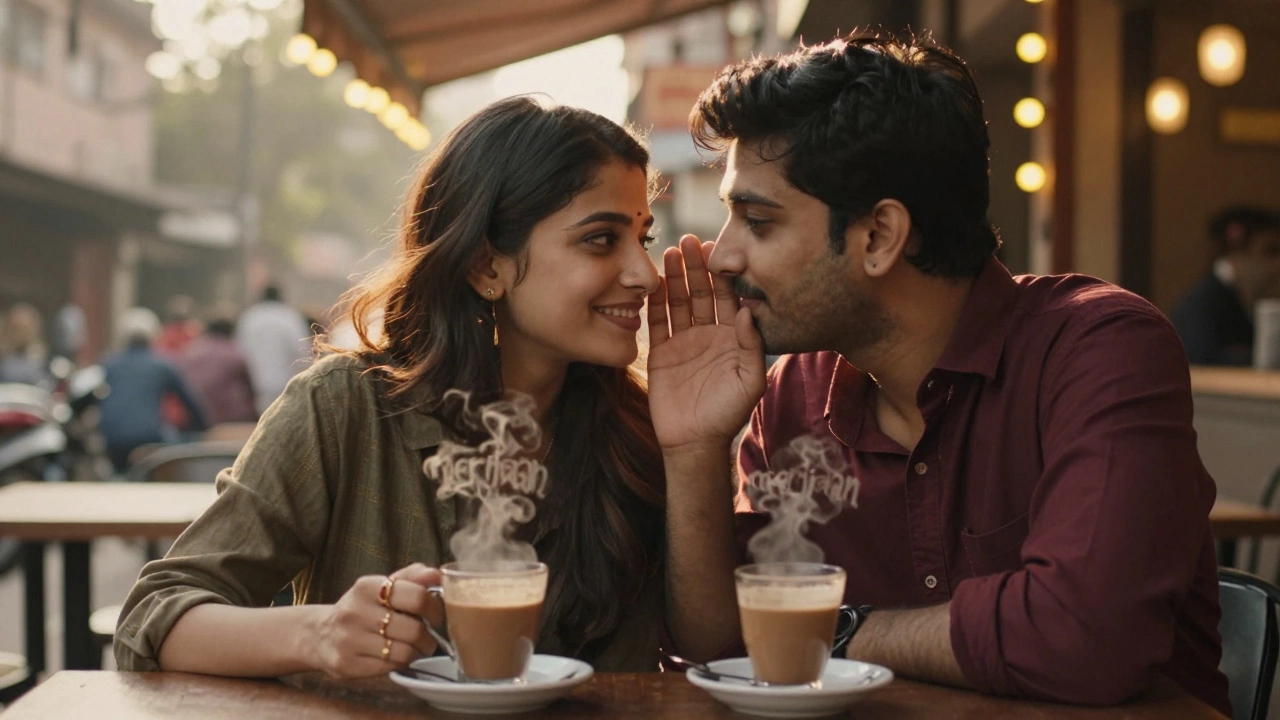
When you hear someone say "babe" in a movie or song, it feels warm, casual, intimate. But if you're in India and want to say the same thing to your partner, "babe" doesn’t land the same way. It sounds foreign. Out of place. Like wearing flip-flops to a wedding. So what do people actually say in India when they want to call their partner something sweet? The answer isn’t one word-it’s dozens, depending on where you are, what language you speak, and how old you are.
It’s Not One Language, It’s 22
India doesn’t have one language. It has 22 officially recognized ones, and hundreds more dialects. That means there’s no single Indian word for "babe." Instead, every region has its own flavor of affection. In Mumbai, you might hear "jaan" whispered over chai. In Chennai, it’s "ponnu." In Delhi, "meri jaan" rolls off the tongue like a lullaby. These aren’t translations-they’re cultural expressions. Each one carries history, emotion, and rhythm.For example, "jaan" comes from Persian and means "soul" or "life." When someone says "meri jaan"-"my soul"-it’s not just a term of endearment. It’s a promise. It says, "You’re the reason I breathe." This isn’t poetic fluff. It’s how millions speak every day. A woman in Lucknow might call her partner "jaan-e-man," meaning "soul of my heart." That’s deeper than "babe." It’s a declaration.
South India: Sweetness in Tamil, Telugu, and Malayalam
Head south, and the tone changes. In Tamil, "ponnu" means "gold"-and it’s used exactly like "babe." "Ponnu, ninnu pona kaiyil irukku"-"Babe, I’m stuck in your hand." It’s playful, tender, and deeply rooted in everyday speech. You won’t find this in textbooks. You’ll hear it in auto rickshaws, at street food stalls, in WhatsApp voice notes.In Telugu, "chitti" is common. It literally means "little sister," but in romantic contexts, it becomes a soft, affectionate nickname. "Chitti, nenu oka coffee teesukuntunnanu"-"Babe, I’m getting us coffee." It’s not about age. It’s about closeness. In Kerala, "kutty" (meaning "little one") is used across genders. A man might call his wife "kutty"-and she’ll smile because it feels like home.
North India: Urdu, Hindi, and the Poetry of Love
In North India, love words often come from Urdu poetry. Words like "jaan," "mohabbat," and "ishq" aren’t just slang-they’re part of a centuries-old tradition. Bollywood songs built entire careers on these phrases. Think of Arijit Singh singing "Tere Bina Zindagi Se"-"Without you, life is nothing." That’s not a lyric. That’s how people talk."Dil" (heart) is another favorite. "Mera dil"-"my heart"-is used the same way English speakers say "baby." "Dil tu hi hai"-"You’re my heart"-is a common text message. And then there’s "janu," a shortened, cuter version of "jaan." It’s what Gen Z uses now. A 22-year-old in Jaipur texts her boyfriend: "Janu, kal kya plan hai?"-"Babe, what’s the plan tomorrow?"
East India: Bengali’s Gentle Whisper
In West Bengal, affection is quiet. "Priti" means "love," but it’s rarely used as a direct term. Instead, "bhalobasha" (love) becomes the foundation. People say "amar bhalobasha"-"my love"-but more often, they use "baba" (daddy) or "ma" (mom) as playful nicknames. A guy might call his girlfriend "ma" just to tease her. She’ll slap his arm and laugh. It’s not about gender roles. It’s about intimacy built through familiarity."Jaan" is also used here, but with a softer tone. "Jaan, tomar kotha ta shune korechi"-"Babe, I heard your words." It’s not loud. It’s not flashy. It’s the kind of love that lingers in the silence between sentences.
What About English? Is "Babe" Used at All?
Yes-but only in cities. In Bangalore, Delhi, or Pune, you’ll hear young couples say "babe," "sweetie," or "honey." Especially among urban professionals, expats, or those influenced by Western media. But even then, it’s usually mixed with local terms. "Babe, jaan, let’s go for dinner"-that’s the real hybrid.It’s not that "babe" is wrong. It’s just not native. Using it alone feels like trying to dance in sneakers at a classical concert. It doesn’t break the rules, but it doesn’t fit the rhythm either. People who use "babe" in India often pair it with a Hindi or regional word to ground it. "Babe, meri jaan"-that’s the sound of modern Indian love.
Why Does This Matter?
Calling someone "babe" isn’t just about words. It’s about belonging. When you use the right term in the right context, you’re saying: "I see you. I know your culture. I’m not just borrowing your love-I’m learning it."A Canadian friend of mine once tried to surprise her Indian boyfriend by texting him "babe" every day for a week. He smiled, but didn’t reply. Later, he told her: "I love you. But when you say "babe," it feels like you’re talking to someone else. Say "meri jaan." That’s my name for you."
That’s the truth. Love in India isn’t about global words. It’s about local heartbeats. Each term carries a different weight. "Ponnu" is warm like sunlight. "Jaan" is deep like a lullaby. "Chitti" is playful like a childhood game. "Kutty" is cozy like a blanket.
Which Term Should You Use?
If you’re dating someone from India, don’t guess. Ask. Say: "What do you like to be called?" Listen. Then use it. Don’t force "babe" because it feels familiar. Learn their word. Say it slowly. Let it sit in the air between you.And if you’re Indian and want to express love in a new way? Try mixing. "Babe, meri jaan". "Sweetie, amar bhalobasha". It’s not cultural appropriation. It’s cultural blending. Love doesn’t need borders.
There’s no single way to say "babe" in India. But there are hundreds of ways to say "I love you." And every one of them is beautiful.
Is "babe" understood in India?
Yes, but mostly in cities and among younger people influenced by Western media. It’s not native, so using it alone can feel out of place. Most Indians use local terms like "jaan," "ponnu," or "chitti" instead. Mixing "babe" with an Indian term (like "babe, meri jaan") sounds more natural.
What’s the most common term of endearment in India?
"Jaan" is probably the most widely used across North and Central India. It comes from Persian and means "soul" or "life." "Meri jaan" (my soul) is a classic phrase you’ll hear in homes, on the street, and in songs. In South India, "ponnu" (Tamil) and "kutty" (Malayalam) are equally common.
Do Indians use "sweetheart" or "honey"?
Sometimes, especially in urban areas or among couples who grew up watching American shows. But it’s rare in everyday speech. Most people prefer words rooted in their own language. "Honey" might be used jokingly or ironically. "Sweetheart" is mostly heard in romantic songs, not real conversations.
Can I use "babe" with my Indian partner?
You can-but only if they’re comfortable with it. Many Indians will appreciate the effort, especially if you pair it with a local term. Saying "babe, jaan" or "babe, my little one" blends both worlds. But if you use "babe" alone, they might feel like you’re not connecting with their culture. Ask first. Listen. Then speak.
Are there gender-specific terms in India?
Some are, some aren’t. "Chitti" (Telugu) and "kutty" (Malayalam) are often used for women but can be used for men too. "Jaan" is gender-neutral. "Baba" (Bengali) is usually for women, while "ma" is sometimes used for men playfully. The key is context-not gender. What matters is how the person feels when they hear it.