
Festival Holiday Checker
Check Festival Holiday Status
Official Public Holiday
State Holiday
Not an Official Holiday
India doesn’t just celebrate festivals-it lives them. Every street, village, and city turns into a stage for color, music, prayer, and feasting. But when someone asks, how many official festivals are there in India?, the answer isn’t as simple as counting holidays on a calendar. There are three levels: national, state, and religious. And while the government recognizes only a handful as nationwide public holidays, the real number of festivals you’ll encounter across the country runs into the hundreds.
India’s Three National Festivals
The Government of India officially declares only three festivals as national public holidays, meaning all government offices, banks, and schools close across the country:
- Republic Day (January 26) - Commemorates the day India’s Constitution came into effect in 1950.
- Independence Day (August 15) - Marks the end of British rule in 1947.
- Gandhi Jayanti (October 2) - Honors Mahatma Gandhi’s birthday and is also recognized globally as the International Day of Non-Violence.
These are the only three festivals you’ll find on every state’s holiday list. No exceptions. Even in places like Nagaland or Mizoram, where Christianity dominates, these three days are still observed as public holidays.
State-Level Festivals: The Real Diversity
What makes India’s festival calendar so rich isn’t the national holidays-it’s the state-level ones. Each of India’s 28 states and 8 union territories has its own list of official holidays. These are tied to local history, dominant religions, harvest cycles, or regional heroes.
For example:
- In Tamil Nadu, Pongal (January 14-17) is a four-day harvest festival celebrated with bull-taming contests, colorful kolam designs, and sweet rice dishes. It’s a gazetted holiday.
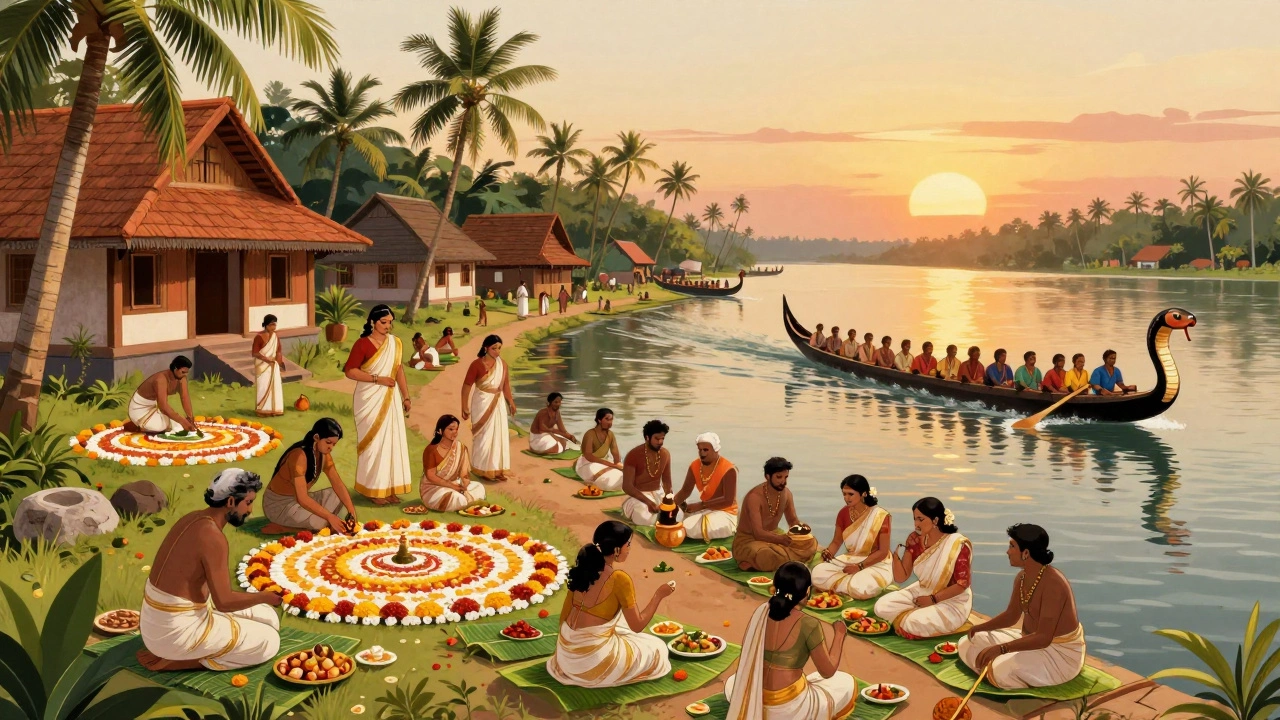
- Onam in Kerala (August-September) is a 10-day festival marking the mythical return of King Mahabali. It’s a state holiday with boat races, floral carpets, and grand feasts.
- Bihu in Assam (April, January, October) has three versions, but Bohag Bihu in April is the biggest and officially recognized.
- In Punjab, Lohri (January 13) is a winter harvest festival celebrated with bonfires and sugarcane. It’s a public holiday there.
- Ganesh Chaturthi is a state holiday in Maharashtra, where it’s celebrated with massive public installations of Lord Ganesha idols.
Some states have holidays for events that don’t exist elsewhere. In Goa, Shigmo is a spring festival with parades and folk dances, and it’s an official holiday. In West Bengal, Durga Puja is not just a religious event-it’s a state-wide shutdown, with schools, offices, and even traffic halted for days.
Religious Festivals: The Unofficial Count
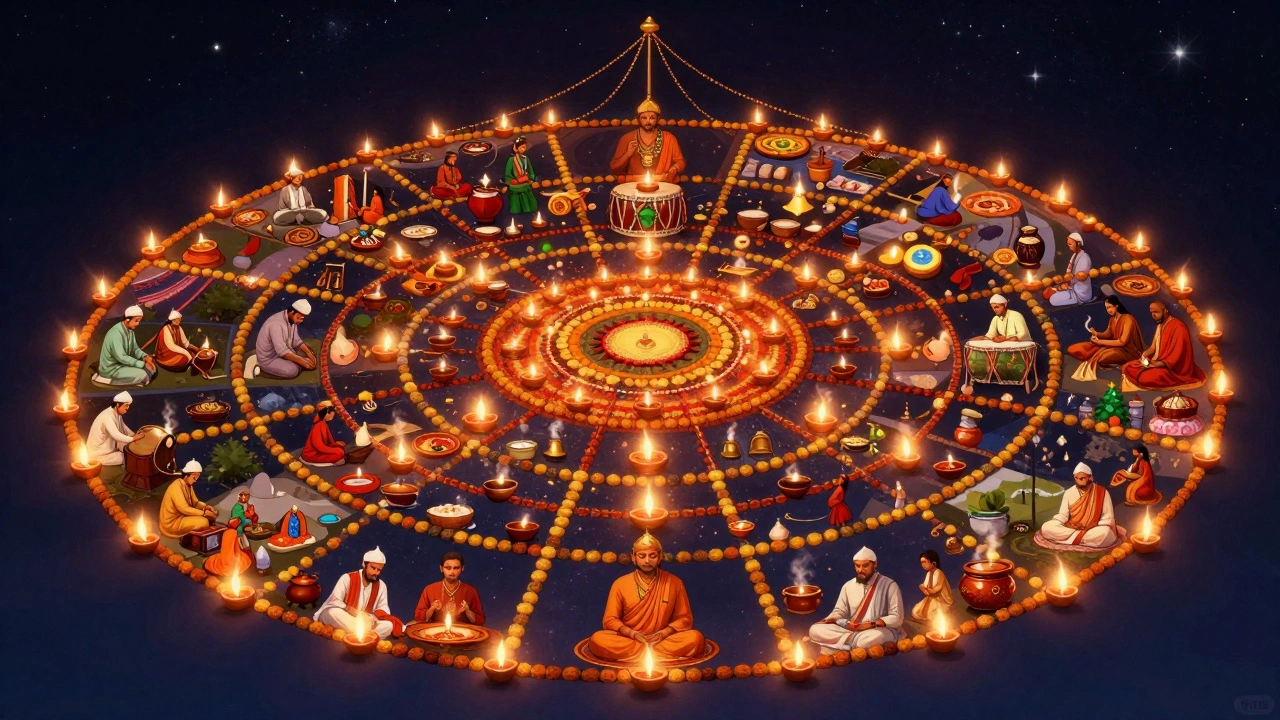
If you’re asking how many festivals Indians actually celebrate, the number jumps to over 500. That’s because religious communities observe dozens of festivals each year, many of which are not declared public holidays but are still widely observed.
Here’s a snapshot of major religious festivals:
- Hinduism: Diwali, Holi, Navratri, Raksha Bandhan, Janmashtami, Maha Shivaratri, Karva Chauth, and dozens of regional ones like Gudi Padwa (Maharashtra), Ugadi (Karnataka and Andhra), and Puthandu (Tamil Nadu).
- Islam: Eid al-Fitr, Eid al-Adha, Muharram, Milad un-Nabi (Prophet Muhammad’s birthday).
- Sikhism: Guru Nanak Jayanti, Vaisakhi, Bandi Chhor Divas.
- Christianity: Christmas, Good Friday, Easter Sunday, and Feast of St. Francis Xavier in Goa.
- Buddhism: Buddha Purnima (Vesak), celebrated in Sarnath and Bodh Gaya.
- Jainism: Mahavir Jayanti, Paryushana, and Diwali (which Jains celebrate as the day Lord Mahavira attained nirvana).
Some of these, like Eid al-Fitr and Guru Nanak Jayanti, are national holidays in certain states but not all. Others, like Paryushana for Jains, are only recognized in states with large Jain populations like Gujarat and Rajasthan.
Why the Confusion? The Legal vs Cultural Divide
Many people assume that because Diwali or Eid is celebrated nationwide, they must be official holidays everywhere. That’s not true. The central government only mandates three. The rest are decided by state governments based on local demographics and traditions.
For example, Diwali is a public holiday in most northern and western states, but in states like Kerala or Tamil Nadu, where Hindu populations are smaller or other festivals take precedence, it’s not always a government holiday-even though homes are lit up, businesses close, and families gather just like everywhere else.
This is why you’ll see a Hindu family in Bengal celebrating Durga Puja as a major holiday, while a Muslim family in Lucknow observes Eid al-Fitr as their biggest day, and a Christian family in Shillong celebrates Christmas with equal fervor. All of them are part of India’s festival mosaic.
How Many Festivals Are Officially Recognized?
So, how many official festivals are there in India? Here’s the breakdown:
- 3 national public holidays (Republic Day, Independence Day, Gandhi Jayanti)
- Over 50 state-level public holidays (varies by state, with most having 10-20 each)
- 500+ religious and cultural festivals observed by communities nationwide
If you count only government-declared holidays, the total number of official festivals across all states and union territories is around 100-120 per year. But if you’re asking how many festivals Indians celebrate, the number is closer to 500 or more.
What About Corporate Holidays?
Many private companies, especially in big cities, give employees extra days off during major festivals like Diwali, Eid, or Christmas-even if it’s not a government holiday. This isn’t required by law, but it’s common practice to respect cultural diversity in the workplace.
In fact, some multinational firms in Bangalore or Hyderabad now offer employees a choice of two religious holidays from a list of six, letting them pick the ones most meaningful to their family traditions.
Final Answer: It Depends on What You Mean by ‘Official’
If you’re looking at the law, there are only three nationwide official festivals. But if you’re looking at the culture, India has more than 500 festivals that shape daily life, food, dress, music, and community bonds. The real magic isn’t in the number-it’s in how each one carries the soul of a region, a community, a generation.
So next time someone asks you how many festivals India has, don’t just give a number. Tell them about the oil lamps lit in a Kerala home during Onam, the dhol beats in a Punjabi village during Lohri, or the silence in a Jain temple during Paryushana. That’s when you understand: India doesn’t have festivals. Festivals have India.
Are Diwali and Eid national holidays in all Indian states?
No. While Diwali and Eid are widely celebrated across India, they are not official public holidays in every state. Diwali is a holiday in most northern and western states, but not always in southern states like Tamil Nadu or Kerala. Eid al-Fitr is a public holiday in states with large Muslim populations like Jammu & Kashmir, Uttar Pradesh, and West Bengal, but not always in others. Only Republic Day, Independence Day, and Gandhi Jayanti are mandatory nationwide.
How many public holidays does a typical Indian state have?
Most Indian states have between 10 and 20 public holidays per year. This includes the three national holidays, plus 7-17 state-specific holidays tied to local festivals, historical events, or religious observances. For example, Maharashtra has 19 official holidays, while Goa has 16, mostly due to its mix of Hindu, Christian, and Portuguese heritage.
Is Christmas a public holiday in all of India?
Yes. Christmas (December 25) is a public holiday in every state and union territory of India. Even in states with very small Christian populations, it’s recognized as a national observance due to its cultural significance and historical presence since colonial times. Schools, banks, and government offices close nationwide.
Why is Gandhi Jayanti a national holiday?
Gandhi Jayanti is a national holiday because Mahatma Gandhi led India’s non-violent independence movement and remains a global symbol of peace. The United Nations also recognizes October 2 as the International Day of Non-Violence. His legacy transcends religion and region, making his birthday a unifying day for the entire country.
Can I take a day off for a festival that’s not officially recognized?
Yes, but only if your employer allows it. If your festival isn’t a government holiday, you’ll need to use your paid leave or request time off. Many companies, especially in diverse cities, let employees take days off for major religious events like Holi, Eid, or Pongal-even if it’s not a public holiday-because they value cultural inclusion.
What to Do Next
If you’re planning a trip to India and want to experience its festivals, time your visit around regional celebrations. Go to Gujarat for Rann Utsav in winter, Kerala for Onam in August, or Varanasi for Dev Deepawali in November. Each one offers a different rhythm, flavor, and feeling.
And if you’re living outside India-like in Toronto, London, or Sydney-you’ll find Indian communities celebrating these same festivals with the same passion. You don’t need to be in India to feel its heartbeat. You just need to show up.