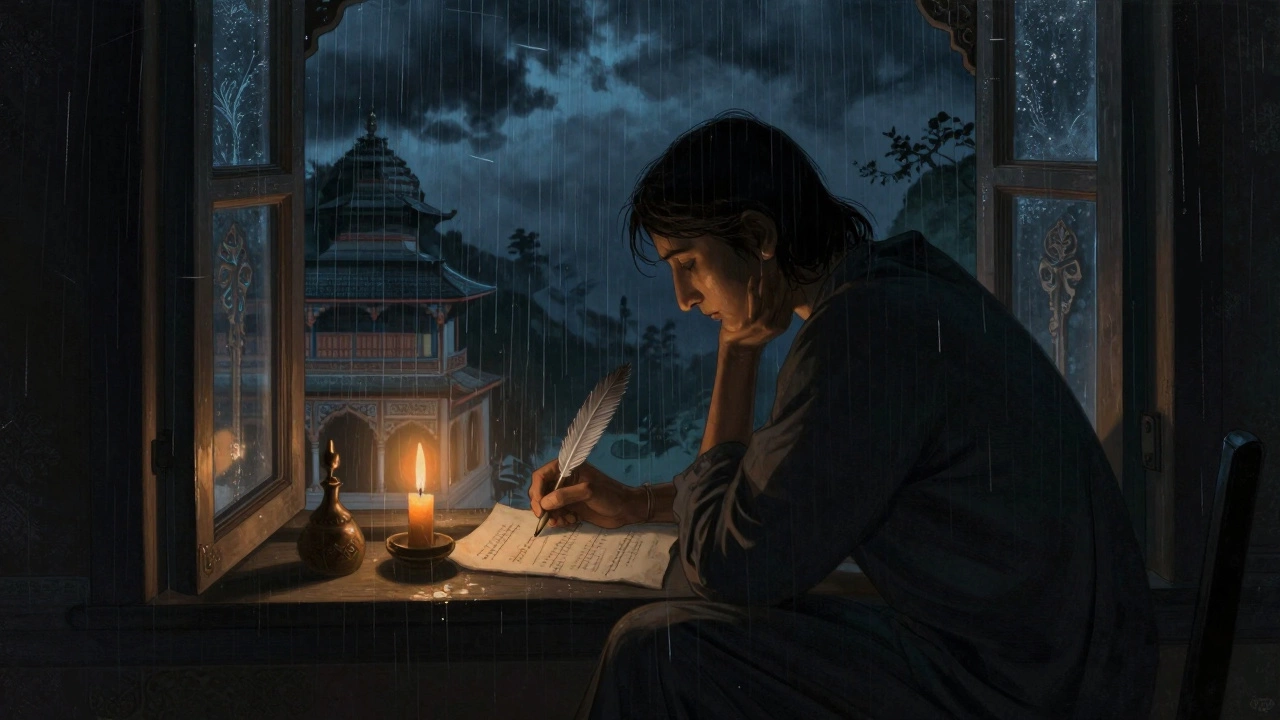
Have you ever stared at a blank page, trying to find the right words to start a poem about loss? In sad poetry India is a rich tradition of expressing grief, longing, and melancholy through structured verse, often rooted in classical forms like ghazals and shayari. The way you begin these poems matters more than you might think. Your opening line sets the tone for everything that follows. It tells the reader whether they are walking into a quiet room of reflection or a storm of emotion.
When we talk about how to greet someone in this context, we aren't talking about saying "Hello" or "Namaste." We are talking about how to address the subject of your pain. Are you speaking to a lost lover? To death itself? To the memory of a childhood home? The greeting in sad Indian poetry is an invitation. It pulls the reader into your world before you even explain why you are hurting.
The Art of Addressing the Absent
In many Western traditions, a poem might start with a direct statement. But in Indian literary tradition places high value on indirectness, metaphor, and respectful distance when discussing sensitive topics. When writing about sadness, especially loss, you rarely shout at the sky. You whisper to the void. This creates a sense of intimacy. It makes the reader feel like they are overhearing a private conversation.
Consider the concept of Mohabbat (love) turning into Gham (sorrow). In a classic ghazal, the poet often addresses the beloved not by name, but by their effect on him. He might say, "Oh mirror of my soul," or "You who broke my heart." This is a form of greeting. It acknowledges the presence of the other person, even if they are gone. It establishes a relationship between the speaker and the subject immediately.
- Address the memory: Instead of saying "I miss you," try "Oh echo of your laughter."
- Address the feeling: Start with "Dear sorrow," treating the emotion as a guest in your home.
- Address the object: Speak to the letter you never sent or the chair where they used to sit.
This technique works because it personifies the abstract. It gives your sadness a face. When you greet the memory instead of the person, you avoid the cliché of direct complaint. You create art.
Traditional Forms and Their Openings
To write authentic sad poetry India relies on established structures like the Ghazal, Nazm, and Kavita, each with specific rules for beginning a verse. Understanding these forms helps you choose the right greeting. Each form has a different rhythm and expectation from the audience.
| Poetic Form | Typical Opening Style | Emotional Tone |
|---|---|---|
| Ghazal | Metaphorical address to the beloved or nature | Resigned, romantic, deep sorrow |
| Nazm | Direct narrative or descriptive scene setting | Realistic, social, personal grief |
| Kavita | Free-flowing, often starting with a question or image | Varied, intimate, raw |
If you are writing a Ghazal, your first couplet (the Matla) must set the rhyme scheme. Your greeting here should be elegant. Use words like Yaar (friend/lover) or Dil (heart). For example, "O heart, why do you beat so loudly in silence?" This greets the internal self rather than an external person. It is a powerful way to start a poem about loneliness.
In contrast, a Nazm might start with a description of rain. "The rain falls on the empty balcony." This is a visual greeting. It invites the reader to look at the scene before feeling the emotion. It is less formal than a Ghazal but equally effective for modern themes of sadness.
Using Nature as a Messenger
In Indian poetic imagery connects human emotions directly to natural elements like monsoon rains, wilting flowers, and migrating birds. Nature is never just background; it is a participant. When you want to greet your subject indirectly, use nature as your messenger.
Think about the monsoon season. In India, rain is often associated with both life and tears. A common trope in sad poetry is the idea that the clouds are crying for the earth, just as the poet cries for their lost love. You can start your poem by addressing the cloud. "Oh heavy cloud, carry my tears to her window." This is a greeting to the element that mirrors your pain. It feels organic and deeply cultural.
Another powerful image is the Chandni (moonlight). The moon is a silent witness to countless nights of insomnia caused by heartbreak. Greeting the moon is a classic move. "Dear moon, you saw us last night; tell me, did she look up too?" This creates a bridge between the past and the present. It uses the celestial body as a confidant. Readers understand this reference instantly because it is woven into the fabric of our stories.

The Power of Silence and Pauses
Sometimes, the best way to greet a topic is with silence. In minimalist poetry employs strategic pauses and brevity to amplify the weight of unspoken grief. You don't always need a grand opening. A single word can be enough. "Gone." Or "Silence." These are greetings to the absence. They force the reader to stop and think. Why is the poem starting with nothing?
This approach works well in modern free verse. If you are writing about the death of a parent, starting with "The phone stopped ringing" is more impactful than "Oh, I am so sad my father died." The former is a factual greeting to the reality of loss. The latter is a statement of emotion. Facts often hurt more than feelings in poetry because they are undeniable.
- Start with a sensory detail: "The smell of old books remains."
- Use a fragment: "Just... empty."
- Ask a rhetorical question: "Where did the time go?"
These openings are subtle. They respect the reader's intelligence. They assume the reader knows what loss feels like and doesn't need it spelled out in dramatic terms. This restraint is a hallmark of mature writing.
Cultural Nuances in Addressing Grief
It is important to understand that Indian expressions of grief are often communal and ritualistic, influencing how individual poets frame their personal sorrow within a collective context. Unlike some Western cultures that emphasize individual isolation in grief, Indian culture often involves family and community support. However, poetry allows for private expression. How do you balance this?
You can address the community indirectly. Mention the prayers being said, the incense burning, the guests leaving. "The guests have left, and the silence returns." This greets the aftermath of communal mourning. It highlights the loneliness that comes after the support fades. It is a very specific type of sadness that resonates with anyone who has experienced a funeral or a major loss in India.
Avoid overly dramatic language if you want authenticity. Phrases like "My world ended" are common but overused. Try to be more specific. "The kitchen is too quiet without your voice." This is a greeting to the domestic space. It grounds the poem in reality. It shows rather than tells. Specificity breeds empathy.
Practical Tips for Writing Your Opening Lines
So, how should you actually write that first line? Here are some practical steps to help you craft a compelling greeting for your sad poetry.
- Identify your core emotion: Is it anger? Regret? Nostalgia? Let this guide your tone.
- Choose your addressee: Who or what are you speaking to? The dead? The living? Yourself?
- Select a metaphor: Use nature, objects, or time to represent your feeling.
- Keep it simple: Avoid complex vocabulary in the first line. Clarity is key.
- Test it aloud: Does it flow? Does it sound natural? If it feels forced, rewrite it.
Remember, the goal is not to shock the reader but to connect with them. A good greeting in sad poetry is like a hand on the shoulder. It says, "I know you are there. I see your pain." It builds trust. Once you have that trust, you can take the reader deeper into your story.
Common Mistakes to Avoid
Many writers fall into traps when starting their poems. One common error is being too vague. "Life is hard" is not a greeting; it is a platitude. Another mistake is being too melodramatic. Excessive use of words like "eternal," "infinite," or "destroyed" can make the poem feel insincere. Ground your language in reality.
Also, avoid mixing metaphors. Don't greet the moon and then suddenly talk about a train station unless there is a clear connection. Consistency in imagery helps the reader stay immersed. If you start with nature, keep the nature theme going. If you start with a cityscape, stick to urban images.
Finally, don't ignore the rhythm. Even in free verse, there is a musicality to language. Read your opening line several times. Does it have a beat? Does it pause naturally? Rhythm affects how the emotion is received. A slow, dragging rhythm can enhance sadness. A choppy, irregular rhythm can convey anxiety or confusion.
Conclusion: Finding Your Voice
Writing sad poetry is a journey of self-discovery. The way you greet your subject reveals who you are as a writer. Whether you choose the elegance of a Ghazal, the realism of a Nazm, or the freedom of free verse, make sure your opening line is honest. Be vulnerable. Be specific. And above all, be human. Your readers are looking for connection, not perfection. Give them a door to walk through, and they will follow you into the depths of your heart.
What is the best way to start a sad poem in Hindi?
In Hindi poetry, starting with a metaphor involving nature (like rain or moon) or addressing the heart ('Dil') directly is very effective. Using words like 'Yaad' (memory) or 'Fasana' (story) also sets a melancholic tone immediately.
Can I use English words in Indian sad poetry?
Yes, Hinglish (Hindi-English mix) is very popular in modern Indian poetry, especially on social media platforms like Instagram. It allows for a wider reach and can express contemporary feelings more accurately for younger audiences.
How do I make my sad poetry relatable?
Focus on universal experiences like missing a call, seeing an old photo, or hearing a familiar song. Use specific details rather than general statements. Relatability comes from shared human moments, not just big emotions.
What is the difference between Ghazal and Nazm in terms of greeting?
A Ghazal usually starts with a metaphorical address to a beloved or abstract concept, following strict rhyme schemes. A Nazm is more flexible and often starts with a narrative scene or direct observation, allowing for a more conversational opening.
Should I mention the cause of my sadness in the first line?
It depends on the style. In direct poetry, yes, clarity is good. In lyrical or metaphorical poetry, it is better to hint at the cause through imagery. Revealing too much too soon can reduce the emotional impact and mystery of the poem.