
Diversity Reality Check: USA vs India
Explore how different definitions of "diversity" yield different winners. Select a metric below to see the comparison.
USA The Melting Pot
INDIA The Thali
You walk into a coffee shop in San Francisco. The barista speaks three languages. The person next to you is from Seoul, the one behind them from Lagos, and the music playing is a remix of Reggaeton and Bollywood. It feels like the whole world crammed into one room. Then you fly to Mumbai or Delhi. You hear twenty different dialects before you even order your chai. The food changes every ten kilometers. The festivals don't just happen; they erupt. So, who really wins the diversity contest? Is America the ultimate melting pot where everyone blends into a new American identity, or is India a mosaic where distinct cultures coexist without losing their original shape? The answer isn't as simple as counting flags.
The Numbers Game: Who Has More?
If you look at raw statistics, America often gets the credit for being the most diverse nation on Earth. And sure, the United States has immigrants from nearly every country in the UN. But let's be real about what "diversity" actually means. In the US, diversity is largely measured by race and ethnicity within a relatively homogeneous cultural framework. You have Black, White, Hispanic, Asian, Native American. These are broad categories. Inside those categories, there is variation, but the underlying cultural operating system-English language, Western individualism, Protestant work ethic roots-is pretty consistent across the board.
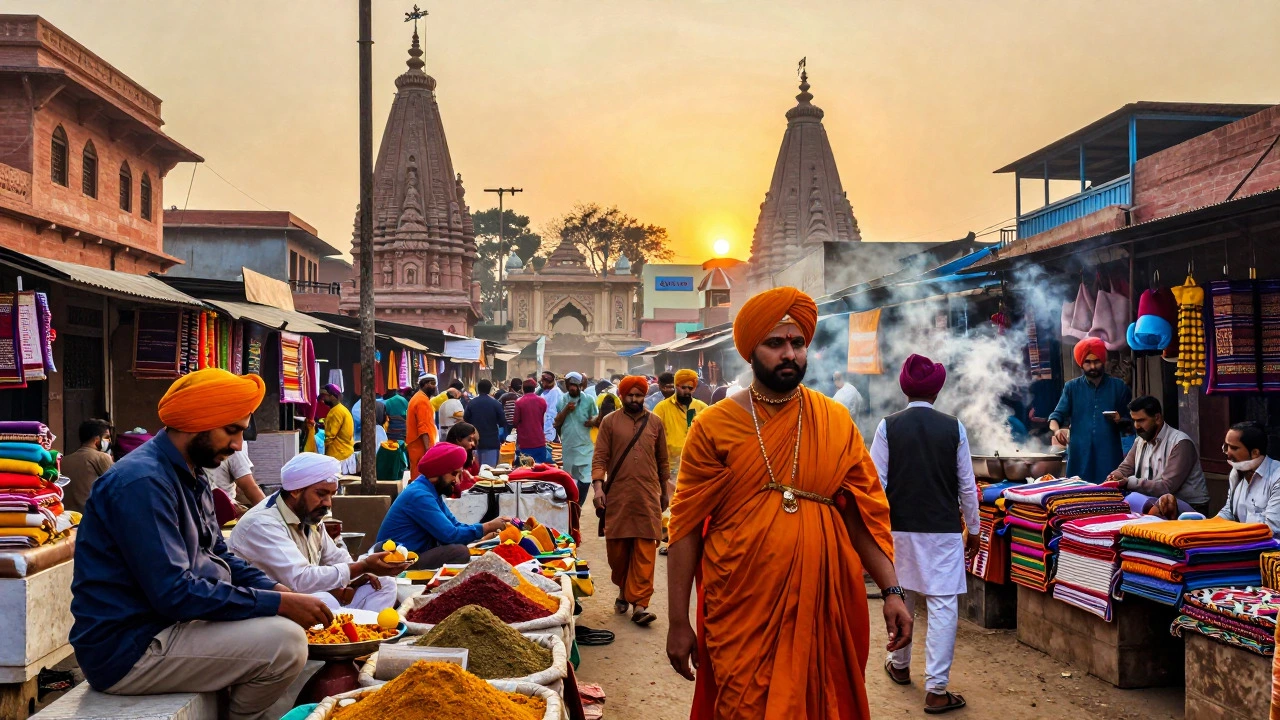
Now look at India. India doesn't just have different races; it has different civilizations living side-by-side. There are over 1.4 billion people. The government recognizes 22 official languages, but there are actually hundreds of major dialects. If you travel from Kashmir in the north to Kerala in the south, you aren't just changing scenery. You are changing the script people read, the gods they pray to, the clothes they wear, and the very definition of family. In America, a Texan and a New Yorker might disagree on politics, but they both celebrate Thanksgiving and worry about the same mortgage rates. In India, a Punjabi Sikh and a Tamil Brahmin might share nothing but citizenship. Their daily rituals, dietary laws, and social structures are fundamentally different worlds.
Linguistic Chaos vs. Linguistic Monoculture
Language is the biggest tell. In the US, English is the undisputed king. Sure, Spanish is widely spoken, especially in the Southwest. Mandarin and Tagalog have strong communities. But if you want to get ahead, you learn English. It’s the glue. This creates a certain level of uniformity. You can drive from Maine to California and communicate easily.
In India, there is no single national language that everyone uses natively. Hindi is spoken by about 44% of the population. That leaves more than half of Indians speaking something else entirely. Bengali, Telugu, Marathi, Tamil, Urdu-these aren't just accents; they are complete literary and cultural universes. A person from West Bengal might not understand a conversation happening in Karnataka. This linguistic fragmentation forces a kind of cognitive diversity that is rare elsewhere. People code-switch constantly. They think in one language, dream in another, and work in a third. For a traveler interested in cultural tourism india, this means every state offers a completely different auditory and intellectual experience.
| Metric | United States | India |
|---|---|---|
| Official Languages | None (De facto: English) | 22 Official + Hundreds of Dialects |
| Religious Composition | ~63% Christian, ~29% Unaffiliated | ~80% Hindu, ~14% Muslim, ~2% Christian, ~2% Sikh/Buddhist/Jain |
| Caste/Social Structure | Racial/Economic Class | Caste System + Tribal Groups + Regional Identities |
| Festivals per Year | National holidays + Religious observances | Thousands of regional/local festivals |
| Culinary Variety | Regional variations (BBQ, Cajun, etc.) | Distinct cuisines per state with unique ingredients/spices |
The Melting Pot vs. The Thali
We love using metaphors. America is the "Melting Pot." The idea is that everyone throws their culture into a big cauldron, stirs it up, and comes out as a new, hybrid American. It’s a beautiful ideal, though historically messy. In reality, many immigrant communities hold onto their traditions fiercely, creating enclaves like Little Italy or Chinatown. But the pressure to assimilate is real. To succeed, you generally adopt American norms.
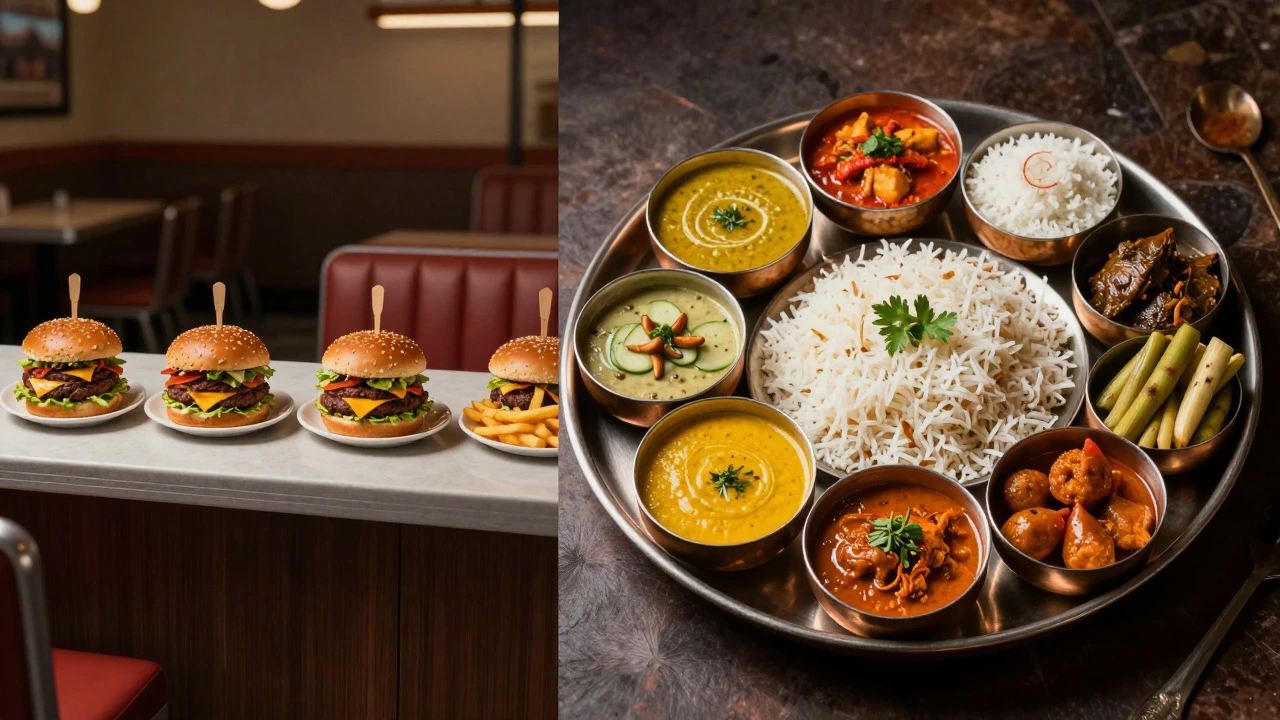
India is better described as a "Thali." Think of a traditional Indian meal served on a large platter. You have rice, dal, several vegetable curries, a salad, papad, and yogurt. Each item sits in its own small bowl. They don’t mix together into a mush. They retain their distinct flavor, texture, and color. You eat them separately or combine them on your plate as you choose. This is how Indian society works. Communities maintain their distinct identities while sharing the same political space. A Muslim family in Hyderabad lives a life vastly different from a Hindu family in Varanasi, yet both are equally "Indian." This preservation of difference is a deeper form of diversity than mere representation.
Religion: The Invisible Thread
Religion drives much of the diversity in both countries, but differently. In the US, religion is increasingly private. Many Americans identify as "spiritual but not religious," or simply unaffiliated. While churches, mosques, and synagogues exist, public life is largely secular. Diversity here is often about tolerance of belief rather than active practice.
In India, religion is public, loud, and visual. It dictates what you eat, when you sleep, and how you greet your neighbors. You see temples, mosques, gurdwaras, and churches on the same street corner. But it goes deeper. Within Hinduism alone, there are thousands of sects. Vaishnavites worship Vishnu; Shaivites worship Shiva. Some eat meat; others are strict vegetarians. Some wear white; others wear bright colors. This internal diversity within a single faith makes the landscape incredibly complex. For a visitor, this means you’re never bored. Every neighborhood has a different spiritual vibe, influencing the architecture, the sounds, and even the smell of the air.
Food: The Ultimate Proof
If you want to test diversity, eat. Try to find a truly "American" dish. You’ll struggle. Burgers came from Germany. Pizza came from Italy. Tacos came from Mexico. Chicken Tikka Masala was invented in Britain. American cuisine is a collage of imports. It’s delicious, yes, but it lacks a singular, deep-rooted indigenous culinary tradition that spans the continent uniformly.
Indian food is arguably the most diverse in the world because it is tied so tightly to geography and climate. Go to Punjab, and you get rich, buttery gravies and wheat-based breads. Go to Kerala, and you get coconut, fish, and rice. Go to Gujarat, and you get sweet-sour vegetarian dishes. Go to Northeast India, and you get fermented bamboo shoots and pork, which tastes nothing like anything else in the subcontinent. In the US, a burger in Chicago is similar to a burger in Atlanta. In India, a dosa in Bangalore is fundamentally different from a dosa in Chennai. The spice profiles, the fermentation techniques, and the serving styles change drastically. This isn't just variety; it's distinct culinary civilizations.
Why This Matters for Travelers
So, why should you care? If you’re planning a trip, understanding this distinction changes how you explore. If you visit America expecting cultural shock, you might be disappointed. You’ll find friendly people and great landscapes, but the cultural baseline is familiar if you come from the West. You’re seeing diversity in faces, not necessarily in ways of life.
When you visit India, prepare for sensory overload. You aren't just seeing different people; you are stepping into different time zones of history and tradition. One village practices ancient tribal rituals untouched by modernity. The next town over is a tech hub. The contrast is jarring and exhilarating. This is why cultural tourism india is so rewarding. You aren't looking for a unified national identity. You are looking for the millions of micro-identities that make up the nation. You want to see the clash and the harmony of these distinct groups. It’s chaotic, yes. But it’s also vibrant in a way that structured diversity rarely achieves.
America offers diversity through inclusion. It says, "Come here, bring your flag, and we will all stand under the Stars and Stripes." India offers diversity through coexistence. It says, "Bring your flag, plant it in your yard, and we will all live on the same street, arguing and celebrating together." Neither is better. They are just different models of human organization. But if you define diversity by the sheer number of distinct, unassimilated cultural units living together, India takes the crown hands down.
Frequently Asked Questions
Is India more linguistically diverse than the USA?
Yes, significantly. While the USA has many immigrant languages, English is the dominant lingua franca for business, education, and media. India has 22 officially recognized languages and hundreds of dialects, with no single language spoken natively by the majority. This creates a fragmented linguistic landscape where communication barriers exist between states, unlike the relative ease of cross-state communication in the US.
Does America have less cultural diversity because it is a younger country?
Partly, but not entirely. America's youth contributes to a lack of deep-rooted, localized traditions compared to India. However, the main reason is the "melting pot" model of assimilation, which encourages blending into a mainstream American culture. India's older, stratified social structures allow distinct cultures to persist side-by-side without merging, preserving higher levels of visible cultural difference.
Which country has more religious diversity?
Both have high religious diversity, but India's is more integrated into daily public life. The USA is predominantly Christian with growing secularism, while India is home to all major world religions plus numerous indigenous sects. Crucially, in India, religious differences dictate diet, dress, and daily rituals visibly, whereas in the US, religious expression is often private, making the diversity less apparent in everyday street-level interactions.
Is food diversity greater in India or America?
In terms of indigenous, regionally distinct cuisines, India is far more diverse. American food culture is largely an aggregation of imported traditions (Italian, Mexican, Chinese) adapted to local tastes. Indian cuisine varies radically by state due to climate, agriculture, and religious dietary laws, resulting in distinct culinary systems (e.g., North Indian vs. South Indian vs. Northeastern) that do not overlap significantly.
Can tourists experience true cultural diversity in America?
Yes, but it requires visiting specific urban enclaves or rural areas with strong heritage communities (like Amish country or Native American reservations). Generally, the American experience is homogenized by mass media and corporate culture. In contrast, traveling between Indian states offers immediate, profound shifts in language, food, and custom, providing a more intense and continuous experience of cultural diversity.