
India's Soft Power & Wisdom Explorer
Filter by Theme
Select categories to see how Indian wisdom addresses different aspects of life.
When people ask if India is a world superpower, they usually think of missiles, GDP charts, or military budgets. But there is another kind of power that doesn’t show up in balance sheets. It’s the quiet pull of ancient wisdom, the rhythm of yoga studios from Toronto to Tokyo, and the way millions seek guidance through spiritual quotes from India. This isn’t just about religion; it’s about a deep cultural current that shapes how billions live, breathe, and find meaning.
The Myth of the Traditional Superpower
We often define "superpower" by hard metrics: nuclear arsenals, global troop deployments, or dominance in international finance. By those standards, India is rising fast but still chasing the top tier. However, this definition leaves out a massive piece of the puzzle. Real influence isn't just about what you can destroy; it's about what you can inspire. Think about it-how many countries have their core philosophy adopted as a daily lifestyle practice worldwide? Not many.
India’s true leverage lies in its soft power. This is the ability to attract and co-opt rather than coerce. While other nations compete for market share, India exports peace, mindfulness, and resilience. The global wellness industry, valued at over $1.5 trillion, owes much of its foundation to Indian concepts like Ayurveda and meditation. You don’t need an army when your ideas are helping people sleep better, stress less, and live longer.
Spiritual Quotes as Cultural Currency
If you scroll through social media, you’ll see them everywhere: short, powerful lines attributed to figures like Mahatma Gandhi, Buddha, or Rumi (though Rumi was Persian, his works are deeply intertwined with Sufi traditions in India). These aren’t just pretty words; they are tools for navigation in a chaotic world.
Consider this quote often shared online: "The future depends on what you do today." - Gandhi. It sounds simple, but it carries the weight of a nation’s struggle for independence and non-violence. When a CEO in Silicon Valley posts this, or a student in London uses it to stay focused, India’s intellectual heritage is working in real-time. These inspirational quotes act as micro-doses of Indian philosophy, reaching people who might never read the Bhagavad Gita or study Sanskrit.
This dissemination creates a unique bond. People don’t just consume these quotes; they internalize them. They become part of personal identities. In a fragmented digital age, having a shared source of moral clarity is a rare commodity. India provides that clarity without demanding conversion or allegiance. That is a subtle form of supremacy.
The Global Yoga Phenomenon
You can’t talk about India’s spiritual export without mentioning yoga. It has moved far beyond the mat. What started as a physical discipline rooted in Hinduism and Jain practices is now a multi-billion dollar global habit. The United Nations declared June 21 as International Day of Yoga, recognizing its universal appeal.
But here’s the kicker: most practitioners outside India focus on the physical benefits-flexibility, strength, weight loss. They rarely dive into the philosophical roots involving karma, dharma, and moksha. Yet, even in this diluted form, the origin story remains intact. Every time someone says "Namaste," they are acknowledging the divine spark within others, a concept central to Indian spirituality. This linguistic adoption is a testament to cultural penetration.
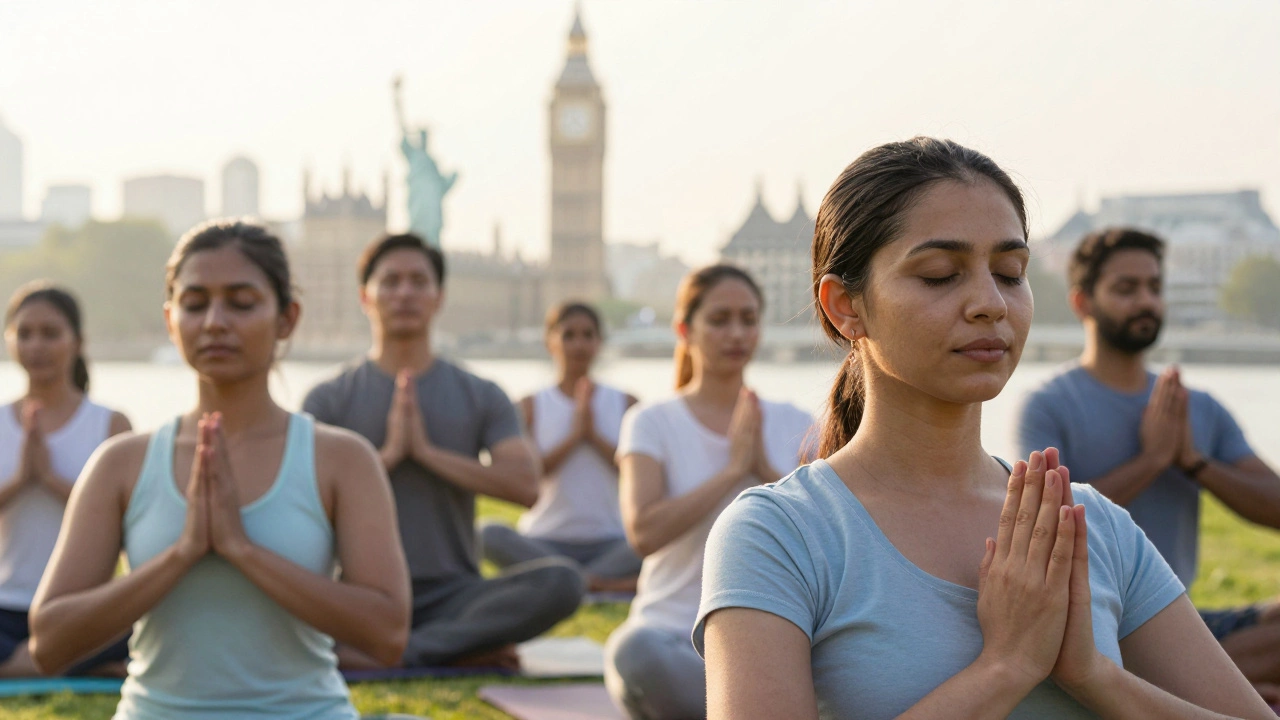
In cities like New York, London, and Sydney, yoga studios are neighborhood staples. They serve as community hubs where diverse groups come together. This social cohesion, driven by an Indian practice, strengthens India’s brand as a place of harmony and holistic well-being. It’s not just exercise; it’s a lifestyle endorsement.
Digital Pilgrimage and Modern Connectivity
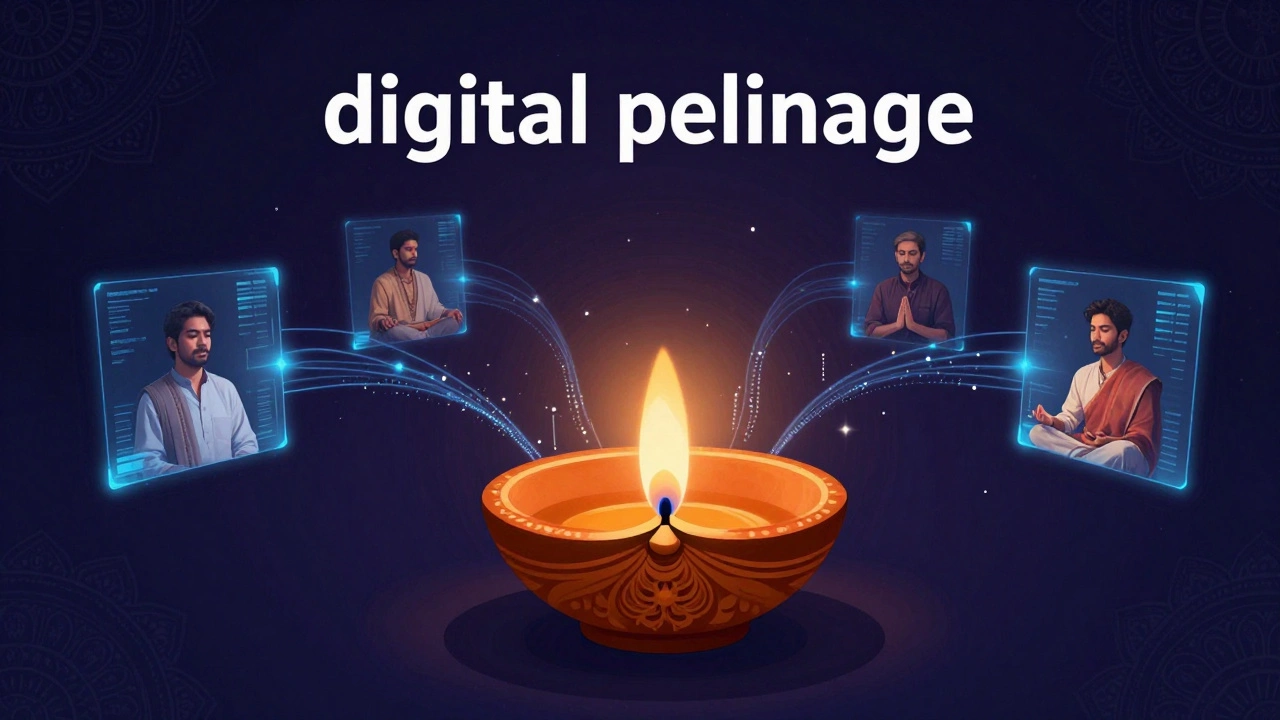
Technology has amplified this spiritual reach. During the pandemic, virtual darshan (viewing of deities) became common. Millions tuned in to watch rituals at the Kedarnath Temple or the Tirupati Balaji Temple from their living rooms. This wasn’t just for devotees; it was curiosity-driven engagement.
Social media platforms are flooded with reels and shorts featuring chants, mantras, and temple aesthetics. The sound of a conch shell or the visual of a diya (oil lamp) triggers a sense of calm in viewers globally. This digital footprint keeps India relevant in the daily lives of young people who may not have direct ties to the subcontinent. It’s a constant, low-friction exposure to Indian culture.
Moreover, apps dedicated to meditation, such as Headspace or Calm, often incorporate techniques derived from Vedic traditions. Even when branded as secular mindfulness, the lineage is clear. This commercialization ensures that Indian spiritual methods remain accessible, affordable, and trendy.
Challenges to Spiritual Supremacy
Of course, it’s not all seamless. There are challenges. Commercialization sometimes strips away the depth, turning sacred practices into commodities. Critics argue that the West appropriates these symbols without understanding their context. For instance, wearing a tilak or using Sanskrit terms without knowing their meanings can feel superficial.
Additionally, political tensions and stereotypes can overshadow these positive cultural exports. News headlines often focus on conflict or economic disparities, which can dilute the image of India as a land of peace. Yet, despite these noise factors, the underlying interest in spiritual wisdom persists. People crave authenticity, and they perceive Indian traditions as deeply authentic.
There is also the issue of accessibility. Deep philosophical texts are dense and require translation and interpretation. While quotes are easy to share, full understanding requires effort. Bridging this gap between surface-level consumption and deep learning is crucial for sustaining long-term influence.
Why This Matters for You
So, why should you care if India is a spiritual superpower? Because it affects your daily life. Whether you’re seeking motivation, dealing with stress, or looking for connection, Indian wisdom offers proven frameworks. It’s not about adopting a new religion; it’s about accessing a vast library of human experience.
When you use a quote from Swami Vivekananda to boost your confidence, or practice pranayama to calm your nerves, you are participating in this global exchange. You are benefiting from centuries of introspection and refinement. Recognizing this adds depth to your own journey.
It also encourages respect for diversity. Understanding that different cultures contribute unique strengths to the human collective fosters empathy. India’s contribution is profound: it teaches us that power isn’t just about force; it’s about inner strength and compassion.
| Metric Type | Examples | Global Reach | Sustainability |
|---|---|---|---|
| Hard Power | Military, Economy, Tech | Transactional | Dependent on resources |
| Soft Power | Yoga, Philosophy, Cuisine | Emotional/Cultural | Self-reinforcing |
Finding Your Own Path Through Wisdom
You don’t need to be an expert to benefit from this wealth. Start small. Pick one quote that resonates with you. Maybe it’s about patience, courage, or love. Reflect on it. How does it apply to your current situation? Write it down. Share it with a friend. See how it shifts your perspective.
Explore beyond the quotes. Read a bit about the context. Who said it? Why? What were they facing? This deeper dive enriches your understanding and connects you to a broader narrative. It transforms passive consumption into active learning.
Finally, practice openness. Be willing to learn from traditions different from your own. India’s spiritual legacy invites everyone to participate. It’s a gift that keeps giving, as long as we remain curious and respectful.
Is India considered a superpower in 2026?
Economically and militarily, India is a major global player but not yet a dominant superpower like the US or China. However, in terms of cultural and spiritual influence, India exerts significant soft power globally through yoga, philosophy, and spiritual teachings.
What are some famous spiritual quotes from India?
Popular quotes include Mahatma Gandhi's "Be the change you wish to see in the world," Buddha's "Peace comes from within," and Swami Vivekananda's "Arise, awake, and stop not till the goal is reached." These emphasize self-improvement and inner peace.
How does yoga contribute to India's global influence?
Yoga is practiced by millions worldwide, promoting health and mindfulness. Its global popularity enhances India's image as a center of wellness and spiritual wisdom, creating positive associations and cultural connections.
Can I use Indian spiritual quotes for personal growth?
Absolutely. These quotes offer timeless advice on handling stress, building resilience, and finding purpose. Integrating them into your daily routine can provide motivation and clarity, regardless of your background.
What is the difference between hard power and soft power?
Hard power relies on coercion, such as military force or economic sanctions. Soft power relies on attraction, using culture, values, and policies to influence others voluntarily. India excels in soft power through its spiritual and cultural exports.