
Indian Community Finder
Find Indian-friendly resources in your US city
Enter your city name to discover local Indian community resources
How It Works
This tool shows you exactly what Indian community resources exist in your target city based on the article's research.
- Indian grocery stores
- Temples and gurdwaras
- Cultural events and festivals
When you think about moving to the USA, one question keeps popping up: Is the USA Indian friendly? It’s not just about visas or job offers-it’s about whether you’ll feel at home. Can you find your favorite masala chai? Will people understand your holidays? Are you welcomed, or just tolerated? The answer isn’t simple, but it’s real-and it’s shaped by millions of Indians who’ve made the leap.
It Starts with the Numbers
Over 4.8 million people of Indian origin live in the United States as of 2025. That’s the third-largest immigrant group after Mexicans and Chinese. You’ll find Indian communities in cities like Jersey City, Cupertino, Houston, and Seattle-not as isolated enclaves, but as active, growing parts of the local fabric. In fact, in some suburbs near Chicago and the Bay Area, over 20% of residents identify as Indian American. This isn’t a small niche. It’s a major demographic shift.
That means grocery stores stock atta, turmeric, and paneer. Indian restaurants aren’t rare anymore-they’re everywhere, from food trucks to fine dining. Diwali is now a public holiday in cities like New York and San Francisco. Schools teach about Holi and Eid alongside Thanksgiving. The visibility alone tells you something: Indians aren’t just surviving here-they’re shaping the culture.
Workplace Culture: Respect, But Not Always Understanding
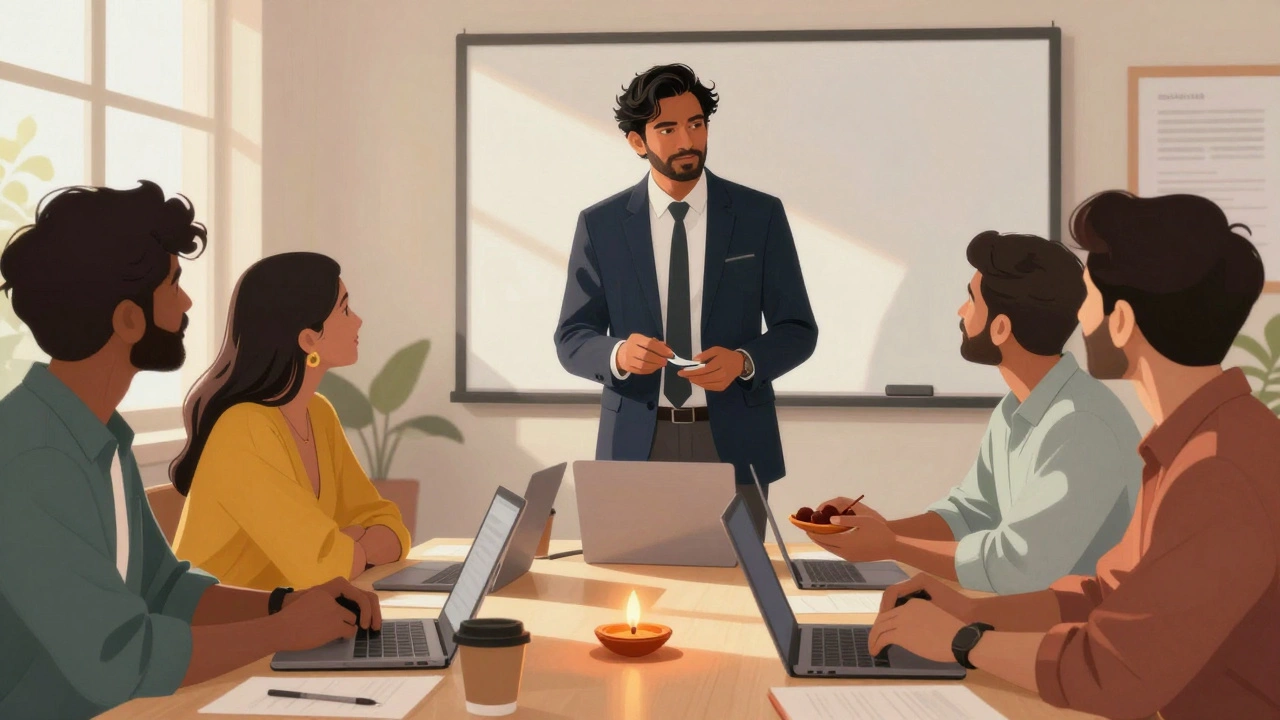
Most Indians who move to the USA for work say the professional environment is fair, even welcoming. Tech companies like Google, Microsoft, and Apple have large Indian teams. Managers often value work ethic, technical skills, and problem-solving-traits many Indians bring in spades.
But culture gaps still exist. A lot of Indians come from hierarchical, relationship-driven workplaces. In the US, feedback is direct. Silence doesn’t mean agreement-it means you’re thinking. Meetings are fast, decisions are quick, and hierarchy is flatter. If you’re used to waiting for approval from three levels up, it can feel chaotic.
There’s also the unspoken pressure to assimilate. Some Indians report being told to “sound more American” in meetings, or to drop their accent. That’s not always racism-it’s often ignorance. But it still stings. The good news? Younger generations of Indian Americans are pushing back. They’re proud of their roots, and they’re teaching workplaces how to be more inclusive.
Everyday Life: The Little Things That Matter
Is the USA Indian friendly? Look at the small moments.
- Can you get fresh coriander in the supermarket? Yes, in most major cities.
- Do your kids have classmates who know what a thali is? More than ever.
- Can you find a temple or gurdwara within 30 minutes? In most metro areas, yes.
- Do people ask about your festival? Sometimes. But more often, they just say, “Oh, that’s cool,” and move on.
There’s no grand welcome parade. No one throws a party when you arrive. But over time, you notice people learning. A coworker brings you a sweet during Diwali. Your neighbor asks how to make samosas. Your kid’s teacher lets you bring in traditional clothes for Culture Day. These aren’t big gestures-but they’re real.
Challenges: The Quiet Struggles
Let’s be honest. Not everything is easy.
Some Indians face microaggressions. “Do you eat curry every day?” “Can you do yoga?” “Are you related to that guy on TV?” These aren’t always meant to hurt-but they add up. Then there’s the loneliness. If you don’t have a community nearby, you can feel isolated, even in a city of millions.
Weather is another shocker. If you’re from Mumbai or Chennai, a snowstorm in Ohio can feel like a personal attack. And holidays? If you’re working on Diwali or Holi, you might not get time off. You’ll have to take PTO, or just grin and bear it.
There’s also the pressure to succeed. Many Indian families come to the USA with high expectations. You’re supposed to be an engineer, doctor, or lawyer. If you want to be a writer, artist, or entrepreneur? That can feel like letting the family down. The pressure to “make it” here is real-and heavy.
What Makes It Worth It
Despite the challenges, most Indians who’ve lived in the USA for more than five years say it was worth it. Why?
- Education: Top universities and scholarships are unmatched.
- Opportunity: If you’re skilled, you can climb fast-regardless of your background.
- Freedom: You can speak your mind, change careers, or start over without stigma.
- Community: Indian Americans have built strong networks. There are WhatsApp groups, cultural associations, and even Indian-owned gyms and cafes.
And here’s the quiet truth: many Indians feel more accepted here than they ever did back home. In India, caste, religion, and regional identity can still divide people. In the USA, you’re often judged by what you do, not who your parents were. That freedom is powerful.
Real Stories, Not Stereotypes
Meet Priya, 32, from Bangalore. She moved to Austin for a tech job. Her first year was rough. No one knew what “poha” was. She cried over a packet of ghee that cost $12. But now? She runs a monthly potluck for 50 people. Her kids speak Kannada at home and English at school. Her coworkers ask her to teach them how to make dosas. She says, “I didn’t find a home here. I built one.”
Then there’s Raj, 41, from Lucknow. He came to the USA as a student. His family thought he’d go back. Instead, he became a civil engineer. He got married to a woman from Gujarat. They live in Atlanta. His parents visit every year. He says, “I miss the noise of Mumbai. But I love that here, my daughter can be anything-doctor, astronaut, or chef. No one tells her she can’t.”
These aren’t outliers. They’re the norm.
Is the USA Indian Friendly? The Verdict
Yes, the USA is Indian friendly-but not because it’s perfect. It’s friendly because Indians here have refused to be invisible. They’ve opened restaurants, started festivals, taught school kids about Navratri, and demanded space in the conversation. They’ve turned “What’s your native country?” into “Let me try your mom’s samosas.”
You won’t find a red carpet. But you’ll find a community. You’ll find people who learn your language, your food, your holidays. And over time, you’ll learn theirs too.
If you’re thinking of moving, don’t wait for permission. Don’t wait for it to be easy. Just go. Build your corner. Speak your truth. Bring your spices. And know this: millions before you have done the same. And they didn’t just survive. They thrived.
Are Indians safe in the USA?
Yes, Indians are generally safe in the USA. Violent crime targeting Indians is rare. Most incidents are isolated and not systematic. However, like any immigrant group, Indians can face occasional bias or microaggressions, especially in areas with less diversity. The key is staying informed, connecting with local Indian communities, and knowing your rights. Major cities have strong support networks, and many universities and workplaces have diversity offices ready to help.
Can I practice my religion in the USA?
Absolutely. The USA protects religious freedom under the First Amendment. You’ll find Hindu temples, Sikh gurdwaras, Muslim mosques, and Christian churches in nearly every major city. Many Indian Americans have built their own places of worship. Some temples even offer yoga, language classes, and cultural events. You can wear a bindi, carry a mala, or pray at home without fear of legal consequences. Public spaces are generally respectful of religious practices.
Do Indian kids fit in at American schools?
Most Indian kids adapt well. Many excel academically and are involved in science fairs, robotics clubs, and debate teams. Cultural differences can cause early awkwardness-like being asked why they don’t eat meat or why they celebrate Diwali-but these moments often turn into teachable moments. Schools increasingly celebrate diversity, and many now host cultural weeks where Indian students share food, music, and traditions. The biggest challenge is balancing parental expectations with peer pressure, but with support, most kids find their place.
Is it hard to find Indian food in the USA?
Not anymore. In cities with over 100,000 residents, you’ll almost always find at least one Indian restaurant. Larger metro areas have dozens-North Indian, South Indian, street food, vegan options, even fusion. Grocery stores like Whole Foods, Trader Joe’s, and even Walmart carry Indian staples: basmati rice, spices, lentils, and frozen parathas. Online delivery apps also offer Indian meals. If you’re in a smaller town, you might need to drive an hour or order online, but it’s never impossible.
Will I be able to find a job in the USA as an Indian professional?
Yes, and in fact, Indian professionals are among the most hired immigrant groups in tech, healthcare, and engineering. Companies actively recruit from India because of the strong education system and work ethic. The main hurdle is the visa process-not discrimination. Once you’re in, performance matters more than background. Many Indians rise to leadership roles in Fortune 500 companies. Networking helps, but skills and experience open the door. Don’t let fear stop you-your qualifications are valued here.