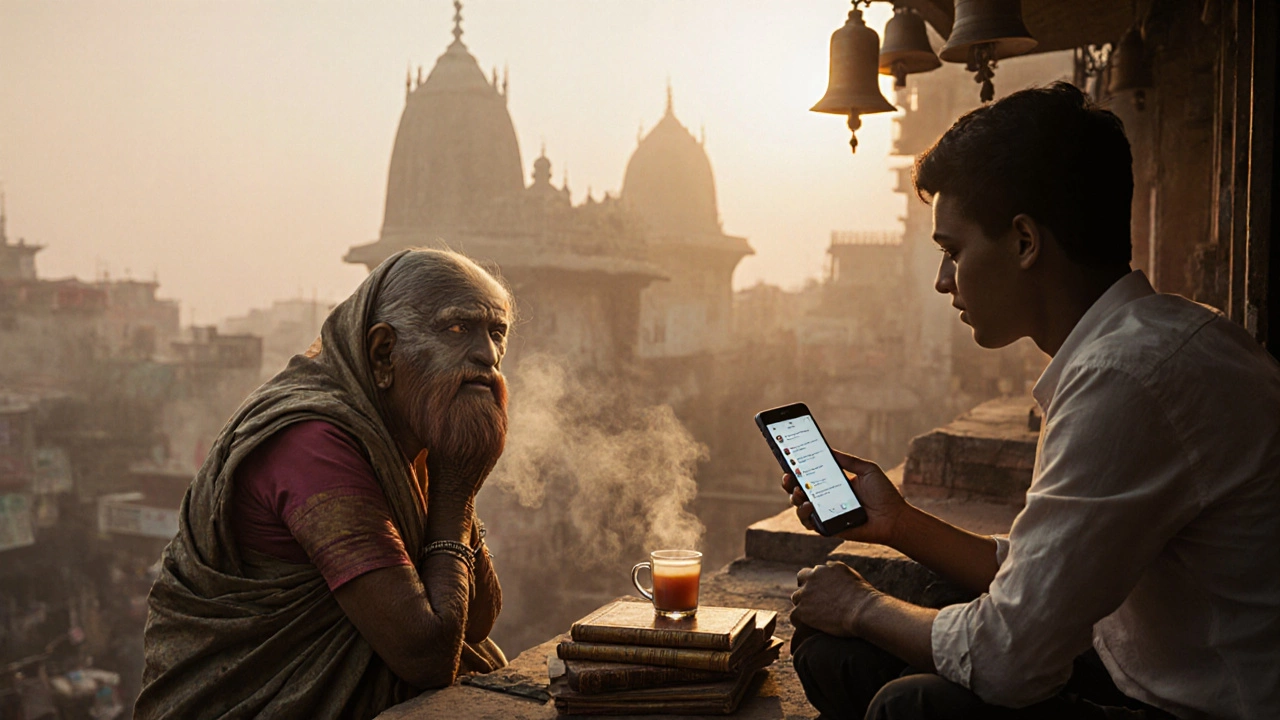
Cultural India: Traditions, Spirituality, and Daily Life
When you think of cultural India, the living blend of ancient rituals, spiritual depth, and everyday resilience that defines millions of lives across the subcontinent. Also known as Indian heritage, it’s not just festivals or temples—it’s the quiet morning chant in a Varanasi alley, the smell of roti cooking on a village chulha, and the way strangers still greet each other with a folded hand. This isn’t a museum exhibit. It’s alive—in the way a Tamil family lights a deepam for Karthigai, in how a Sikh man ties his turban with pride before heading to work, and in the silence between verses of a poem that moves someone to tears.
Indian spirituality, a way of seeing the divine in the ordinary, not just in prayer but in breath, food, and relationships. Also known as dharma, it doesn’t demand belief—it invites practice. You find it in the Upanishads, yes, but also in a grandmother’s advice to sit still before eating, or in the way a yogi in Rishikesh breathes through pain without flinching. This spirituality isn’t separate from daily life—it’s woven into it. And that’s why quotes from Indian sages still echo in offices in Bangalore and homes in Kerala. It’s not about escaping the world. It’s about living in it with more awareness.
Indian daily life, the rhythm of family meals, shared chai, and unspoken obligations that bind generations. Also known as Indian lifestyle, it’s messy, loud, beautiful, and deeply personal. There’s no single story. In Gujarat, roti is more than food—it’s a symbol of home. In Tamil Nadu, temple bells mark time like alarms. In Bengal, poetry is whispered like a secret between friends. You won’t find one version of India here—you’ll find dozens, each shaped by language, climate, faith, and history. And yet, beneath all that difference, there’s a shared understanding: connection matters more than convenience.
What makes cultural India endure isn’t its monuments, though the Taj Mahal stands tall. It’s not even its ancient texts, though they still guide minds. It’s the way people carry these things—not as relics, but as living habits. The way a child learns to respect elders not because it’s taught, but because it’s felt. The way grief is honored in poetry, not buried under silence. The way diversity isn’t just accepted—it’s celebrated in every color of sari, every flavor of curry, every dialect of love.
What you’ll find below isn’t a list of facts. It’s a collection of real moments—poems that capture silence, quotes that cut through noise, stories that show what life actually looks like in India. From the quiet sadness of a Neruda poem resonating in an Indian bedroom, to the unspoken strength in a mother’s routine, to the pride in wearing a turban or a bindi without explanation—these are the threads that make up cultural India. No grand speeches. Just truth, told plainly, by those who live it.