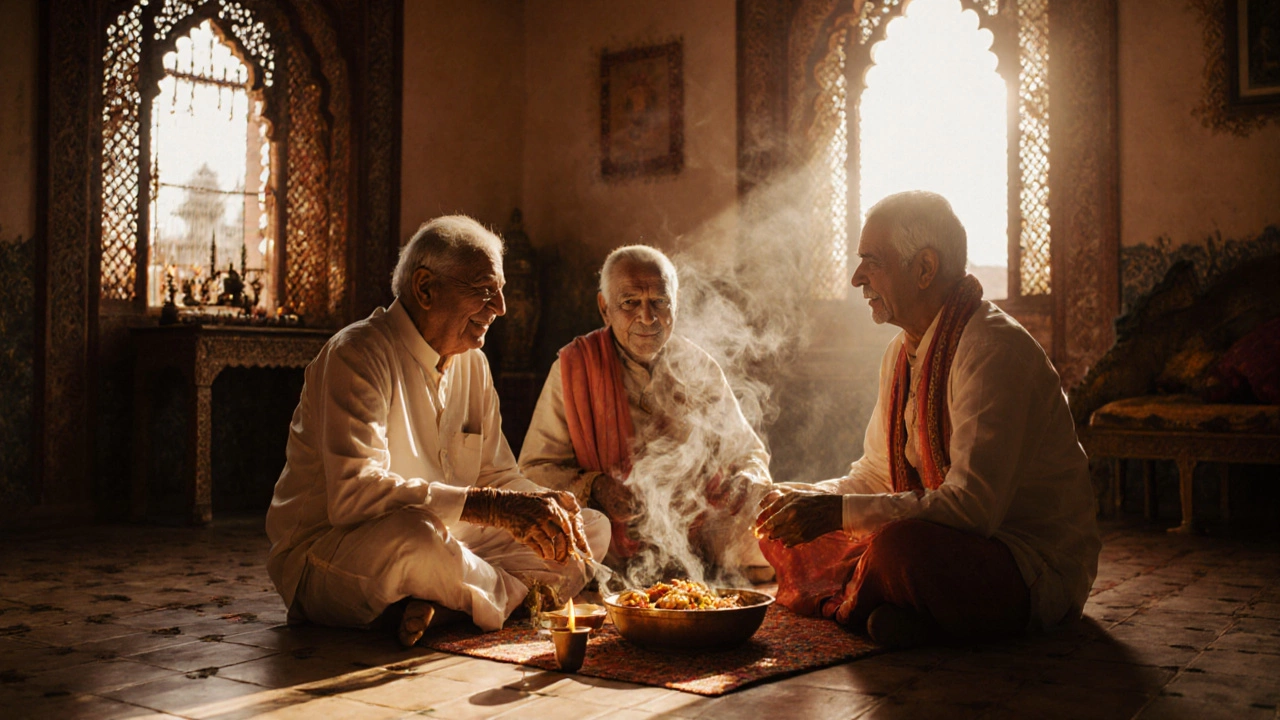
What Is the Way of Life in India? A Real Look at Daily Living
The way of life in India is shaped by family, faith, food, and resilience. It’s not one story-it’s hundreds, woven together across cities, villages, and generations.
When you think of culture in India, the living blend of ancient rituals, regional customs, and spiritual practices that define daily life across millions of homes. Also known as Indian heritage, it’s not something you see only in temples or parades—it’s in the way someone bows before a kitchen altar, how a family eats roti with their hands without thinking, or why silence is valued more than loudness. This isn’t a museum exhibit. It’s alive—in Tamil Nadu’s Pongal dances, in a Sikh man tying his turban before work, in a woman in Varanasi lighting a diya for someone long gone.
Indian spirituality, the quiet, daily practice of finding meaning beyond material success, rooted in texts like the Upanishads and lived through yoga, meditation, and simple acts of surrender. Also known as Indian philosophy, it doesn’t demand you join a religion—it asks you to notice your breath, your grief, your gratitude. That’s why a poem by Neruda about loss hits so hard here: in India, sadness isn’t something to hide. It’s something you hold, like a prayer bead, and let it teach you. This same spirituality shows up in the way people talk about one God—not as a doctrine, but as a feeling that connects a farmer in Gujarat to a monk in Sikkim.
Indian diversity, the coexistence of 22 official languages, hundreds of dialects, dozens of religions, and countless food traditions—all thriving side by side without erasing each other. Also known as cultural pluralism, it’s not just a slogan on a poster. It’s the fact that you can eat spicy dosa in Chennai, wear a hijab in Lucknow, and still share the same bus ride to work. You’ll find this in the way people dress: a sari isn’t just fabric—it’s identity. A turban isn’t just headwear—it’s honor. A simple chapati isn’t just food—it’s unity. These aren’t stereotypes. They’re truths passed down through generations, quietly, without fanfare.
What you’ll find below isn’t a list of facts. It’s a collection of real moments: the emotional truth behind why Indians cry in poetry, not in public. The invention of zero, not as a math symbol, but as a philosophical shift. The quiet resilience in a village kitchen that feeds a whole family, day after day. The spiritual weight of a single greeting passed down for 4,500 years. These aren’t random posts. They’re pieces of a larger picture—each one showing you a different angle of what culture in India really means when you stop looking for the postcard version and start listening to the people who live it.
The way of life in India is shaped by family, faith, food, and resilience. It’s not one story-it’s hundreds, woven together across cities, villages, and generations.