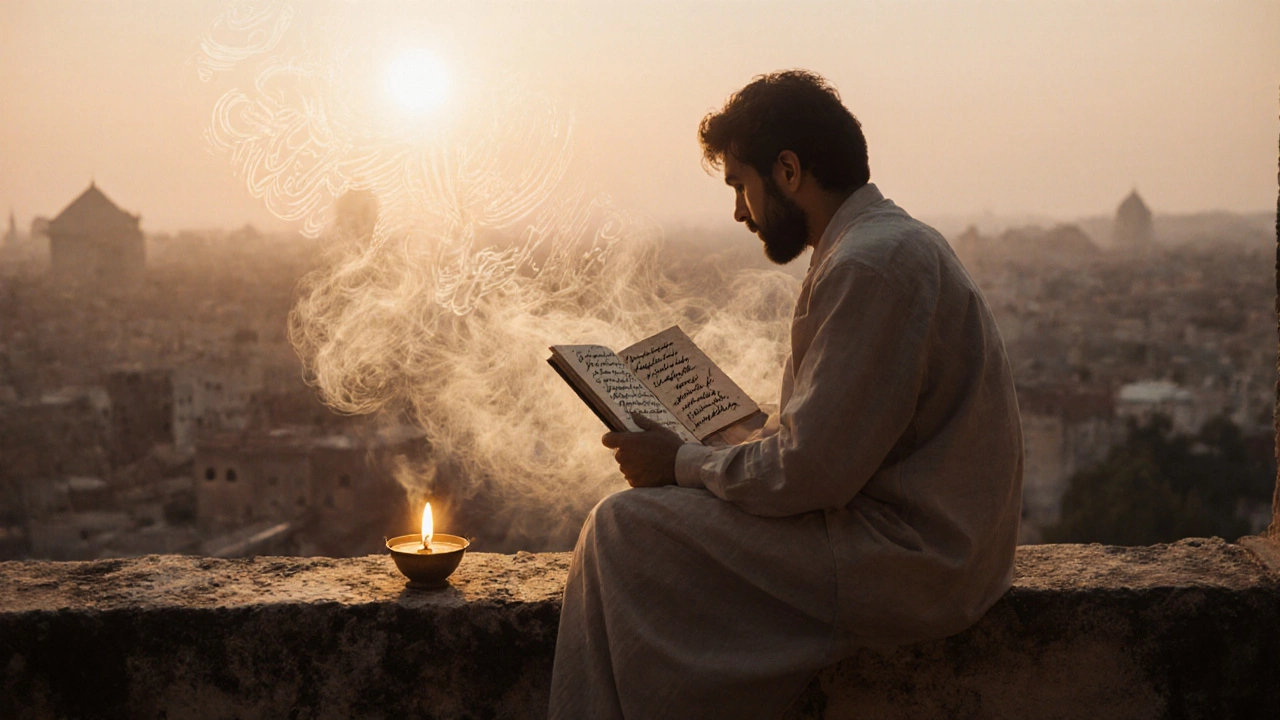
Dard-e-Dil: The Quiet Pain Behind Indian Poetry and Soulful Sadness
When you hear the phrase dard-e-dil, a Persian-derived Urdu term meaning the pain of the heart. Also known as heartache, it doesn’t refer to a broken relationship—it’s the deeper, quieter kind of suffering that lingers after loss, silence, or unspoken longing. This isn’t dramatic crying in the rain. It’s the stillness after a phone call that never comes. It’s the tea left cold on a windowsill. In Indian poetry, especially in Urdu and Hindi traditions, dard-e-dil is the soil where the most powerful verses grow.
This kind of pain doesn’t need loud music or flashy tears. It thrives in restraint. You’ll find it in the pause between lines of Faiz Ahmed Faiz, in the whispered regrets of Ghalib, and in the unspoken grief behind a mother’s smile in a village kitchen. It’s the same emotion that makes a song like "Kabhi Kabhie Mere Dil Mein" linger for decades—not because it’s sad, but because it’s honest. Indian culture often tells you to hide pain, to keep it inside, to not burden others. But poetry? Poetry gives it a voice. That’s why Indian sad poetry, a tradition rooted in emotional honesty and spiritual endurance doesn’t shout. It breathes. And in that breath, people recognize themselves.
Related to this is the idea of silent suffering, a cultural norm where pain is carried alone, not shared. It’s why crying is often seen as weakness, yet poetry becomes the only safe space to release it. You’ll see this in posts that ask, "Is it better to cry or hold it in?"—because in India, holding it in is the norm, and poetry is the rebellion. The same quiet strength that defines India’s resilience also shapes how its people carry heartbreak. You won’t find grand gestures here. You’ll find lines like, "Maine socha tha ke main bhool jaunga," or "Tere bina jeena, maut se kya farq hai?"—simple, raw, and devastating because they’re true.
What makes dard-e-dil different from Western heartbreak? It’s not about blame, or closure, or moving on. It’s about carrying the wound and still showing up. Still making chai. Still smiling at your child. Still writing poems at 3 a.m. That’s why this concept connects so deeply with spiritual quotes from the Upanishads, where pain is not an enemy but a teacher. It’s why someone in Varanasi, someone in Lucknow, and someone in a Mumbai chawl all feel the same ache, even if they speak different languages.
Below, you’ll find posts that explore this pain in different forms—through songs that break hearts without a single drumbeat, through poems that echo across cultures, through the quiet courage it takes to feel deeply in a world that tells you not to. These aren’t just words. They’re lifelines for anyone who’s ever loved, lost, and stayed silent.