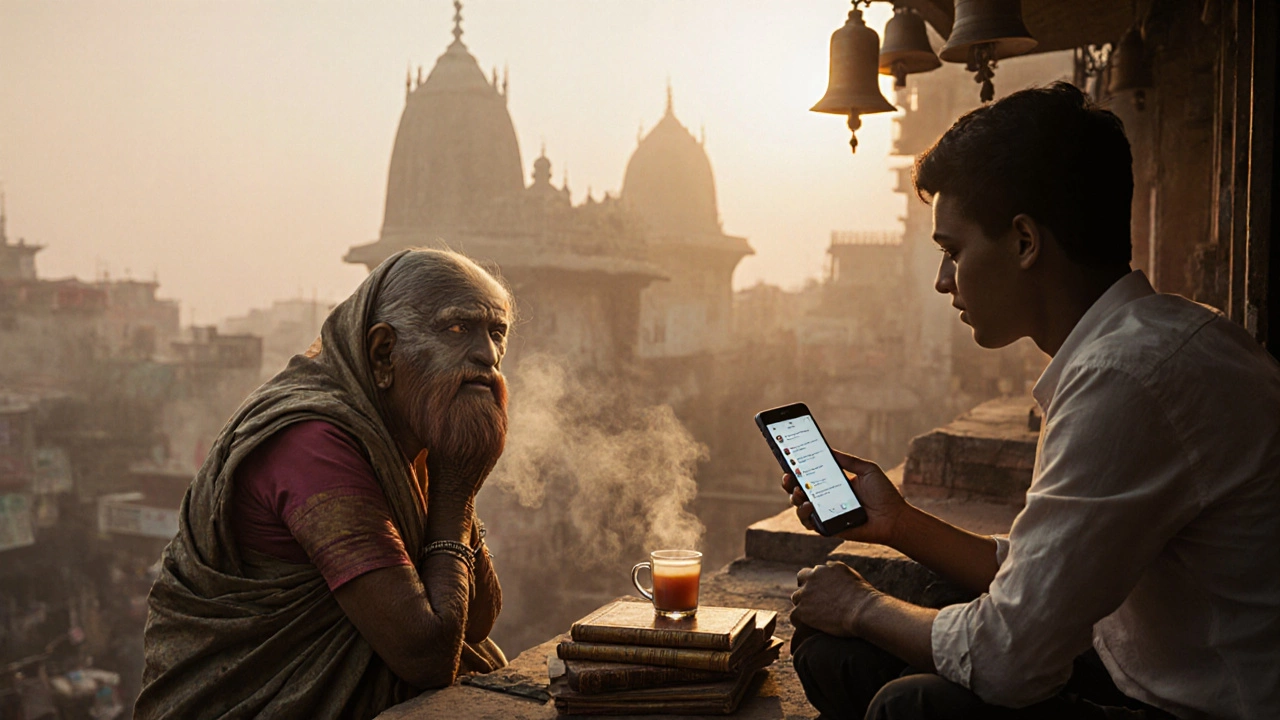
India Meaning: What It Really Stands For Beyond the Map
When we talk about India, a land where ancient wisdom meets modern chaos, and where a single word can hold thousands of meanings. Also known as Bharat, it isn’t defined by borders or GDP—it’s defined by how people breathe, pray, eat, and endure. This isn’t a place you find on a map. It’s something you feel in the quiet before dawn at a Varanasi ghat, in the clatter of a chakki grinding roti in a village kitchen, in the silence after a line of poetry that hits too close to home.
The Indian spirituality, a quiet, unshakable force rooted in texts like the Upanishads and the Bhagavad Gita, where the divine isn’t far away—it’s in the breath, the silence, the space between thoughts isn’t about temples alone. It’s in the way someone lets go of anger without saying a word. It’s in the belief that one God can have a thousand names and still be the same. This isn’t religion as a rulebook. It’s religion as a rhythm. And that rhythm shows up in Indian diversity, the fact that you can eat spicy dosa in the south, buttery roti in the north, and still find the same soul in both. It’s in the turban, the sari, the hijab, the monk’s robe—all worn with pride, not protest. This isn’t tolerance. It’s coexistence baked into daily life.
And then there’s the Indian way of life, a tapestry woven from family dinners, monsoon rains, festival lights, and the quiet courage it takes to keep going when things don’t go right. No single story fits. One person finds peace in yoga; another in a crowded temple; another in the sound of a train at 4 a.m. No one agrees on what India means—but everyone agrees it matters. You don’t need to visit to feel it. You just need to listen—to the poetry, the quotes, the unspoken truths people share when they’re tired of explaining themselves.
What follows isn’t a list of facts. It’s a collection of voices—poets, thinkers, ordinary people—who’ve tried to put India into words. You’ll find quotes that calm the mind, poems that name the pain, and truths about daily life that no travel guide would ever write. Whether you’re searching for the meaning behind a spiritual saying, wondering why roti is more than bread, or trying to understand how a country with so many languages still feels like one home—this is where you start.