India's National Motto: What It Really Means and Why It Matters
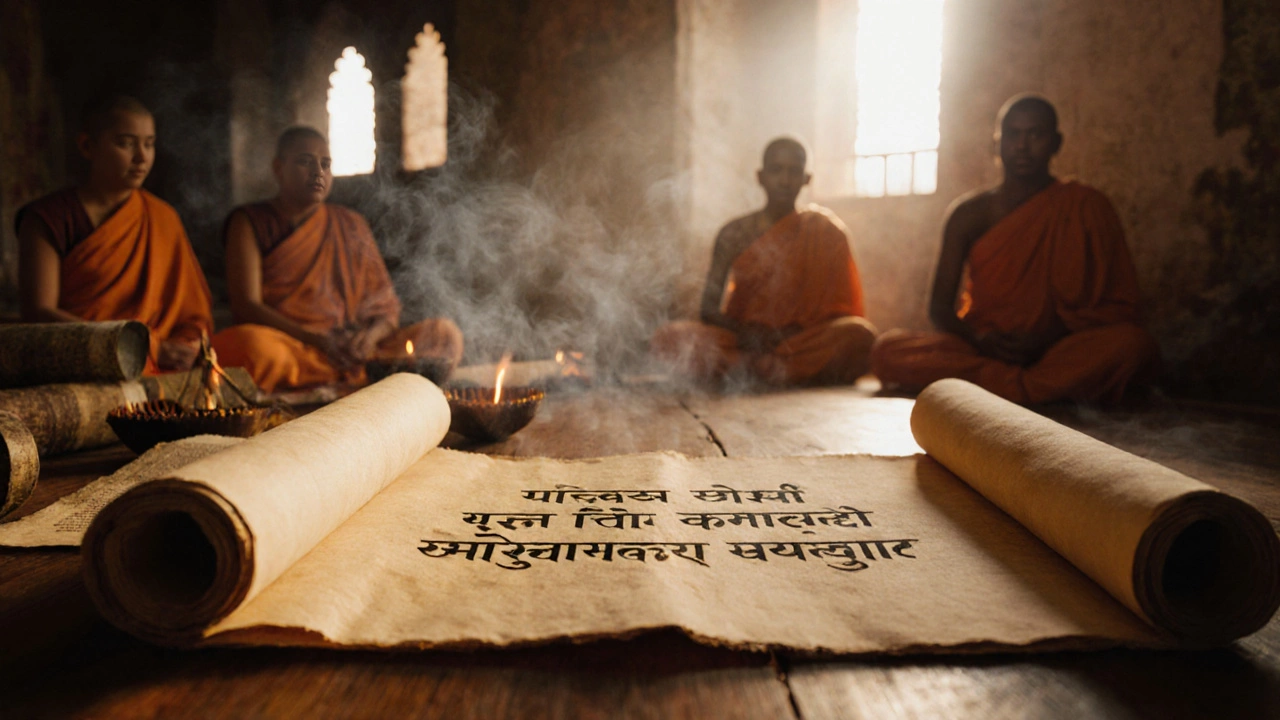
India's national motto, Satyameva Jayate, a Sanskrit phrase meaning 'Truth Alone Triumphs,' drawn from the ancient Mundaka Upanishad. Also known as 'Truth Alone Wins', it’s not a political slogan—it’s a quiet, unshakable belief woven into how millions live, speak, and endure. You won’t hear it shouted in rallies, but you’ll feel it in the silence after a poet finishes a verse about loss, in the farmer who refuses to lie about his crop yield, in the mother who teaches her child honesty before alphabet. This motto isn’t carved in stone for show—it’s lived in small, daily choices.
It connects directly to Indian philosophy, a tradition that values inner truth over external success, rooted in texts like the Bhagavad Gita and Upanishads. Unlike slogans about power or progress, this one asks: Are you real? Are you honest—with others, with yourself? That’s why it echoes in Indian poetry, where broken hearts are called dard-e-dil and silence speaks louder than words. The saddest songs aren’t about loud pain—they’re about holding truth when the world wants you to pretend. The same truth lives in Gandhi’s nonviolence, Tagore’s verses on freedom, and the quiet dignity of a village elder who refuses to bend for a bribe.
This motto doesn’t ask for grand gestures. It asks for consistency. It’s why a quote about resilience becomes more powerful than a political promise. It’s why a simple friendship quote about loyalty hits deeper than a thousand social media likes. In India, truth isn’t a legal term—it’s a spiritual practice. You find it in the way roti is made with clean hands, in how a yogi sits in stillness without chasing applause, in how a poet writes grief without sugarcoating it. It’s not about being perfect. It’s about being real.
What follows isn’t a list of facts. It’s a collection of voices—poets, thinkers, everyday people—who’ve lived this motto in silence, in song, in sorrow, and in strength. You’ll read about broken hearts that speak truth, spiritual quotes that outlast empires, and the quiet courage behind India’s most enduring symbols. This is not history. This is how truth still wins—every day, in ways no headline can capture.