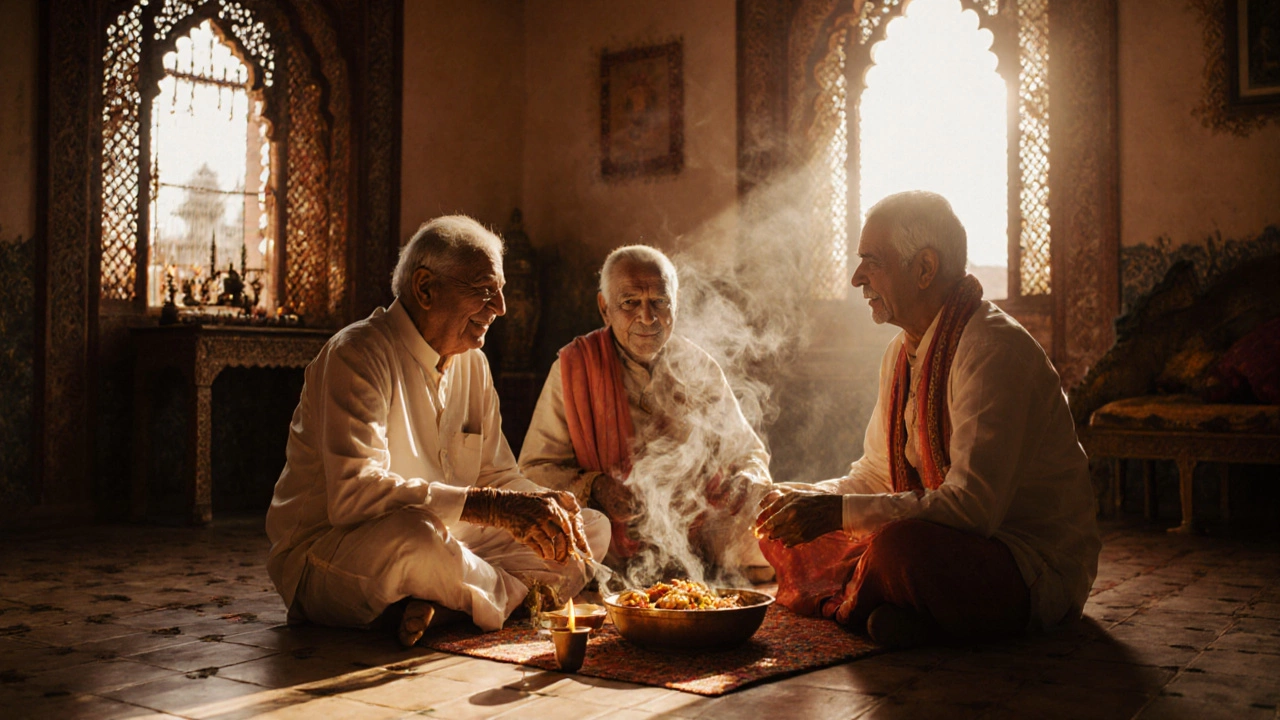
What Is the Way of Life in India? A Real Look at Daily Living
The way of life in India is shaped by family, faith, food, and resilience. It’s not one story-it’s hundreds, woven together across cities, villages, and generations.
When you think of Indian daily life, the rhythm of ordinary moments that shape millions of lives across villages, towns, and cities in India. Also known as everyday India, it's not the temples or the festivals you see in travel brochures—it's the smell of roti on a morning stove, the sound of a grandmother humming a bhajan while folding laundry, or the way a stranger offers you tea without asking why you look tired. This is where India breathes—not in grand declarations, but in silent, stubborn acts of care.
Indian culture, the living fabric woven from centuries of tradition, language, and belief. Also known as Indian heritage, it doesn’t live in museums. It lives in the way a mother teaches her daughter to tie a sari just right, or how a street vendor remembers your name and your usual order. This culture doesn’t demand attention—it shows up, quietly, in the way people share food, bow their heads before a temple, or sit in silence after a long day. And it’s this quietness that makes it powerful. You won’t find it in headlines, but you’ll feel it in the pause between two people speaking, in the way someone waits for the elder to eat first, in the way a child learns to say ‘thank you’ not because they were told to, but because they saw it done.
Indian spirituality, not as a religion, but as a way of moving through the world—with patience, presence, and acceptance. Also known as ancient Indian wisdom, it doesn’t ask you to believe in gods—it asks you to notice the sacred in the mundane. It’s in the morning prayer before the bus ride, in the way a shopkeeper closes his eyes for a moment before starting work, in the way someone sits by the river just to breathe. You don’t need to be religious to feel it. You just need to be awake. And that’s why Indian daily life feels so different from the hustle elsewhere. It’s not about doing more. It’s about being more—with your hands, your heart, your silence.
What you’ll find in the posts below isn’t a list of tourist attractions or exotic customs. It’s the real stuff—the unspoken rules, the hidden rituals, the small acts of courage that keep India moving. You’ll read about why roti is more than food, why crying in silence is a form of strength, how friendship is measured in shared chai, and why the oldest greeting in history still echoes in a village in Tamil Nadu. These aren’t stories about India. They’re stories from inside it.
The way of life in India is shaped by family, faith, food, and resilience. It’s not one story-it’s hundreds, woven together across cities, villages, and generations.