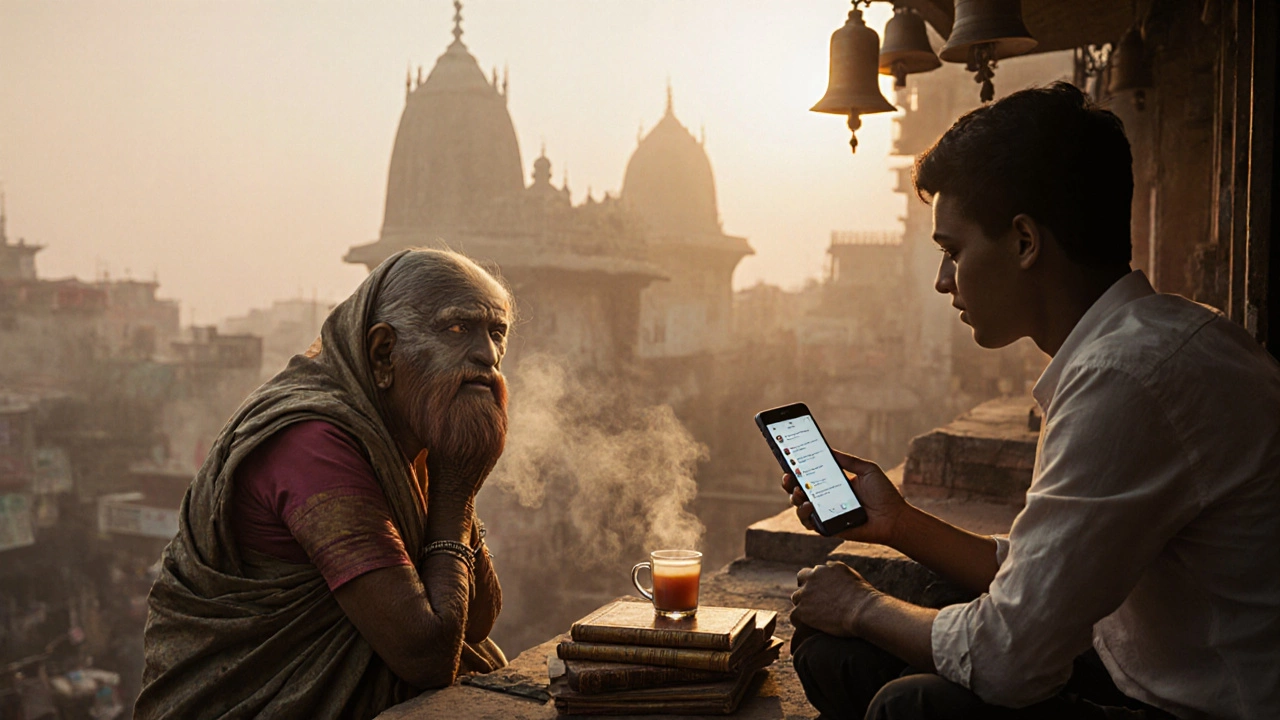
Indian Spirit: The Soul Behind the Quotes, Poetry, and Daily Life
The Indian spirit, the quiet, enduring force that shapes thought, tradition, and daily resilience in India. Also known as the soul of India, it isn’t loud or performative—it’s in the early morning chant by the Ganges, the silent tear after a loss, the shared roti between strangers, and the unspoken patience that carries families through hardship. This isn’t a myth or a tourist slogan. It’s lived, every day, by people who don’t call it anything special—because they don’t need to.
The Indian spirituality, a way of seeing the world rooted in inner stillness, not dogma. Also known as ancient Indian wisdom, it flows through the Upanishads, the Bhagavad Gita, and the quiet meditations of yogis who never wrote a book. You’ll find it in the poems that don’t scream but whisper—like the ones that make you pause on a crowded train. It’s not about temples alone. It’s in how grief is honored without words, how silence is treated as sacred, and how one God is named in a hundred ways without conflict.
And then there’s the Indian culture, the living, breathing mix of food, family, faith, and festivals that holds the Indian spirit together. Also known as daily life in India, it’s not a museum exhibit—it’s the auntie who sings while grinding spices, the uncle who recites Tagore while fixing a bicycle, the child who learns to tie a turban before learning to tie shoelaces. This culture doesn’t exist in textbooks. It’s in the way people cry in poetry but smile in traffic. It’s in the diversity of dress, the unity of ritual, the way a single word like "dharma" can mean duty, truth, and destiny all at once.
You won’t find the Indian spirit in slogans or social media trends. You’ll find it in the poems that carry grief like a prayer, the quotes that ask you to breathe before you act, and the everyday moments where strength isn’t loud—it’s steady. This collection brings together voices that speak to that quiet core: the poets who turned sorrow into song, the thinkers who saw unity in chaos, and the ordinary people whose lives became the real scripture.
What follows isn’t just a list of posts. It’s a doorway into the heartbeat of India—not the version sold to tourists, but the one carried in the hands of farmers, the eyes of mothers, the silence of monks, and the words of poets who never sought fame. You’ll read about why crying is courage here, why roti is more than food, and how zero and yoga were born not in labs, but in minds trained to see beyond the surface. This is the Indian spirit—not as a concept, but as a lived reality. And it’s waiting for you to notice it.