Satyameva Jayate: Truth Alone Triumphs in Indian Philosophy and Culture
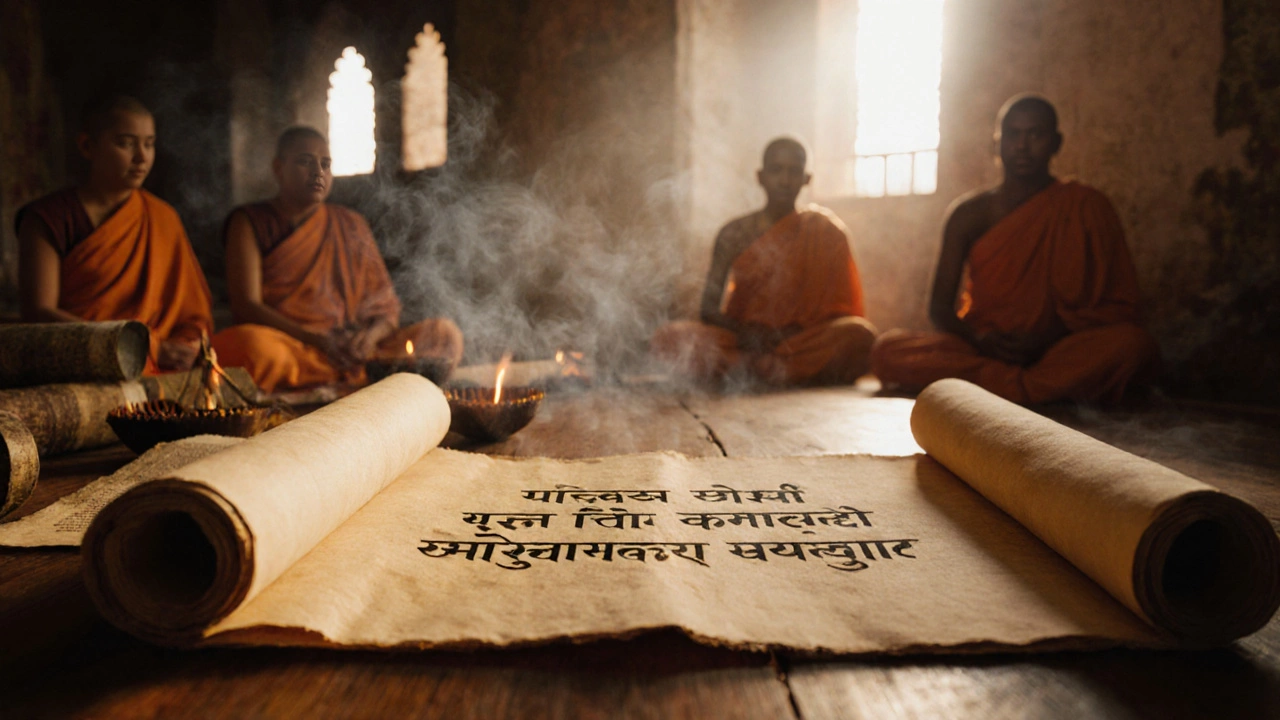
When you hear Satyameva Jayate, the ancient Sanskrit phrase meaning 'Truth Alone Triumphs,' adopted as India's national motto. Also known as 'Truth Prevails', it’s not just carved on the national emblem—it lives in the silence between verses of a ghazal, in the steady gaze of a farmer waiting for rain, in the way a mother refuses to lie to protect her child’s dignity. This isn’t a political slogan. It’s a way of being.
Truth in Indian thought doesn’t mean shouting facts. It’s the quiet honesty in Indian poetry, where broken hearts are called dard-e-dil—not because they’re loud, but because they’re real. It’s in the spiritual quotes, rooted in the Upanishads and Bhagavad Gita, that teach presence over performance. It’s why a sad song like 'Kabhi Kabhie Mere Dil Mein' moves people more than any anthem—because it doesn’t pretend. It just is. And in a world full of noise, that’s the loudest thing there is.
Truth here isn’t something you prove in court. It’s something you live. It’s the farmer who plants seeds even when the sky stays dry. It’s the grandmother who teaches her grandchild to say 'thank you' even when there’s nothing to give. It’s why India doesn’t need to boast about its inventions—zero, yoga, chess—because they were never meant to be owned. They were meant to be shared. And that’s the kind of truth that lasts.
What you’ll find below isn’t a list of quotes. It’s a mirror. Each post reflects how Satyameva Jayate shows up—in grief, in resilience, in friendship, in the way India breathes. You’ll read about the silence behind tears, the weight of a single word, the courage it takes to live honestly in a world that rewards performance. These aren’t just stories. They’re echoes of a truth that never left.