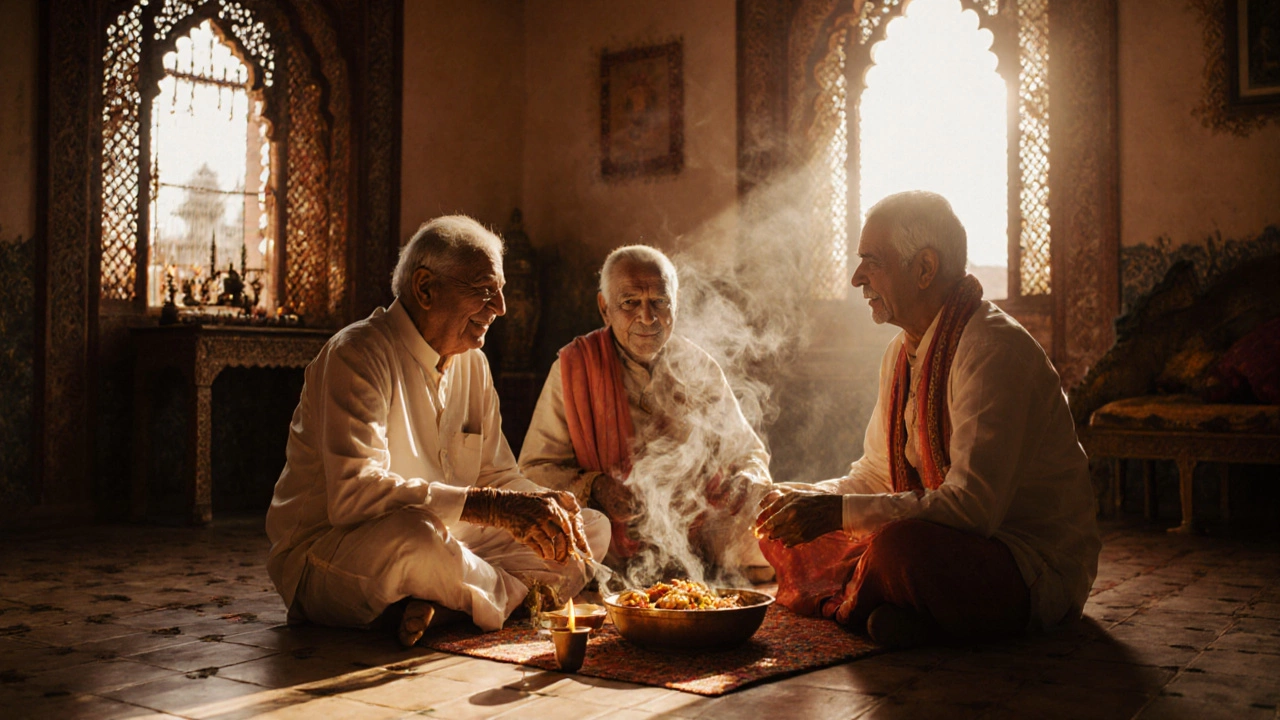
What Is the Way of Life in India? A Real Look at Daily Living
The way of life in India is shaped by family, faith, food, and resilience. It’s not one story-it’s hundreds, woven together across cities, villages, and generations.
When we talk about traditional India, the living, breathing culture shaped by centuries of daily practice, spiritual depth, and regional diversity. Also known as old India, it’s not locked in museums or textbooks—it’s in the way a grandmother folds a sari, the sound of temple bells at dawn, and the silence between words in a family gathering. This isn’t nostalgia. It’s survival. It’s the way people still wake before sunrise to light a diya, not because they’re told to, but because it feels right.
Indian rituals, the repeated acts that bind communities across castes, languages, and states. Also known as cultural practices, they don’t need grand explanations—they just are. From Pongal harvest festivals in Tamil Nadu to the quiet fasting of Karva Chauth in North India, these rituals aren’t about performance. They’re about belonging. They connect a child to their great-grandmother’s hands, a farmer to the soil, and a city worker to a memory they didn’t know they carried. And Indian spirituality, not as a religion, but as a way of seeing the world—in stillness, in service, in surrender. Also known as inner wisdom, it’s what makes a quote from the Bhagavad Gita feel more true than a motivational poster. You don’t need to meditate on a mountaintop to get it. You just need to sit quietly with your tea in the morning and notice how the world feels different when you’re not chasing it.
traditional clothing, more than fabric—it’s identity woven into thread. Also known as regional attire, it tells stories without saying a word. A turban isn’t just headwear—it’s honor in Punjab. A sari isn’t just a garment—it’s grace in motion across Kerala and Bengal. A hijab isn’t just cloth—it’s faith worn with pride in every corner of India. These aren’t costumes for tourists. They’re armor, comfort, and belonging rolled into one.
What you’ll find below isn’t a list of old customs. It’s proof that traditional India is alive—not frozen. You’ll read about why crying is seen as courage in some villages, how a single roti unites the country, and why silence speaks louder than slogans here. You’ll see how yoga isn’t just stretching, how zero wasn’t just math, and how a greeting older than the pyramids still echoes in a simple "Namaste." This isn’t about preserving the past. It’s about understanding why the past still breathes in every corner of modern India.
The way of life in India is shaped by family, faith, food, and resilience. It’s not one story-it’s hundreds, woven together across cities, villages, and generations.