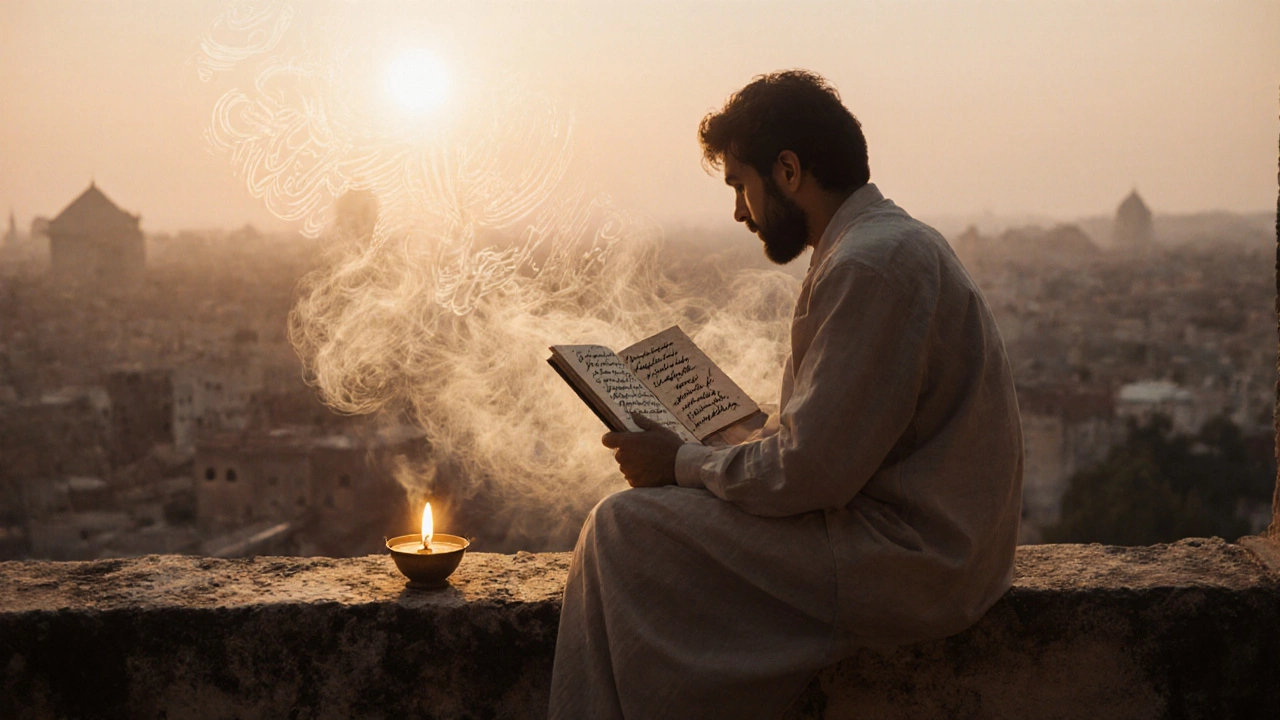
Urdu Ghazal: The Soul of Indian Poetry and Emotional Depth
When you hear the word Urdu ghazal, a lyrical poetic form rooted in Persian tradition but deeply woven into Indian soil. Also known as ghazal, it is not just poetry—it’s a quiet cry in the dark, a love letter written in syllables, and a meditation on separation that millions still carry in their hearts. Unlike Western poetry that often seeks resolution, the Urdu ghazal thrives in the space between longing and silence. Each couplet stands alone, yet together they build a world where pain is beautiful, love is unattainable, and the soul speaks louder than the tongue.
This form doesn’t just live in books—it lives in the air of Lucknow, the alleys of Old Delhi, the radio waves of All India Radio, and the late-night gatherings where someone hums a verse while sipping chai. It draws from Sufi poetry, a mystical tradition that sees divine love through human longing. Also known as Islamic mystic verse, it taught poets like Mir Taqi Mir and Ghalib to turn heartbreak into hymns. The Urdu poetry, the language of the ghazal. Also known as Hindustani poetic language, blends Persian elegance with Indian emotion, making it the perfect vessel for expressing what English or Hindi often can’t. You won’t find loud declarations here. Instead, you’ll find the ache of a lover who says, "I’m still waiting," and the world understands.
What makes the Urdu ghazal so powerful in India isn’t just its rhythm or rhyme—it’s how it mirrors the unspoken truths of everyday life. In a country where emotions are often buried under duty, family, and silence, the ghazal gives permission to feel deeply without shame. It’s the poem you read when you’re alone at 2 a.m., when the weight of love, loss, or loneliness becomes too heavy to carry silently. It’s no surprise that Indian poets and listeners still turn to it—not because it’s old, but because it’s true.
Below, you’ll find posts that explore how this form connects to Indian spirituality, emotional expression, and cultural identity. Some look at how ghazals echo in modern Indian life. Others compare them to sad poetry from other cultures, or show how they’re still alive in WhatsApp statuses, wedding songs, and street performances. You’ll see how a 17th-century form still speaks to a 21st-century heart.