Ancient Indian Music Timeline Explorer
Explore the evolution of Hindu music from Vedic chants to modern traditions. Select a time period or tradition to learn about its characteristics and legacy.
Primary Focus:
Key Characteristics:
Legacy:
Have you ever wondered where the soul of Indian music actually begins? It’s not in a Bollywood studio or a classical concert hall. The roots go back thousands of years, deep into the oral traditions of ancient India. When people ask, "Which is the first Hindu song?" they are usually looking for a single title, like a modern hit. But history doesn’t work that way. There isn't one specific "song" with a catchy chorus that we can play on Spotify today.
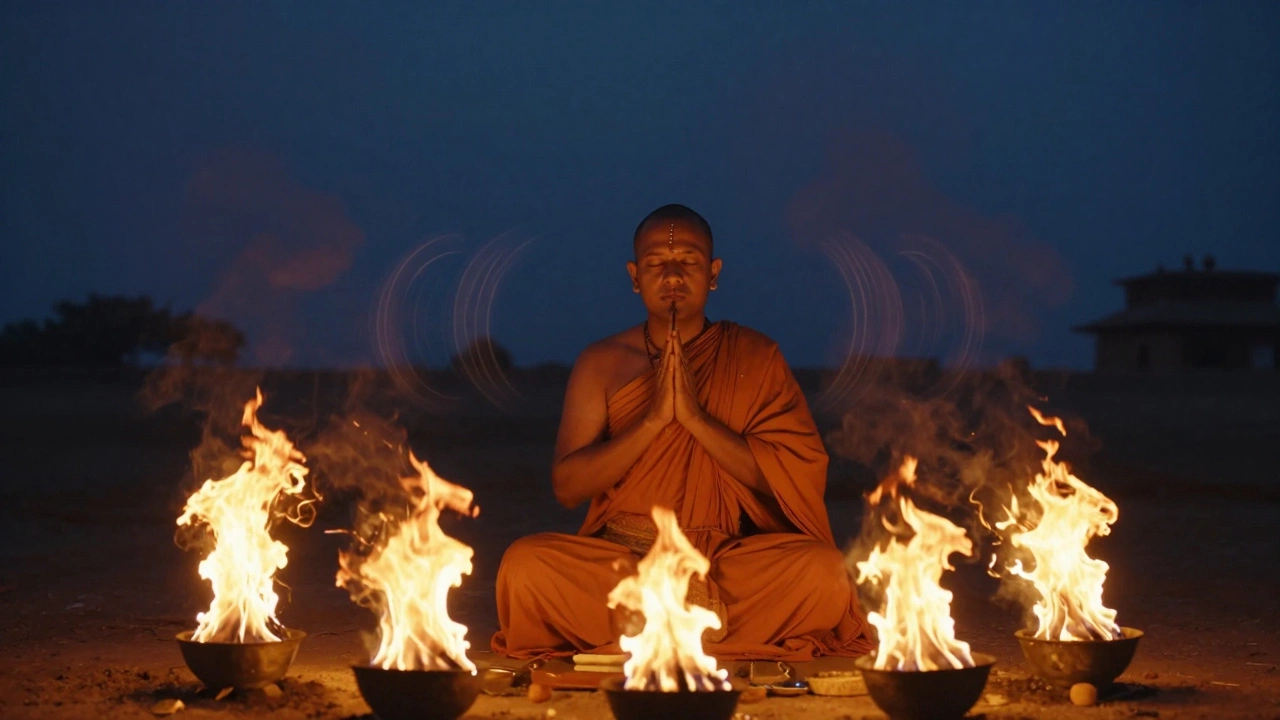
Instead, the answer lies in the Sama Veda, which is the oldest collection of melodic chants in the world. These weren't just songs; they were sacred rituals set to rhythm and pitch. To understand the first Hindu song, we have to look at how sound was used to connect with the divine long before written notation existed.
The Sama Veda: The Cradle of Melody
If you want to find the absolute beginning of structured musical expression in Hindu tradition, you start with the Vedas. Specifically, the Rig Veda is the oldest known text of Hinduism, containing hymns dedicated to various deities. Composed around 1500-1200 BCE, these hymns were meant to be recited, not sung. They had rhythm, but they lacked the complex melodic structure we recognize as music today.
Then came the Sama Veda. This text took verses from the Rig Veda and transformed them into melodies. Priests, known as Udgatri, would chant these verses using specific pitches and rhythms. This is widely considered the first form of organized music in human history. Imagine a drone note held steadily while a vocalist moves through a scale of three or four notes. That simple interaction between a steady base (drone) and a moving melody is the DNA of almost all Indian music, from folk tunes to classical ragas.
The Sama Veda didn't just introduce melody; it introduced the concept of Gana, or song. These chants were performed during fire sacrifices (Yajnas). The precision was critical. A wrong note wasn't just a musical error; it was believed to disrupt the cosmic order. This seriousness gave birth to a tradition where music was a spiritual discipline, not just entertainment.
From Chants to Folk Songs: The Oral Tradition
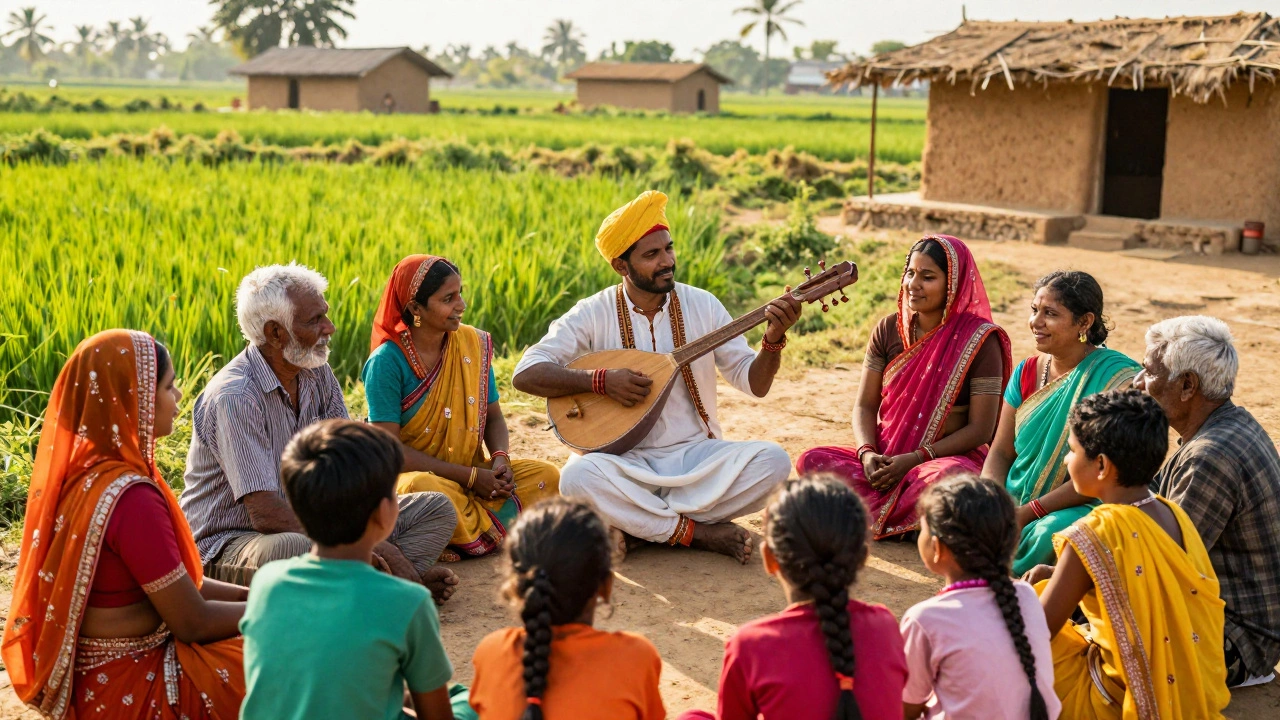
You might think that because these chants were religious, they stayed confined to temples. That’s not true. Over centuries, these sacred melodies trickled down into everyday life. They mixed with local dialects, regional rhythms, and community stories. This is how Indian folk songs emerged as traditional music passed down orally within communities, reflecting their daily lives and beliefs.
Folk music is the heartbeat of rural India. Unlike classical music, which follows strict rules, folk music is flexible. It changes based on who is singing it and where. In Bengal, you have Baul songs. In Rajasthan, there are Manganiyar ballads. In Punjab, Boliyan echo across fields. While we can't point to one "first" folk song, we know they evolved directly from the same rhythmic and melodic instincts found in the Vedas.
Consider the role of instruments. Early Vedic chants were unaccompanied. Later, simple percussion instruments like the Damaru (a small drum) were added. As time passed, string instruments like the Veena and wind instruments joined in. Each region developed its own toolkit. The Ektara (one-string instrument) became iconic for wandering minstrels, allowing them to carry their music anywhere. This portability helped spread musical styles across vast distances, creating a rich tapestry of regional sounds.
Natyashastra: Codifying the Art
By around 200 CE, a monumental text appeared: the Natyashastra is an ancient Sanskrit treatise on performing arts, covering dance, drama, and music theory. Written by Bharata Muni, this book didn't just describe music; it systematized it. It defined the Shadja (Sa), Rishabh (Re), Gandhar (Ga), Madhyama (Ma), Pancham (Pa), Dhaivata (Dha), and Nishaad (Ni)-the seven notes we still use today.
Before the Natyashastra, music was largely intuitive. After it, music became theoretical. This text explained how different combinations of notes could evoke specific emotions, or Rasa. If you wanted to inspire devotion, you used certain scales. If you wanted to depict battle, you used others. This framework allowed composers to create more complex pieces, bridging the gap between simple folk chants and sophisticated courtly music.
The Natyashastra also emphasized the connection between voice and body. Singing wasn't just about sound; it was about expression. This holistic approach is still visible in traditional performances, where singers often gesture or move slightly to emphasize the emotion of the lyrics. It reminds us that in early Hindu music, the performer was an active participant in the storytelling, not just a broadcaster of sound.
Devotional Movements: Bhakti and Sufi Influences
As history moved forward, the rigid structures of Vedic ritual began to soften. The Bhakti movement, which gained momentum between the 7th and 17th centuries, changed everything. Saints like Kabir, Mirabai, and Tulsidas wrote poetry that was meant to be sung by ordinary people. They rejected complex Sanskrit in favor of vernacular languages-Hindi, Bengali, Marathi, Tamil.
This democratization of music was huge. Suddenly, you didn't need to be a priest to sing to God. You just needed a heart and a voice. Songs like Mirabai's bhajans, praising Krishna, became immensely popular. They were simple, repetitive, and deeply emotional. These bhajans are direct descendants of the early Vedic chants but stripped of their ritualistic complexity. They are the ancestors of the devotional songs heard in homes across India today.
Simultaneously, Sufi mystics in North India were blending Islamic poetic traditions with local musical forms. Qawwali music emerged from this fusion. The result was a unique cultural exchange where Hindu and Muslim musicians shared stages, scales, and stories. This period produced some of the most enduring folk and semi-classical genres, proving that the "first" songs were never static-they were always evolving through contact and community.
Regional Diversity: No Single Origin Story
India is not a monolith, and neither is its music. Trying to identify a single "first Hindu song" ignores the incredible diversity of the subcontinent. In the south, the Carnatic tradition developed independently, rooted in the Tamil Sangam literature and later formalized by composers like Tyagaraja. In the north, Hindustani music absorbed Persian influences after the arrival of Islamic dynasties.
Let's look at a few examples of how distinct these traditions are:
- Tamil Folk: Ancient Tamil songs, dating back to the Sangam period (300 BCE - 300 CE), focus on nature, love, and war. They use unique meters and rhythms that differ significantly from North Indian patterns.
- Bengal Baul: Baul singers are mystic minstrels who believe the body is a temple. Their songs are philosophical, often challenging social norms, and accompanied by the Ektara and Dotara.
- Kashmiri Sufiyana: In the Kashmir valley, music blends Persian modes with local Kashmiri melodies, creating a haunting, slow-paced style distinct from the rest of the country.
This diversity shows that the "first" songs were likely many, arising simultaneously in different valleys and plains. What united them was the underlying belief in the power of sound (Shabda Brahman) to reveal truth. Whether it was a farmer singing in Odia or a scholar chanting in Sanskrit, the intent was similar: to express the ineffable through vibration.
Preserving the Legacy Today
In our modern, digital age, it's easy to lose sight of these origins. We stream playlists without knowing the history behind the beats. However, understanding the first Hindu song helps us appreciate the depth of current Indian music. When you hear a raga in a film score or a folk tune in a pop remix, you're hearing echoes of the Sama Veda.
Efforts to preserve these traditions are ongoing. Organizations record elderly folk singers before their knowledge fades. Scholars transcribe ancient manuscripts. Musicians experiment with fusing Vedic chants with electronic music. These initiatives ensure that the lineage remains unbroken. The next time you listen to Indian music, try to listen past the instrumentation. Listen for the drone. Listen for the rhythm. You might just hear the whisper of the first song ever sung.
| Era/Text | Primary Focus | Key Characteristics | Legacy |
|---|---|---|---|
| Rig Veda (1500 BCE) | Recitation | Rhythmic, no melody, Sanskrit | Foundation of textual tradition |
| Sama Veda (1200 BCE) | Melodic Chant | Pitch-based, drone accompaniment | Origin of Indian classical scales |
| Natyashastra (200 CE) | Theory & Drama | Defined 7 notes, Rasa theory | Standardized performance arts |
| Bhakti Movement (7th C.) | Devotion | Vernacular languages, simple tunes | Popularized folk and bhajan genres |
Is there a specific name for the first Hindu song?
No, there is no single named song. The earliest musical expressions are the chants of the Sama Veda. These are collections of hymns rather than individual songs with titles like modern compositions.
What is the difference between Rig Veda and Sama Veda?
The Rig Veda consists of hymns meant to be recited with rhythm but without melody. The Sama Veda takes these same hymns and sets them to musical pitches, making it the first source of melodic music in Hindu tradition.
How did Indian folk songs originate?
Folk songs evolved from ancient Vedic chants and tribal rhythms over thousands of years. As sacred music spread to common people, it blended with local languages and cultures, creating diverse regional folk traditions.
Who wrote the Natyashastra?
The Natyashastra was written by Bharata Muni, an ancient sage. It serves as the foundational text for Indian performing arts, including music, dance, and drama.
Are Vedic chants considered music?
Yes, especially those from the Sama Veda. They use specific pitches, rhythms, and drones, which are the fundamental elements of music. They are considered the root of Indian classical music.
What role did the Bhakti movement play in music?
The Bhakti movement made music accessible to everyone by using local languages instead of Sanskrit. It created simple, emotional devotional songs (bhajans) that remain popular in Indian households today.