Christianity & Yoga Parallels Explorer
Select Christian Teachings
BiblicalSelect Yogic Principles
YogicShared Values Identified
Based on your selections, here are the historical and philosophical connections between these traditions.
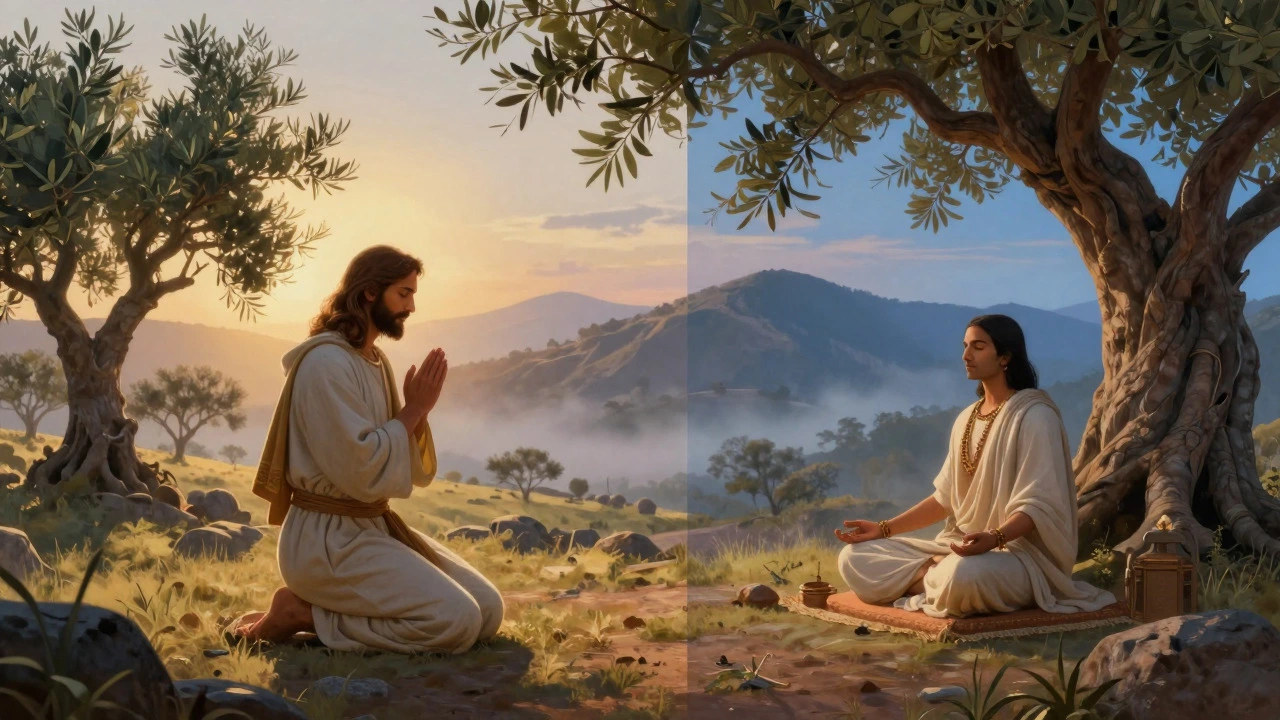
It’s a question that pops up more often than you might expect, especially as yoga moves from niche studios to mainstream gyms worldwide. Was Jesus a yogi master? If you’ve ever noticed how the Sermon on the Mount sounds suspiciously like ancient wisdom texts, or if you’ve seen Christians practicing yoga without blinking, this curiosity makes sense. The short answer is no-historically and theologically, Jesus was not a yogi in the traditional Indian sense. But the longer answer is far more interesting. There are striking parallels between the teachings of Jesus and the philosophy of yoga that suggest a shared human pursuit of inner peace, discipline, and divine connection.
To understand why people ask this, we have to look at what both traditions actually value. When we strip away the cultural packaging-the robes, the temples, the specific rituals-we find two paths that emphasize self-mastery, compassion, and a deep, personal relationship with the Divine. This isn’t about claiming one religion copied the other; it’s about recognizing that different cultures have arrived at similar truths through their own unique lenses.
The Historical Reality: Geography and Time
Let’s start with the facts. Jesus of Nazareth was a Jewish teacher and religious figure who lived in the Middle East during the 1st century CE. His life and teachings were rooted in Second Temple Judaism, heavily influenced by Hebrew scripture, prophetic traditions, and the social context of Roman-occupied Palestine. He spoke Aramaic, quoted the Torah, and engaged with Pharisees and Sadducees. His world was one of stone synagogues, olive groves, and desert asceticism-not the ashrams or mountain caves associated with early yogis.
Yoga, on the other hand, originated in the Indian subcontinent thousands of years before Jesus was born. Classical yoga, as codified by Patanjali in the Yoga Sutras, emerged around 400 BCE, though its roots go back much further into Vedic traditions. The geographical distance between Judea and ancient India is vast, and there is no credible historical evidence of direct contact between early Christian communities and classical yoga practitioners during Jesus’ lifetime.
So, if they never met, why do the similarities exist? Human beings everywhere face the same fundamental challenges: suffering, mortality, greed, fear, and the longing for meaning. Different cultures developed different tools to address these universal issues. In India, those tools became known as yoga. In Judea, they became part of the ethical and spiritual teachings of prophets like Jesus.
Parallels in Practice: Meditation and Mindfulness
One of the strongest connections people draw is between Christian prayer/meditation and yogic dhyana (meditation). Jesus frequently withdrew to solitary places to pray. Luke 5:16 tells us he “often withdrew to lonely places and prayed.” This practice of solitude, silence, and focused attention mirrors the yogic emphasis on withdrawing the senses (pratyahara) and turning inward.
- Solitude: Both traditions value time alone with God/the Divine. Jesus went to the wilderness for 40 days; yogis retreat to forests or caves for tapas (austerity).
- Mental Discipline: Jesus taught his disciples to watch their thoughts (“For out of the heart come evil thoughts...” Matthew 15:19). Similarly, Patanjali’s first sutra defines yoga as “the stilling of the fluctuations of the mind” (Yoga Sutras 1.2).
- Breath Awareness: While Jesus didn’t teach pranayama (breath control), the concept of receiving the “breath of life” is central to both Genesis and John 20:22, where Jesus breathes on his disciples to give them the Holy Spirit.
Many modern Christians practice mindfulness meditation derived from yoga techniques, arguing that the method is neutral while the intention determines its spirituality. Critics worry this dilutes Christian distinctiveness, but proponents see it as reclaiming ancient contemplative practices that predate modern commercialized yoga.
Ethical Teachings: Love, Non-Violence, and Humility
If you read the Beatitudes alongside the Yamas and Niyamas (the ethical foundations of yoga), you’ll notice remarkable overlaps. These aren’t just vague similarities-they’re concrete moral frameworks.
| Christian Teaching (Jesus) | Yogic Principle (Patanjali) | Shared Value |
|---|---|---|
| “Blessed are the meek” (Matthew 5:5) | Ahimsa (Non-violence) & Satya (Truthfulness) | Humility and gentleness over aggression |
| “Love your enemies” (Matthew 5:44) | Maitri (Loving-kindness) & Karuna (Compassion) | Universal love beyond tribal boundaries |
| “Turn the other cheek” (Matthew 5:39) | Aparigraha (Non-possessiveness) & Asteya (Non-stealing) | Releasing ego-driven retaliation and greed |
| “Seek first the Kingdom of God” (Matthew 6:33) | Ishvara Pranidhana (Surrender to the Divine) | Prioritizing spiritual connection over material gain |
Jesus’ command to love neighbors and enemies aligns closely with the yogic ideal of ahimsa (non-harm). Both traditions challenge the listener to rise above natural instincts for revenge or self-preservation. They demand a higher level of emotional and spiritual maturity.

The Body as a Temple vs. The Body as a Vehicle
Here’s where things get tricky. Traditional yoga often views the physical body as a vehicle for spiritual realization-something to be disciplined, purified, and eventually transcended. Some schools even de-emphasize the body’s importance compared to the soul (atman).
In contrast, Christianity emphasizes the incarnation-God becoming flesh in Jesus. This gives the physical body immense dignity. Paul writes in 1 Corinthians 6:19, “Do you not know that your bodies are temples of the Holy Spirit?” For Christians, caring for the body is an act of worship because it houses God’s presence.
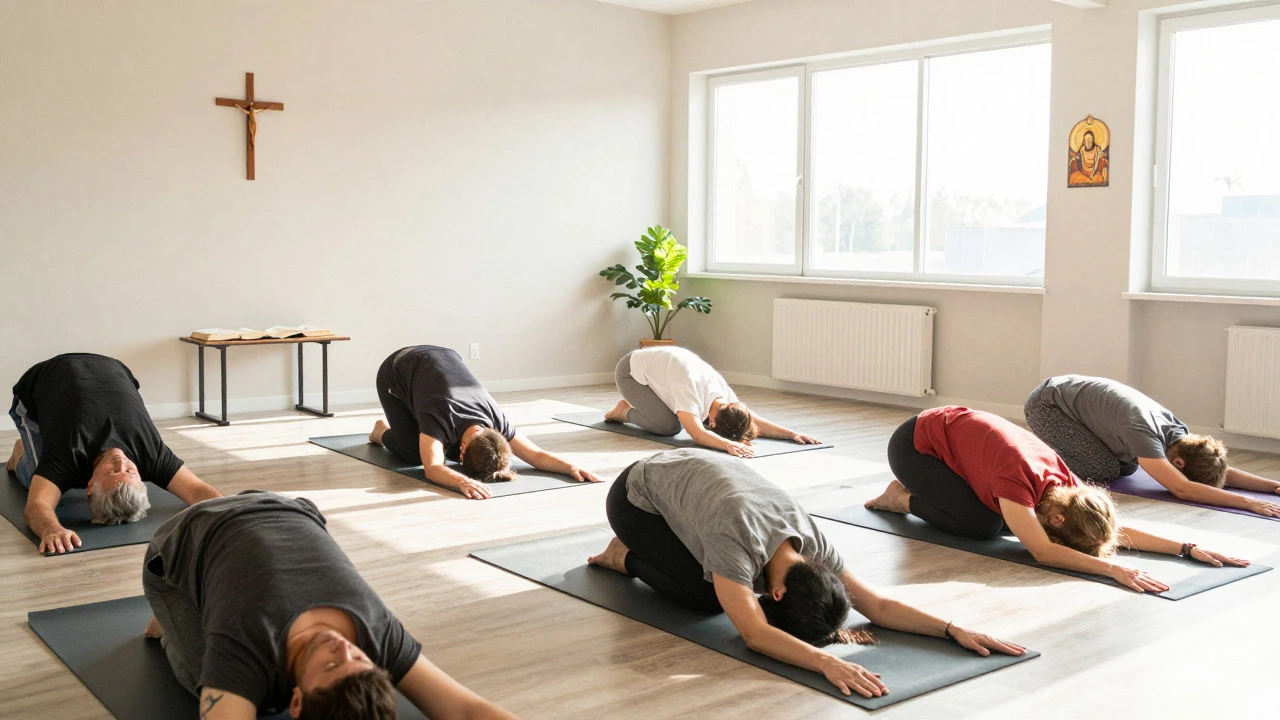
This difference matters when practicing yoga today. Many Christians feel uncomfortable with poses named after Hindu deities (like Hanumanasana or Ganesha) or mantras invoking Shiva. That’s why movements like “Christian Yoga” or “Faith-Based Fitness” have emerged, replacing Sanskrit terms with biblical references and focusing on movement as gratitude rather than ritual.
Why the Confusion Persists
Several factors fuel the idea that Jesus might have been connected to yoga:
- Modern Syncretism: As globalization blends cultures, spiritual practices mix freely. People attend church and then go to hot yoga class without seeing a conflict.
- Esoteric Claims: Some fringe theories suggest Jesus traveled to India or Tibet as a young man, studying under gurus. These claims lack historical evidence but persist in popular culture due to books like *Holy Blood, Holy Grail*.
- Universal Language of Spirituality: Concepts like karma, reincarnation, and enlightenment resonate with Christian ideas of judgment, resurrection, and salvation, leading to easy comparisons.
While these connections feel intuitive, they often overlook the distinct theological frameworks. Christianity centers on grace through faith in Christ’s sacrifice; yoga traditionally focuses on effortful liberation through discipline and knowledge. One is relational; the other is transformative.
Can Christians Practice Yoga?
This is the practical question many believers face. The answer depends on your perspective:
- Yes, if... You view yoga primarily as physical exercise and mental discipline. Focus on breathwork, flexibility, and stress relief. Avoid rituals or mantras that contradict your faith.
- No, if... You believe any association with non-Christian spirituality compromises your witness. Seek alternative fitness routines like calisthenics, Pilates, or dance.
- Maybe, if... You join a Christian-led yoga group that adapts the practice to align with biblical values. Many churches now offer “Prayer Yoga” classes.
Ultimately, intent matters most. If you use yoga to calm your mind so you can better hear God’s voice, many theologians would argue that’s perfectly consistent with Christian devotion.
Conclusion: Shared Humanity, Distinct Paths
Was Jesus a yogi master? No. But he was a master of inner transformation, much like the great yogis of history. Both traditions invite us to slow down, listen deeply, and live with greater integrity. Whether you call it prayer or meditation, grace or karma, the goal remains the same: to become more fully human, more fully alive, and more connected to something greater than ourselves.
Instead of asking whether Jesus practiced yoga, perhaps we should ask: What can we learn from both traditions to enrich our own spiritual journey? The beauty lies not in merging them into one, but in appreciating how diverse paths lead toward similar peaks of peace and purpose.
Did Jesus ever travel to India and study yoga?
There is no historical evidence supporting the claim that Jesus traveled to India. This theory stems from speculative works like Nicolas Notovitch's "The Unknown Life of Jesus," which scholars widely regard as fiction. Biblical accounts place Jesus in Judea and Galilee throughout his life.
Is yoga inherently pagan or incompatible with Christianity?
Yoga has roots in Hindu philosophy, but its physical aspects (postures, breathing) are secular and adaptable. Many Christians practice yoga safely by focusing on health benefits and avoiding religious symbols or mantras. It becomes incompatible only if adopted uncritically with conflicting beliefs.
What are the main differences between Christian meditation and yogic meditation?
Christian meditation typically involves reflecting on Scripture, praying, or contemplating God's attributes. Yogic meditation often aims at emptying the mind or achieving union with universal consciousness. The former is relational (focused on God); the latter is experiential (focused on state of being).
Can I say "Namaste" as a Christian?
"Namaste" means "I bow to the divine within you." While originally Hindu, many use it culturally as a greeting. Christians may choose to replace it with phrases like "Grace and peace" or simply smile, depending on their comfort level with cultural versus religious associations.
Are there Christian alternatives to yoga?
Yes. Options include Pilates, barre, tai chi (adapted), or specifically designed "Christian Yoga" programs that substitute Sanskrit terms with biblical language and incorporate prayer into movement sequences.