Gujarat Textile Authenticity Checker
Identify Authentic Gujarat Textiles
Check if your fabric matches the traditional characteristics of Gujarat's famous textiles. Based on the article about Patola silk, Bandhani, and Ajrak.
Authenticity Results
Recommendation:
Key Indicators:
Gujarat isn’t just known for its vibrant festivals or bustling markets-it’s one of India’s oldest and most respected centers for handwoven textiles. If you’ve ever seen a richly colored dupatta with intricate geometric patterns or a sari that looks like it was painted with thread, you’ve likely encountered fabric made in Gujarat. The state doesn’t just produce cloth; it weaves stories, heritage, and centuries of skill into every thread.
Patola Silk: The Royal Fabric of Gujarat
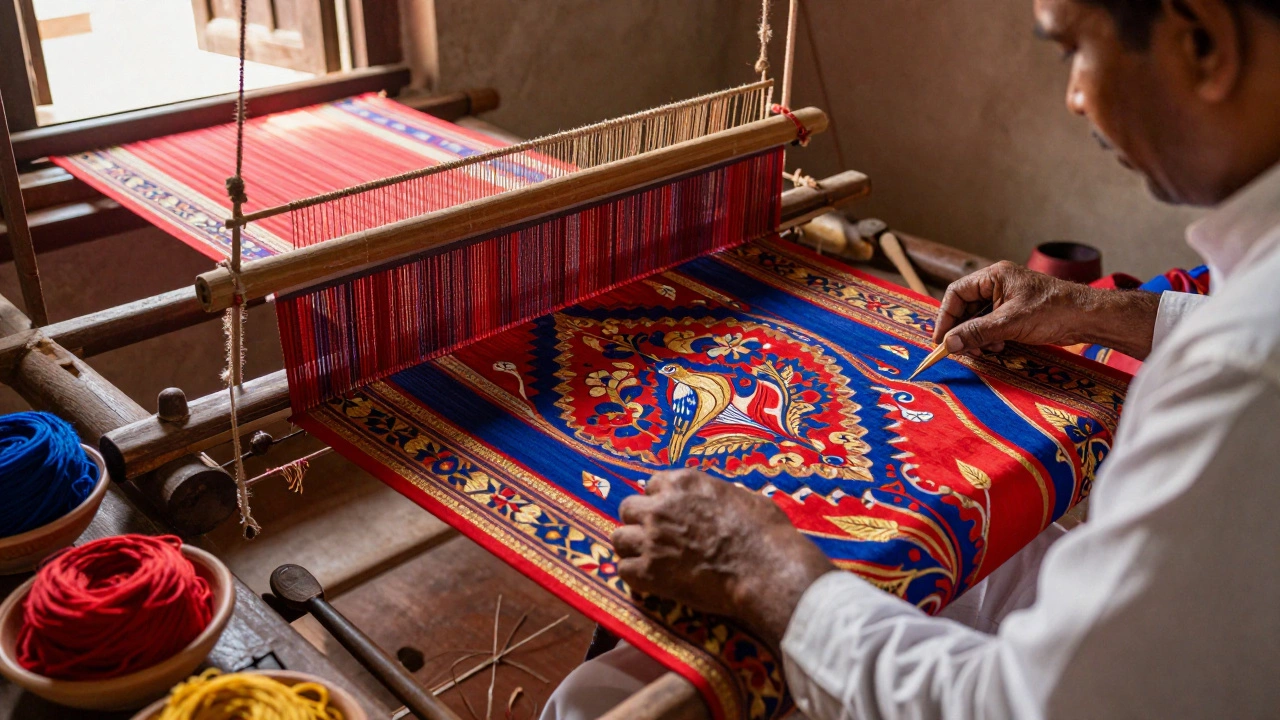
When people ask what fabric Gujarat is famous for, the first answer is almost always Patola silk. This isn’t just any silk-it’s a double ikat weave, meaning both the warp and weft threads are tie-dyed before weaving. That’s rare. Only a handful of places in the world still do this, and Gujarat is one of them.
Patola silk comes from Patan, a town in North Gujarat. The process takes months. A single sari can require 15 to 20 days just to tie and dye the threads, and another 10 to 15 days to weave on a traditional loom. The patterns are symmetrical, often featuring parrots, elephants, or floral motifs, and the colors are made from natural dyes-indigo, madder root, lac, and turmeric.
Historically, Patola saris were worn by royalty and traded as far as Indonesia and Southeast Asia. Today, a genuine Patola silk sari costs between ₹80,000 and ₹3 lakh, depending on complexity. Only about 20 families in Patan still know the full technique. That’s why each piece is considered a family heirloom, not just clothing.
Bandhani: The Art of Tying and Dyeing
If Patola is the royalty of Gujarat’s fabrics, Bandhani is the people’s favorite. Also called tie-dye, Bandhani is everywhere in Gujarat-from wedding saris to everyday turbans. The word comes from the Sanskrit word bandh, meaning to tie.
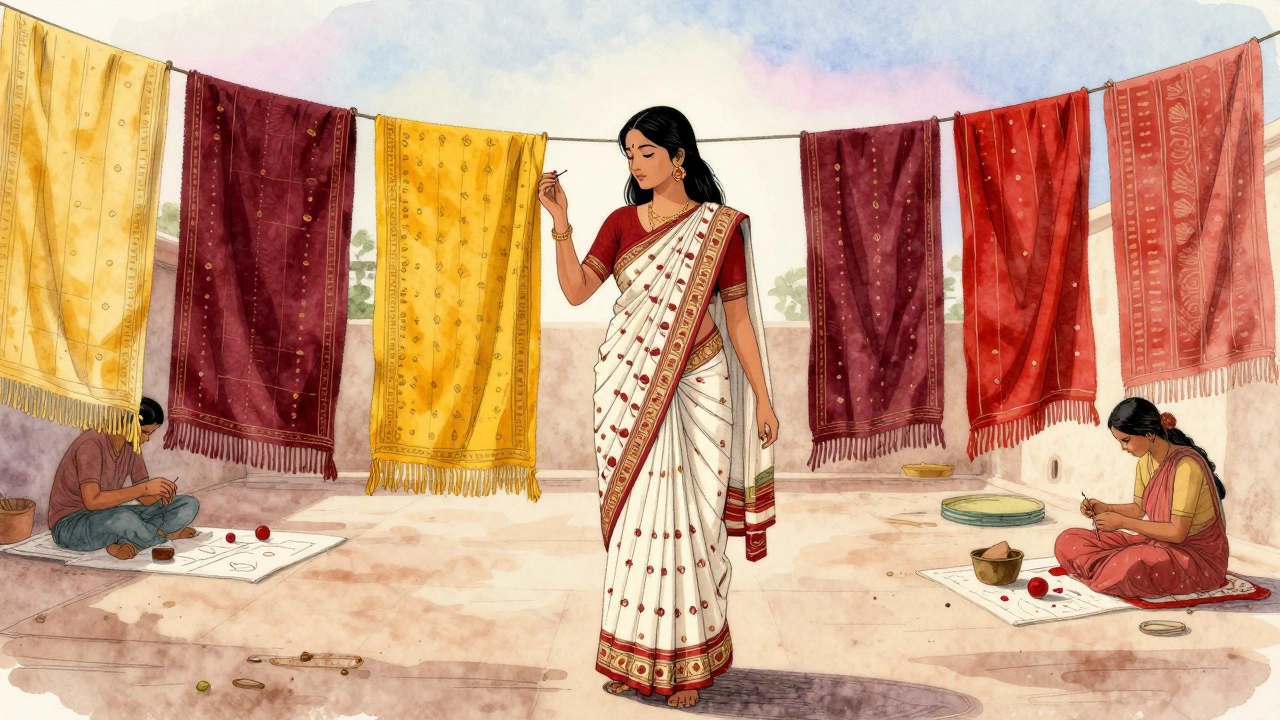
Artisans in cities like Jamnagar, Bhuj, and Jaipur (in Gujarat, not Rajasthan) tie tiny knots on fabric using their fingernails. Each knot resists dye, creating a dot. Hundreds or even thousands of dots make up a single design. The fabric is dipped multiple times in different colors-first yellow, then red, then deep maroon-to build layered patterns.
Bandhani isn’t just pretty. It’s symbolic. Red and black dots mean marriage. Yellow and green mean fertility. A bride’s Bandhani sari might have 1,000+ dots, each tied by hand. In some villages, a woman spends three months preparing her wedding Bandhani.
Modern designers now mix Bandhani with cotton, georgette, and even chiffon, but the traditional version is still 100% cotton or silk. You’ll find it in local markets for ₹1,500 to ₹8,000. For many Gujarati women, wearing Bandhani isn’t fashion-it’s identity.
Block Printing: Patterns Carved in Wood
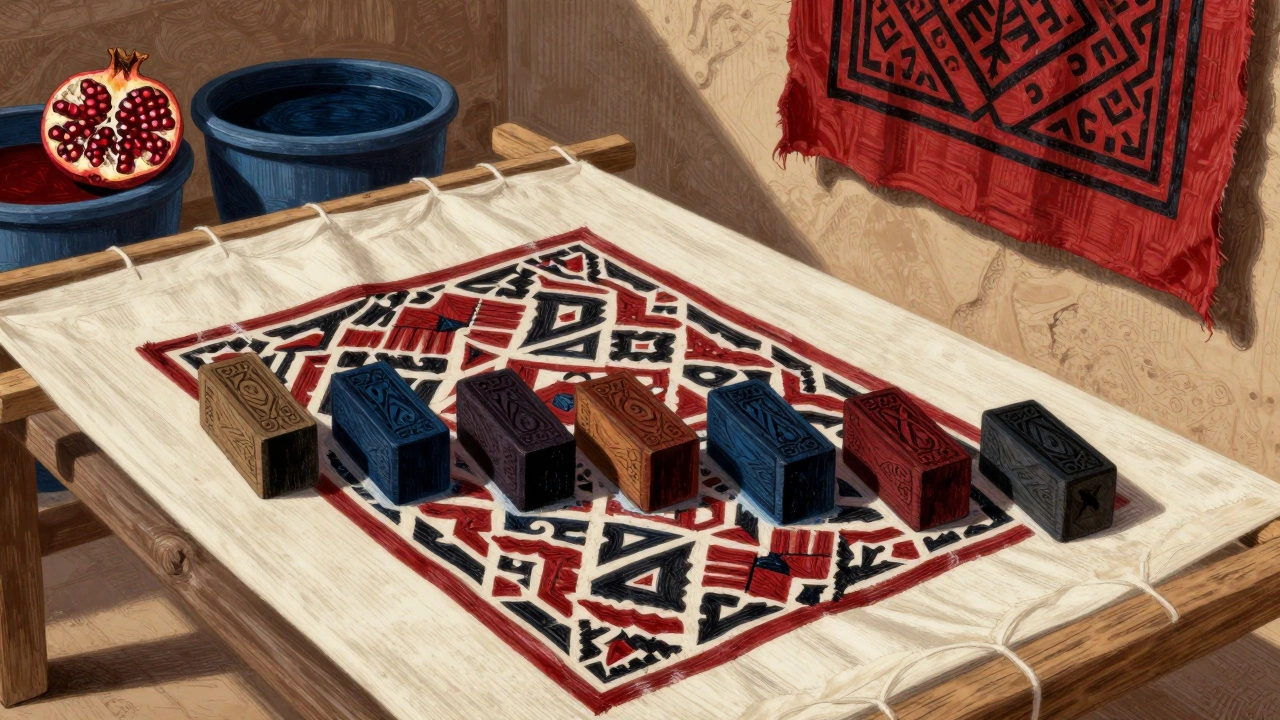
While Patola and Bandhani rely on tying and weaving, block printing brings color through carved wooden stamps. The town of Ajrakhpur, near Bhuj, is famous for this. Ajrak prints use deep indigo and crimson, with geometric patterns that look ancient-some designs are over 5,000 years old.
Each block is hand-carved from sheesham or teak wood. One design might use six or seven blocks, each dipped in a different dye. The fabric is pressed, dried in the sun, washed, and pressed again. The whole process can take up to 20 days. No two Ajrak pieces are exactly alike.
Ajrak is worn by men as turbans and shawls, and by women as dupattas. It’s also used in homes as table runners and wall hangings. The dyeing uses natural ingredients: pomegranate rind, indigo, madder, and iron filings. The process is so clean, the wastewater can be used to water crops.
Other Notable Gujarati Fabrics
Gujarat’s textile legacy doesn’t stop at Patola, Bandhani, and Ajrak. There’s more:
- Chanderi cotton-lightweight, sheer, and woven with gold zari-is also produced in parts of Saurashtra. It’s cooler than silk and perfect for hot weather.
- Khadi-hand-spun, handwoven cotton-has deep roots in Gujarat thanks to Gandhi’s freedom movement. Today, Khadi cooperatives in Sabarmati and Kutch still produce fabric using charkhas (spinning wheels).
- Shantiniketan cotton-a soft, breathable fabric with floral prints-is popular in rural Gujarat for daily wear.
These fabrics aren’t just sold locally. They’re exported to Europe, Japan, and the U.S. as sustainable, slow-fashion pieces. Boutiques in New York and London now stock Gujarati textiles under labels like ‘Handloom Heritage’ or ‘Kutch Weaves’.
Why These Fabrics Matter Today
Fast fashion has flooded the market with cheap synthetic fabrics. But in Gujarat, artisans are fighting back. The government has given GI (Geographical Indication) tags to Patola, Bandhani, and Ajrak-meaning only textiles made in these regions using traditional methods can carry those names.
Organizations like the Kutch Craft Foundation and the Gujarat Handloom Development Corporation train young weavers. Some schools in Ahmedabad now teach textile history as part of their curriculum. And younger generations? Many are returning to weaving-not out of obligation, but pride.
One weaver in Patan told me, “My grandfather tied the first knot. My son now designs the patterns. We don’t make fabric to sell. We make it to remember.”
How to Tell Real from Fake
With popularity comes imitation. Here’s how to spot real Gujarati textiles:
- Patola: Look for perfect symmetry. Machine-made copies have blurry edges. Real Patola has no loose threads. The backside looks almost as detailed as the front.
- Bandhani: The dots should be small, even, and tightly packed. Fake ones use heat-pressed dots that feel stiff. Real Bandhani is soft and flexible.
- Ajrak: The colors should fade slightly with washing-not bleed. Real Ajrak smells faintly of indigo and earth. Fake ones smell like chemicals.
Buy from cooperatives, government emporiums like Gujarat Haat, or certified artisans on platforms like India Handloom. Avoid street vendors selling “Patola” for under ₹5,000-it’s not possible.
Where to Find Authentic Gujarati Fabrics
If you want to buy directly:
- Patan: Visit the Patola Weavers’ Cooperative. You can watch weavers at work.
- Jamnagar: The Bandhani Market near the old bus stand has hundreds of stalls.
- Bhuj: The Kutch Craft Emporium sells Ajrak and other handwoven pieces.
- Ahmedabad: Manek Chowk and Law Garden Night Market offer affordable options.
Many artisans now sell online through verified portals. Look for sellers who show videos of the making process. If they can’t show you the knots, the dye pots, or the wooden blocks-they’re not selling the real thing.
Is Patola silk the same as Banarasi silk?
No. Patola silk is from Gujarat and uses a double ikat weave, where both warp and weft are tie-dyed. Banarasi silk is from Uttar Pradesh and features gold or silver zari embroidery woven into silk. Patola is more time-consuming to make and has geometric patterns, while Banarasi has floral and Mughal-inspired designs.
Can I wash Bandhani at home?
Yes, but gently. Hand wash in cold water with mild soap. Never wring or tumble dry. Lay flat in shade to dry. Sunlight fades the natural dyes. Avoid bleach or detergent with enzymes.
Why is Ajrak black and red?
The black comes from iron filings soaked in indigo, and the red from madder root. These colors aren’t just aesthetic-they’re symbolic. Black represents the earth, red represents life and energy. The contrast also makes the patterns stand out under desert sunlight.
Are Gujarati fabrics eco-friendly?
Yes. Traditional Gujarati textiles use natural fibers-cotton and silk-and plant-based dyes. The water used in dyeing is recycled and safe for soil. No synthetic chemicals are involved. That’s why these fabrics are considered some of the most sustainable in the world.
How long does it take to make one Patola sari?
It takes 3 to 6 months. The dyeing process alone can take 45 days, and weaving another 30 to 45 days. Only one weaver works on a single sari at a time. That’s why there are so few made each year.
If you ever wear a Gujarati textile, you’re not just wearing fabric. You’re wearing history. You’re wearing the hands of grandmothers who tied knots before sunrise, the patience of weavers who worked in silence for months, and the colors of a land that refused to let its traditions fade. That’s what Gujarat is famous for-not just the cloth, but the soul behind it.