Independence Day Quote Finder
What are you facing today? Describe your situation and we'll suggest the most relevant quote from India's freedom struggle.
On August 15, 1947, India didn’t just gain freedom-it woke up to a new identity. Millions walked out of fear, silence, and centuries of control. That day wasn’t won by speeches alone. It was carved by the grit of farmers who stopped paying taxes, students who skipped class to protest, mothers who hid freedom fighters in their kitchens, and leaders who sat in jail smiling. If you’re looking for a single quote to capture that moment, it’s not just about words. It’s about the soul behind them.
The Quote That Still Moves Millions
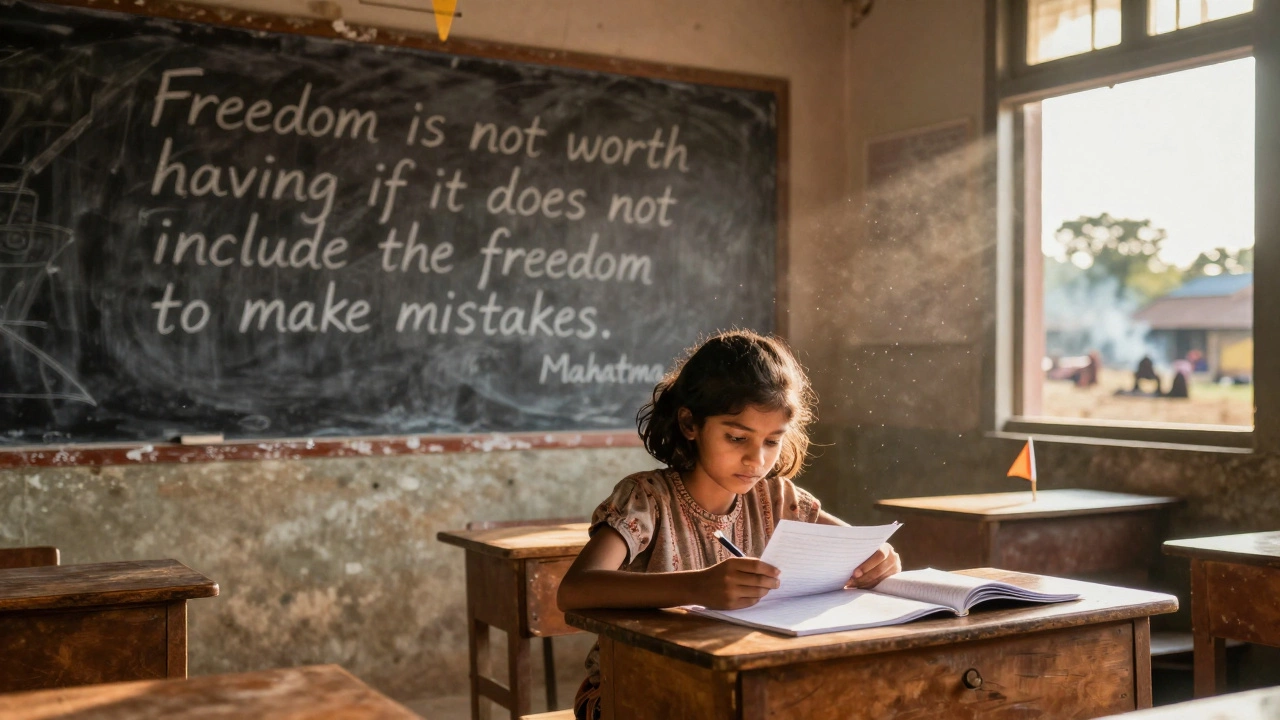
"Freedom is not worth having if it does not include the freedom to make mistakes"-Mahatma Gandhi.
This isn’t just a line you see on posters. It’s the heartbeat of India’s independence movement. Gandhi didn’t just want the British gone. He wanted Indians to be free inside-free to think, to fail, to rise again without fear. That’s why this quote still echoes in classrooms in Delhi, in villages in Odisha, and in homes in Toronto where Indian families gather every August 15.
Think about it. Most countries celebrate independence with fireworks and parades. India? We also pause. We read letters from prison. We watch old black-and-white footage of people walking barefoot with flags. We ask: What did they give up so we could choose our own path?
Why This Quote Stands Out
Other leaders had powerful lines. Jawaharlal Nehru spoke of "a tryst with destiny." Subhas Chandra Bose shouted, "Give me blood, and I will give you freedom." But Gandhi’s words are quieter. They don’t shout. They settle in.
He knew freedom wasn’t just political. It was psychological. A nation can kick out its rulers but still live in chains-fear of failure, fear of speaking up, fear of being different. His quote cuts through that. It says: true independence means you can stumble, and no one will punish you for it.
In today’s world, where social media tells us to be perfect, this quote is a quiet rebellion. It’s why a student in Bangalore posts it before her exam. Why a nurse in Mumbai writes it on her break room whiteboard. Why a father in Vancouver reads it to his daughter before she gives her first speech.
Other Powerful Quotes from the Freedom Struggle
Gandhi’s words are the most spiritual, but they’re not the only ones that matter. Here are a few others that carry weight:
- "They may kill us, but they cannot kill our ideas."-Bhagat Singh
- "Swatantrata mera janmasiddh adhikar hai aur main use lekar rahunga."-Lala Lajpat Rai (Freedom is my birthright, and I shall have it.)
- "Do not be afraid of the storm. It is the wind that carries you to your destination."-Sarojini Naidu
- "The future depends on what you do today."-Mahatma Gandhi
Each of these comes from someone who lived the truth behind the words. Bhagat Singh was hanged at 23. Lala Lajpat Rai died after being beaten by police. Sarojini Naidu was jailed seven times. These weren’t quotes for Instagram. They were lifelines.
How These Quotes Shape Modern India
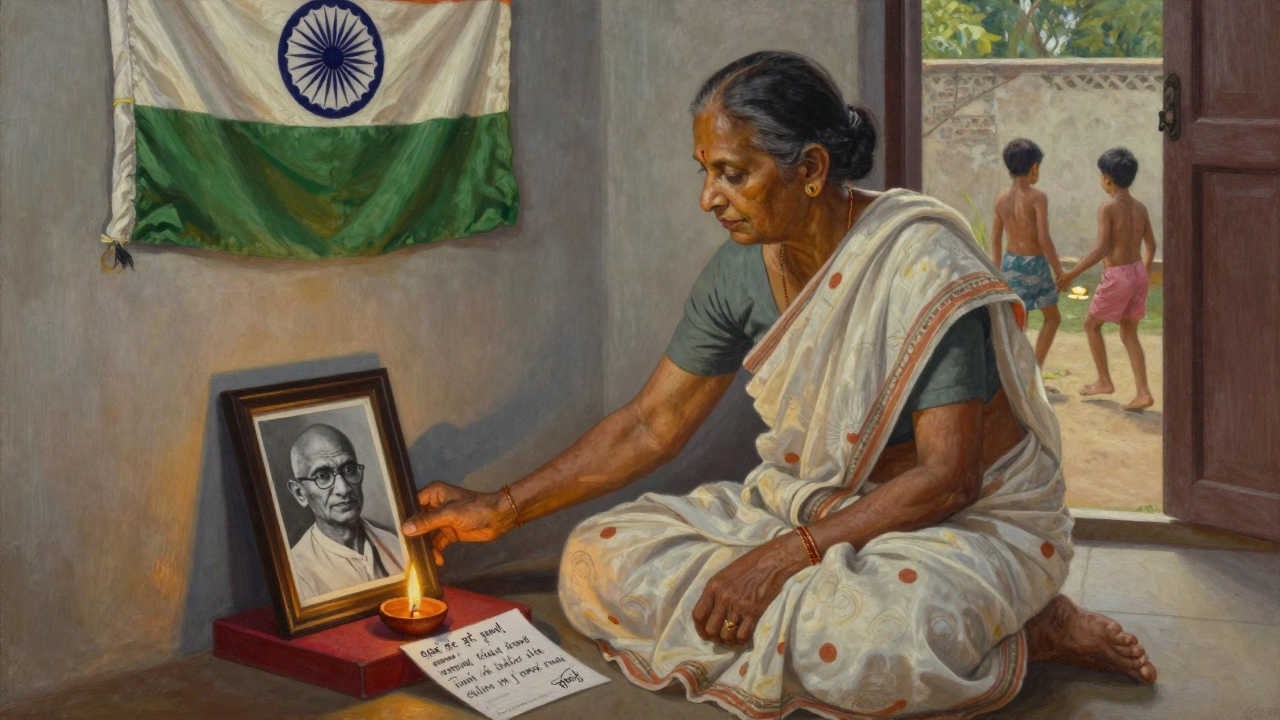
Look around you. The freedom fighters didn’t just want a new flag. They wanted a new kind of person. Someone who could stand up for justice, even when it was unpopular. Someone who could forgive but never forget. Someone who could dream without asking permission.
Today, that spirit lives in the girl in rural Bihar who started a YouTube channel to teach girls math. In the man in Chennai who turned his scooter into a mobile library. In the teenager in Pune who organized a clean-up drive after seeing the river choked with plastic.
These aren’t grand gestures. They’re quiet acts of independence. And that’s exactly what Gandhi meant. Freedom isn’t a parade. It’s the daily choice to act with courage, even when no one’s watching.
What These Quotes Teach Us About Spirituality
There’s a reason these quotes show up in spiritual spaces. They’re not political slogans-they’re spiritual truths. Gandhi’s life was shaped by the Upanishads, the Bhagavad Gita, and the Sermon on the Mount. His idea of freedom wasn’t about power. It was about inner peace.
True spirituality, in this context, means being unshakable. Not because you’re strong, but because you’re free inside. You don’t need approval. You don’t need applause. You just need to know what’s right-and do it anyway.
That’s why you’ll find these quotes in ashrams in Rishikesh, next to yoga mats in Mysore, and in prayer circles in the Canadian suburbs. They’re not about nationalism. They’re about awakening.
How to Use These Quotes Today
Don’t just memorize them. Live them.
- Write one on your mirror. Not for motivation. For accountability.
- When you’re afraid to speak up at work, ask: "What would Bhagat Singh do?"
- When you’re tempted to stay silent when someone is treated unfairly, remember: freedom includes the right to speak.
- Teach a child one of these quotes-not as history, but as a rule for life.
On August 15, don’t just post a quote. Ask yourself: What did I do today that made me freer than I was yesterday?
Why This Matters Beyond India
These quotes aren’t just for Indians. They’re for anyone who’s ever felt trapped-by society, by fear, by their own doubts.
People in Ukraine, in Hong Kong, in Brazil, in South Africa-they’ve all used these same lines in their own struggles. Why? Because the fight for inner freedom is universal.
Gandhi’s words crossed borders because they didn’t ask for revolution. They asked for courage. And courage? That’s something every human being can choose, no matter where they’re from.