
Blackout Poetry Maker
Create Your Poem
Your Blackout Poem
Your selected words become a poem:
Select words to see your poem here.
How to use this tool:
- 1 Paste any text into the box above
- 2 Click words to select them (they'll turn purple)
- 3 Click "Generate Poem" to see your creation
- 4 Try different selections to find hidden meaning
Have you ever looked at a newspaper page and seen a poem hiding between the headlines? That’s blackout poetry - a quiet, powerful way to turn ordinary text into something deeply personal. You don’t need to be a writer. You don’t even need to know how to rhyme. All you need is a pen, a marker, and a page full of words you don’t care about anymore.
What Exactly Is Blackout Poetry?
Blackout poetry is a form of found poetry where you take an existing piece of text - like a newspaper article, a textbook page, or even an old letter - and erase most of it. What’s left becomes your poem. The words you keep are arranged to form meaning, emotion, or rhythm. The rest? You black it out with a marker, turning the page into a visual art piece.
It’s not about writing new words. It’s about discovering hidden ones. The original text becomes your canvas. Your pen becomes your scalpel. And suddenly, a sentence about stock prices turns into a line about loneliness. A weather report becomes a metaphor for heartbreak.
This style of poetry became popular in the 2000s, but its roots go deeper. In India, poets have long used existing texts - from religious scriptures to government notices - to create layered, silent commentary. Blackout poetry gives that tradition a modern shape.
How Is It Different From Other Poetry?
Most poetry starts with a blank page. Blackout poetry starts with a crowded one. You’re not making something from nothing. You’re uncovering something that was already there.
Compare it to free verse: free verse is about flow, rhythm, and personal expression. Blackout poetry is about limitation. You can only use the words already on the page. That’s the challenge. That’s the magic.
It also differs from concrete poetry, where the shape of the text forms a picture. Blackout poetry is more about meaning than form. The shape of the blacked-out areas might look like shadows or silence - but the power comes from what’s left behind.
Why Do People Make It?
For many, blackout poetry is a form of meditation. You sit with a page. You read slowly. You pause. You circle a word. Then another. You don’t force the poem. You let it reveal itself.
It’s also a way to reclaim language. In a world full of noise - ads, headlines, social media posts - blackout poetry lets you say: These words matter. These don’t. You’re not just reading. You’re editing. You’re choosing.
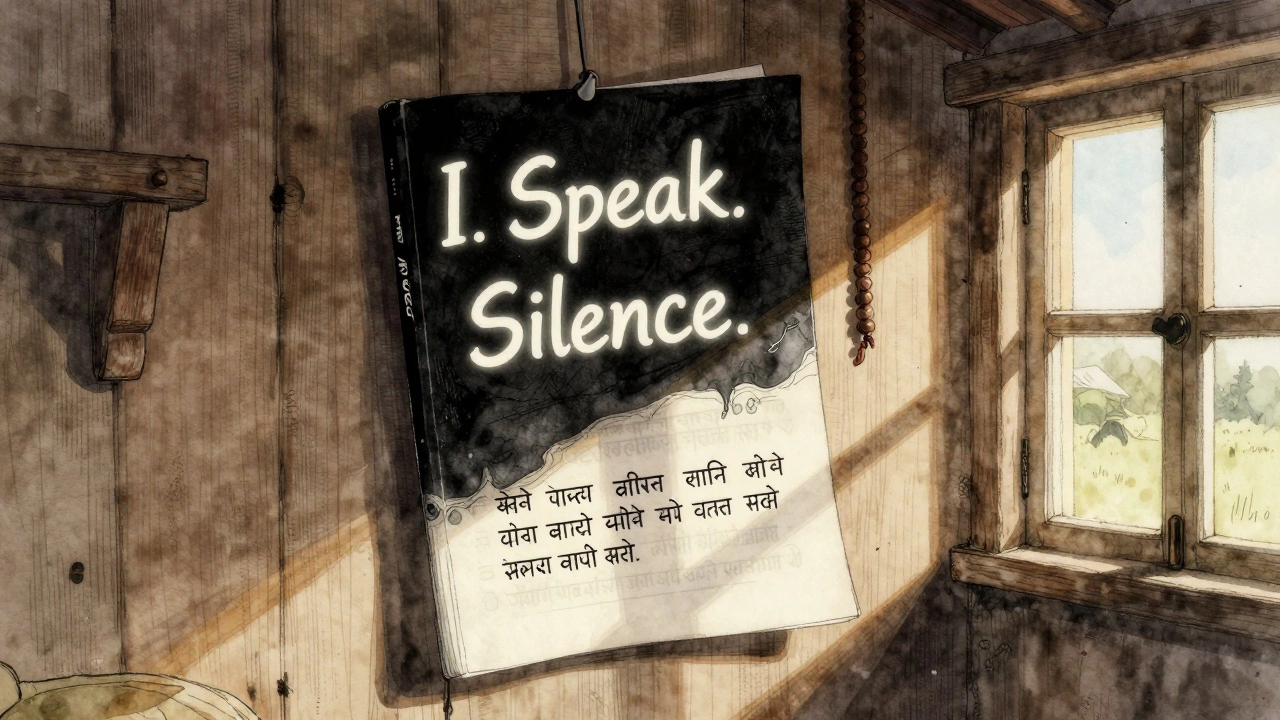
In India, where newspapers are still a daily ritual in homes across cities and villages, blackout poetry has become a quiet act of resistance. A student in Jaipur might blackout a government notice about water shortages and leave only: “We wait. We hope. We are still here.” A grandmother in Chennai might turn a recipe page into a love letter to her late husband: “Sugar. Heat. Time. You.”
How to Make Your Own Blackout Poetry
Here’s how to start - no experience needed.
- Find a page. Use an old newspaper, a magazine, a textbook, or even a printed email. The more text, the better.
- Read it once. Don’t think about poetry. Just read. Let words catch your attention.
- Circle the words that feel alive. Not the ones that make sense. The ones that feel right. A single word like “still” or “burn” might be enough.
- Connect the dots. Look for a thread - a feeling, a question, a memory. Do the words you circled tell a story? A question? A whisper?
- Black out the rest. Use a permanent marker. Cover everything except your chosen words. Don’t worry about neatness. The mess is part of the art.
- Read it aloud. Does it sound like something you meant to say?
There’s no right way. A poem can be one line. Or five. It can be silent. Or loud. It can be angry. Or tender. The only rule? Let it be yours.
Real Examples From India
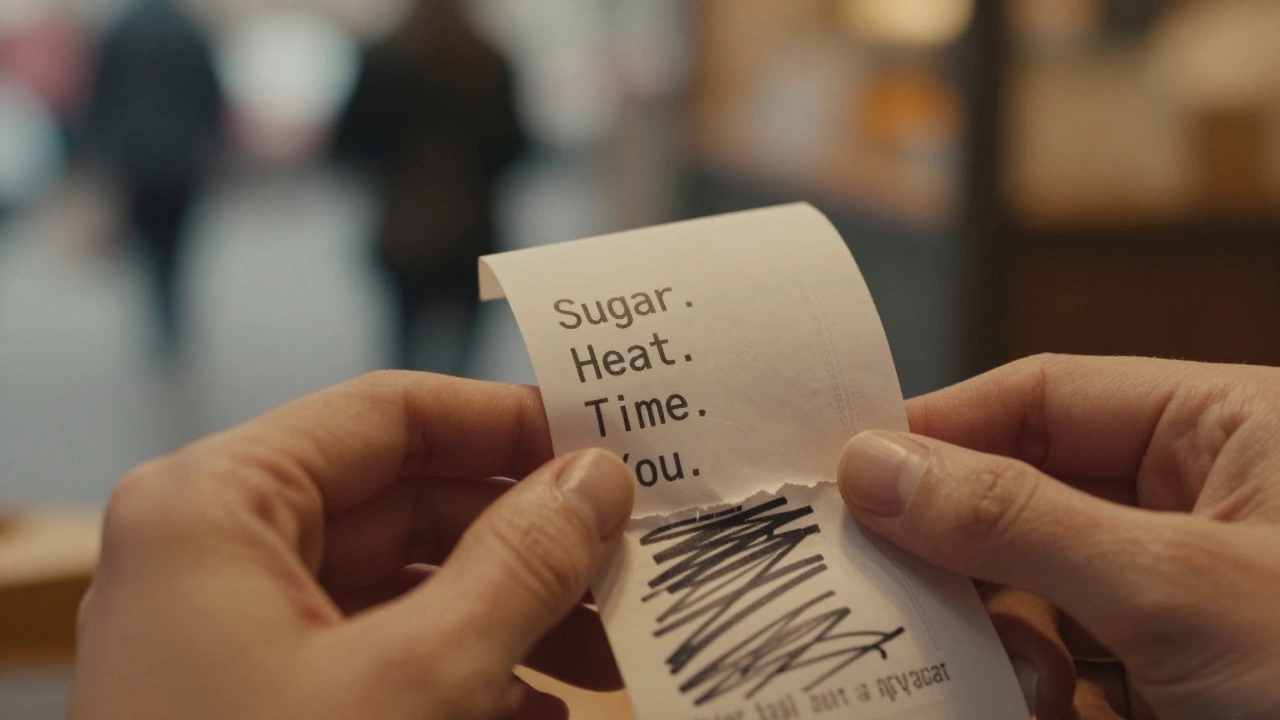
One student in Lucknow took a page from a Hindi grammar book. She blacked out every word except: “I. Speak. Silence.” She posted it on her wall. A teacher saw it and asked if she wrote it. She said, “No. I found it.”
A man in Varanasi used a page from a travel brochure. He left: “The river. Always. Calling.” He framed it and hung it by his window. Every morning, he reads it before he prays.
These aren’t famous poems. They’re quiet ones. But they matter. Because they’re true.
What You Need to Get Started
You don’t need special tools. Here’s what works:
- Text source: Newspapers (The Hindu, Times of India), old books, printed letters, or even handwritten notes.
- Marker: A thick black permanent marker (like a Sharpie) works best. It covers cleanly.
- Pencil: Lightly sketch your words before you black out. You can erase mistakes.
- Patience: Don’t rush. Let the poem come to you. Sometimes it takes 20 minutes. Sometimes it takes a week.
Some people use colored markers. Others use paint. A few even burn the paper slightly to add texture. But the simplest version - pen, marker, page - is still the most powerful.
Where to Find Inspiration
If you’re stuck, look around you:
- Old grocery lists
- Bus tickets
- Receipts from chai stalls
- Handwritten notes from school
- Pages from religious texts (if you feel comfortable)
In India, language is everywhere. On walls. On signs. On wrappers. You don’t need to go looking for poetry. It’s already written. You just need to see it.
What This Poetry Teaches Us
Blackout poetry doesn’t ask you to be brilliant. It asks you to be present.
It teaches you to slow down. To notice. To listen - not just to what’s said, but to what’s unsaid. In a country where millions read the same headlines, blackout poetry lets you find your own truth inside them.
It’s also deeply democratic. You don’t need to be published. You don’t need a degree. You don’t need to speak English or Hindi or Tamil. You just need to care enough to look again.
And sometimes, that’s enough.
Can blackout poetry be made in languages other than English?
Yes, absolutely. Blackout poetry works in any language - Hindi, Tamil, Punjabi, Bengali, or any other. The beauty of it is that it doesn’t rely on rhyme or grammar. It relies on meaning and emotion. Many poets in India create blackout poems using newspaper clippings in regional languages, turning bureaucratic notices or religious texts into personal reflections.
Do I need to use a newspaper, or can I use any text?
You can use any printed text. Newspapers are popular because they’re full of dense language and easy to find. But people also use old books, letters, receipts, menus, or even printed social media posts. The key is that the text already exists - you’re not writing new words, you’re revealing hidden ones.
Is blackout poetry considered real poetry?
Yes. It’s recognized by poets, artists, and educators around the world. It’s taught in schools in the U.S., Canada, and parts of India. While it’s different from traditional poetry, it shares the same goal: to express emotion, truth, or insight through carefully chosen words. Many literary journals now accept blackout poetry as a legitimate form.
Can children make blackout poetry?
Yes, and many do. It’s a great way for kids to engage with language without pressure. Teachers in Delhi and Pune use blackout poetry in classrooms to help students explore emotions, build focus, and find their voice. A 10-year-old might blackout a science textbook and leave: “Stars. Sleep. Dreams.” That’s poetry.
Is blackout poetry only for art projects?
No. While it’s often used in art classes, many people make it for personal reasons - grief, healing, memory, or quiet rebellion. In India, it’s become a way for people to process daily life: a woman might blackout a grocery list to reveal “You left. I stayed.” It’s not performance. It’s survival.