Gujarat Travel Dress Code Planner
Select the items you have packed or planned to wear. The tool will verify if your outfit is suitable for temples, rural areas, and festivals.
Readiness Score
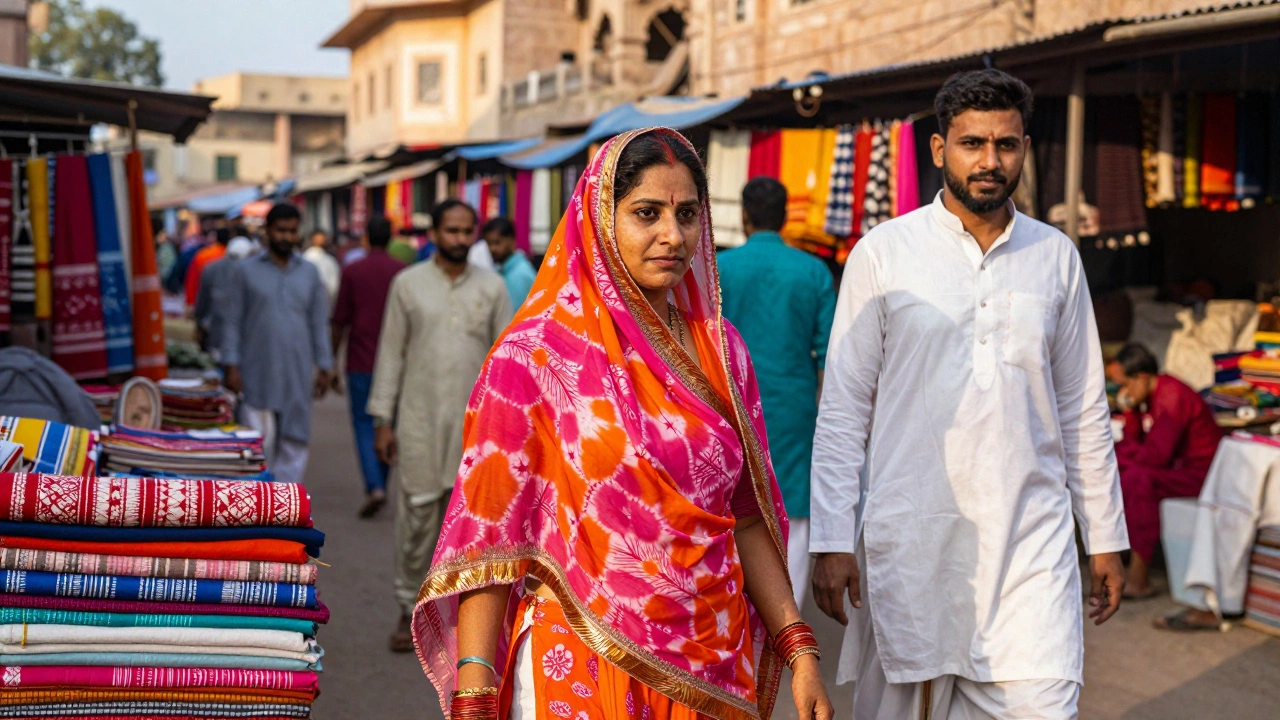
Imagine walking through the vibrant streets of Ahmedabad or visiting a bustling temple in Somnath. You notice something immediately: the clothes people wear aren't just about covering up; they are loud, colorful, and deeply meaningful. If you are planning a trip to Gujarat, understanding the local dress code is more than just a fashion tip-it is a key to respecting the culture and staying comfortable in the heat.
Gujarat is one of India’s most culturally diverse states. It is home to over 30 distinct communities, each with its own unique style. There isn’t one single "uniform" for the entire state. Instead, the dress code shifts depending on whether you are in the desert regions of Kutch, the coastal areas of Saurashtra, or the urban centers like Gandhinagar. However, there are common threads-literally and figuratively-that tie these styles together.
The Core Elements of Gujarati Traditional Wear
To understand what people wear, you have to look at the materials. Gujarat has a hot climate for most of the year, so breathability is king. Cotton is the primary fabric used daily. But when it comes to festivals, weddings, or special occasions, the textiles become incredibly intricate.
Two fabrics define the region’s textile heritage: Patola silk is a double-ikat silk fabric known for its complex geometric patterns and high value. Also known as Double Ikat, it is handwoven in Patan and can take months to create a single pair of sarees. The precision required to align the dye patterns on both sides of the fabric makes it one of the most expensive textiles in the world. Another staple is Bandhani is a tie-dye technique where tiny dots are created by tying threads around the fabric before dyeing. This method produces vibrant, polka-dot patterns that are iconic across western India.
For men, the traditional outfit often includes a kurta (a long tunic) paired with a dhoti or loose cotton trousers. In rural areas, you will still see many men wearing the fara, a long piece of cloth wrapped around the waist and legs, which allows for ease of movement while working in fields. Women traditionally wear the ghagra choli (a long skirt and blouse combination) with an odhni (a scarf draped over the head or shoulders).
Regional Variations: From Kutch to Saurashtra
If you think "Gujarati dress" looks the same everywhere, a quick trip to different districts will prove otherwise. The geography dictates the style.
| Region | Key Characteristics | Distinctive Features | Common Occasions |
|---|---|---|---|
| Kutch | Bold colors, heavy embroidery | Mirror work, appliqué, and bandhani | Festivals, weddings |
| Saurashtra | Simple cotton, minimal jewelry | Plain white or pastel sarees with gold borders | Daily wear, religious ceremonies |
| North Gujarat (Patan/Ahmedabad) | Luxury silks, intricate weaving | Patola ikat patterns, rich reds and yellows | High-status weddings, gifts |
| South Gujarat | Influenced by Maharashtrian styles | Panetar sarees (white with red border), simpler cuts | Navratri, daily life |
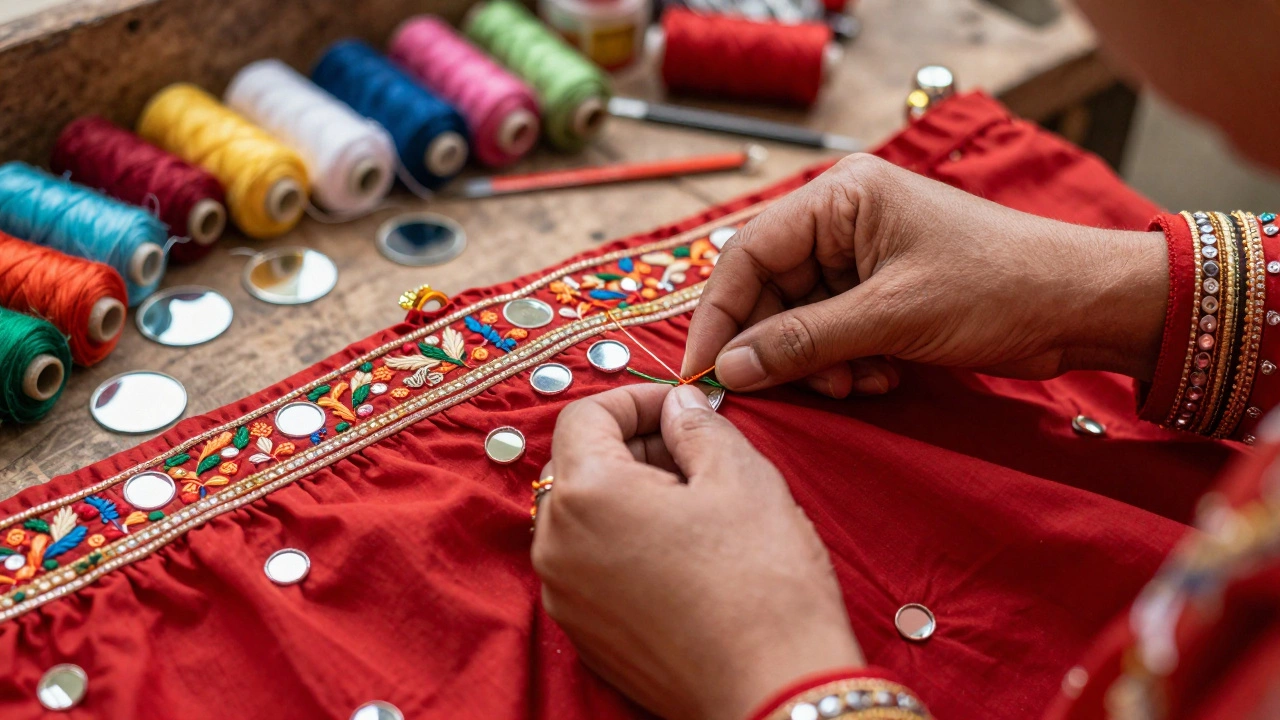
In Kutch, the women’s attire is a visual feast. The chaniya choli here is heavily embellished with mirror work (abhla) and bright threads. The odhni is often made of contrasting colors and features elaborate embroidery along the edges. This style is not just decorative; the mirrors reflect sunlight, keeping the wearer cooler, and the sturdy stitching withstands the harsh desert environment.
In contrast, the women of Saurashtra tend to prefer simplicity. A plain cotton saree in white, cream, or light pink with a subtle gold border is common. The focus here is on modesty and comfort rather than ostentation. Jewelry is also lighter, often consisting of simple gold chains or silver bangles.
Modern Adaptations: What Do People Wear Today?
While traditional wear remains strong during festivals like Navratri and Diwali, daily life in cities like Ahmedabad, Vadodara, and Surat has modernized significantly. You will see a blend of Western and Indian styles.
Younger generations often opt for fusion wear. A printed kurta might be paired with jeans, or a lightweight chiffon saree might be worn with a crop top instead of a traditional blouse. Men in corporate settings frequently wear shirts and trousers, reserving kurtas for weekends or family gatherings.
However, even in modern settings, certain cultural norms persist. For example, revealing clothing is generally frowned upon, especially in religious spaces or older neighborhoods. Shoulders and knees should usually be covered. This is not just about tradition; it is also about practicality in a conservative society.
Visiting Temples and Religious Sites
If your itinerary includes temples like the Somnath Temple, Dilwara Temples, or Swaminarayan Akshardham, you need to adjust your wardrobe accordingly. These places have strict dress codes that apply to everyone, regardless of religion.
- Cover Your Shoulders: Sleeveless tops, tank tops, and spaghetti straps are not allowed. Carry a shawl or scarf to drape over your shoulders.
- Avoid Shorts and Skirts Above the Knee: Long pants, jeans, or full-length skirts are preferred. Capris may be acceptable if they cover most of the leg, but it is safer to go longer.
- Remove Footwear: You will need to take off your shoes before entering the main temple area. Slip-on shoes or sandals are much easier to manage than laced boots.
- No Leather Items: Some strict temples prohibit leather bags, belts, or wallets inside the premises. Check specific rules before you arrive.
Many temples provide rental services for traditional attire if you are underdressed, but it is better to plan ahead. Wearing respectful clothing shows appreciation for the spiritual significance of the site.
Festival Fashion: Navratri and Beyond
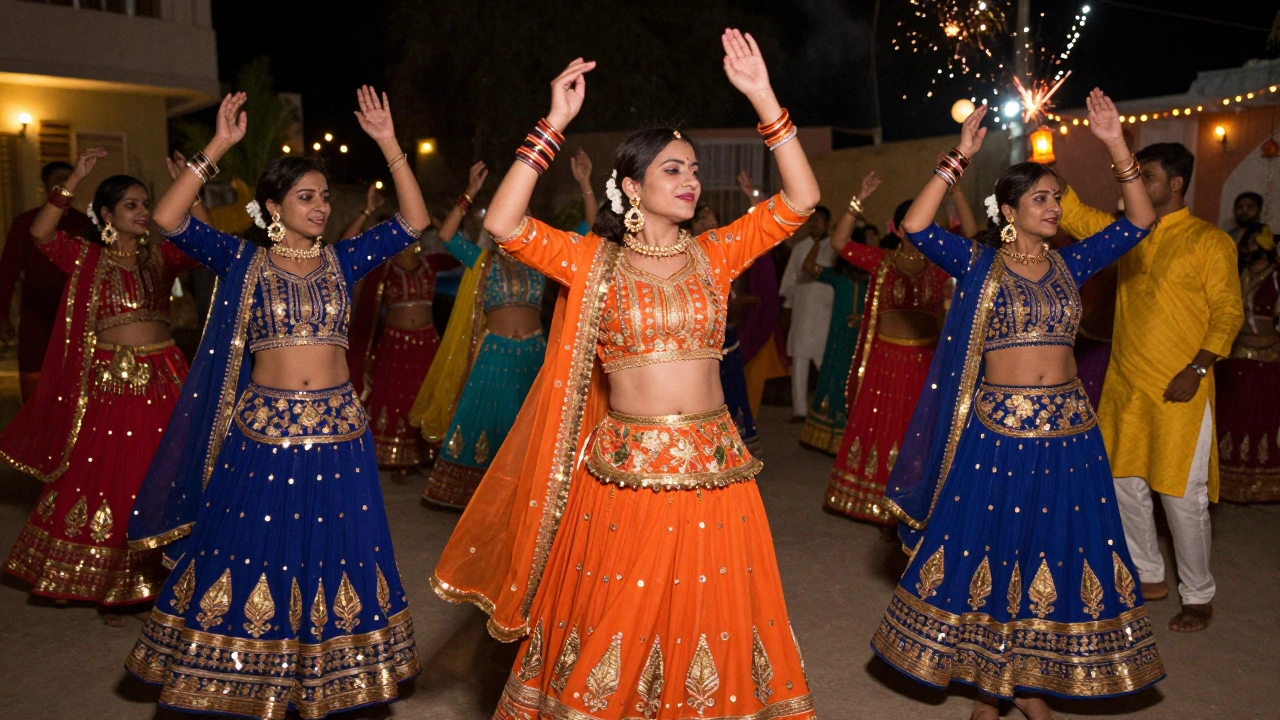
You cannot talk about Gujarati dress without mentioning Navratri. This nine-night festival is the pinnacle of traditional fashion in Gujarat. During this time, the entire state transforms into a sea of color.
Women wear brightly colored chaniya cholis with matching odhnis. The outfits are often accessorized with heavy jhumkas (earrings), bangles, and anklets. Men wear colorful kurtas with pyjamas or dhotis, sometimes adding a stole or shawl over the shoulder. The energy is infectious, and even visitors are encouraged to participate by wearing traditional clothes.
Buying a chaniya choli for Navratri is a common practice. Many families have heirloom pieces passed down through generations, but new designs are always popular. The market during Navratri is booming, with designers creating contemporary twists on classic patterns.
Practical Tips for Travelers
As a visitor, you don’t need to buy a full traditional wardrobe, but having a few key items will enhance your experience.
- Invest in a Scarf or Shawl: This is versatile. Use it to cover your head when entering temples, protect yourself from the sun, or add a layer when AC is too cold indoors.
- Choose Breathable Fabrics: Stick to cotton, linen, or rayon. Avoid synthetic materials like polyester, which trap heat and sweat.
- Respect Local Norms: In rural areas, dressing conservatively helps you blend in and avoid unwanted attention. Bright colors are welcome, but cut and coverage matter more.
- Footwear Matters: Comfortable walking shoes are essential, but ensure they are easy to remove. Sandals with straps are ideal for temple visits.
Shopping for traditional textiles is a great way to support local artisans. Markets like Law Garden in Ahmedabad or Bhuj in Kutch offer authentic Bandhani, Patola, and embroidered goods. Look for handloom labels to ensure you are buying genuine products.
Understanding the Symbolism Behind the Clothes
Gujarati clothing is not just about aesthetics; it carries deep symbolic meaning. Colors, patterns, and even the way a garment is draped can convey social status, marital status, or regional identity.
For instance, red and yellow are auspicious colors often worn during weddings and festivals. White is associated with purity and is commonly worn during religious rituals. The intricate patterns in Patola silk often depict motifs like peacocks, lotuses, and elephants, each symbolizing prosperity, beauty, and strength.
Embroidery techniques like roshi (appliqué) in Kutch tell stories of the community’s history and connection to nature. By wearing these garments, people keep their cultural heritage alive. When you see someone in traditional Gujarati attire, you are seeing a living piece of art that reflects centuries of craftsmanship.
What should I wear to a Gujarati wedding?
For a Gujarati wedding, opt for bright, festive colors like red, pink, orange, or green. Women can wear a lehenga, saree, or chaniya choli with heavy jewelry. Men should wear a sherwani, kurta pajama, or a formal suit. Avoid black or white, as these colors are associated with mourning in some contexts. Comfort is key since weddings involve lots of dancing and standing.
Is it okay to wear shorts in Gujarat?
Shorts are generally acceptable in tourist areas, malls, and among younger crowds in cities. However, they are inappropriate for visiting temples, rural villages, or conservative neighborhoods. To be safe, carry a pair of long pants or a scarf to cover up when needed. Respect for local customs will go a long way in making positive connections.
Where can I buy authentic Patola silk?
Authentic Patola silk is primarily woven in Patan, Gujarat. You can find it in specialized stores in Patan, Ahmedabad, and Vadodara. Look for the GI (Geographical Indication) tag to ensure authenticity. Be cautious of imitations, as real Patola can cost thousands of dollars due to the labor-intensive double-ikat process.
What is the difference between Bandhani and Tie-Dye?
Bandhani is a specific type of tie-dye originating from India, particularly Gujarat and Rajasthan. While all Bandhani is tie-dye, not all tie-dye is Bandhani. Bandhani involves tying tiny, precise knots with thread before dyeing, creating small, uniform dots. Other tie-dye methods may use larger folds or rubber bands, resulting in different patterns.
Do I need to cover my head in Gujarat?
Covering your head is mandatory in most Hindu temples in Gujarat. Women traditionally drape their odhni over their heads, while men may wear a cap or use a scarf. Outside of religious sites, head covering is not required, though it can be useful for sun protection. Always observe what locals are doing and follow suit.