Dance Difficulty Analyzer
Select a dance form to understand its primary challenges, physical demands, and mental load based on expert analysis.
Have you ever watched a dancer spin so fast that they look like a blur, or strike a pose with such precision it seems impossible for human joints? You might wonder, what is the hardest dance to learn? The answer isn’t simple because "hard" means different things to different people. For some, it’s the physical toll of ballet. For others, it’s the mental gymnastics required to remember thousands of steps in Indian classical dance.
If you are looking to start dancing or just curious about the discipline behind these art forms, understanding what makes them difficult is key. We often hear that Indian classical dances like Kathak is a North Indian classical dance form known for its intricate footwork, spins (chakkars), and storytelling through gestures are incredibly tough. But is it harder than the rigid structure of Ballet is a Western classical dance style characterized by precise movements, turnout, and pointe work? Let’s break down the specific challenges of the world’s most demanding dance forms.
The Mental Maze: Why Kathak Is a Brain Workout
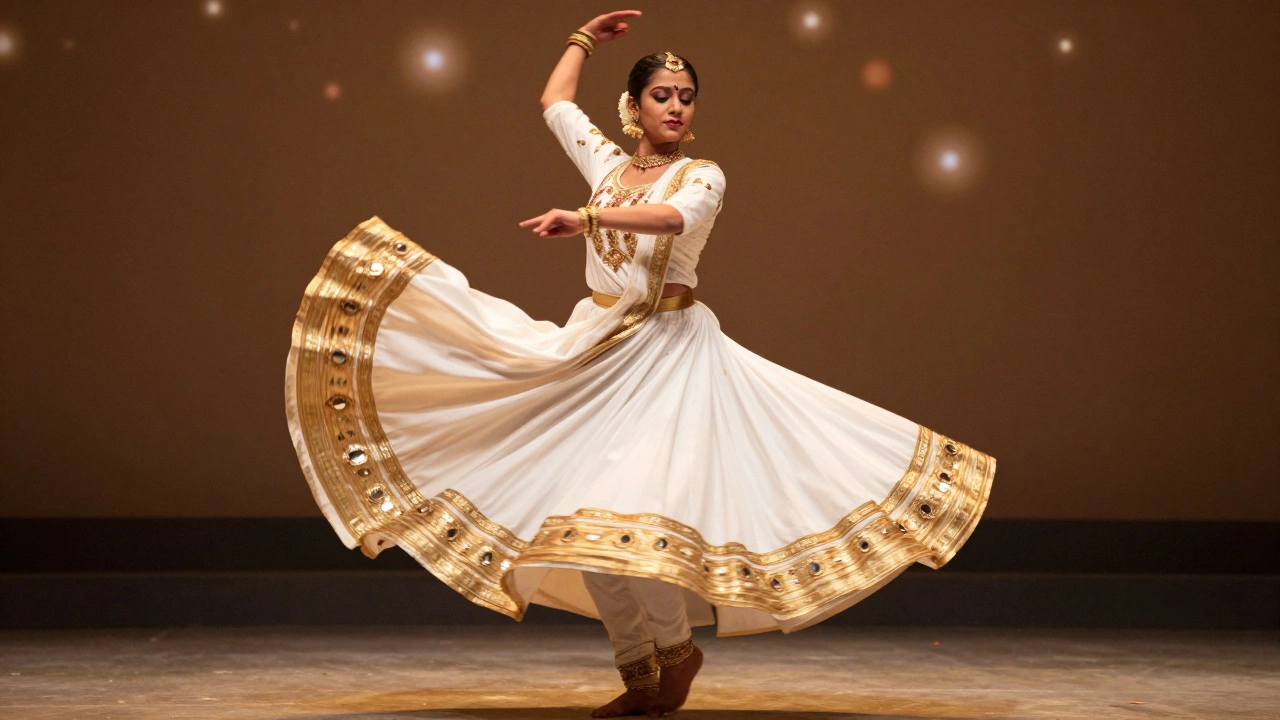
When we talk about the hardest dance to learn in the context of regional Indian forms, Kathak is a North Indian classical dance form known for its intricate footwork, spins (chakkars), and storytelling through gestures often tops the list. But why? It’s not just about moving your feet; it’s about doing math while spinning.
Kathak relies heavily on Tala is the rhythmic cycle in Indian classical music and dance, serving as the time framework for performance. Think of Tala as a musical clock. In Kathak, you don’t just keep time; you play with it. A beginner learns basic cycles like Teentaal (16 beats). An advanced dancer performs in Ektal (12 beats) or Dadra (6 beats), but the real challenge comes when you have to hit the first beat (Sam) after a complex sequence of subdivisions.
Imagine trying to count fractions while running a marathon. That is essentially what a Kathak dancer does. They must execute Chakkars are rapid, controlled spins in Kathak dance that require core strength and balance-sometimes dozens in a row-while simultaneously tracking the rhythm in their head. If you miss the beat, the entire illusion breaks. This cognitive load makes Kathak mentally exhausting. You aren’t just memorizing steps; you are improvising within a strict mathematical grid.
Furthermore, Kathak involves Abhinaya is the expressive aspect of Indian classical dance involving facial expressions and hand gestures to convey emotions and stories. While your feet are calculating rhythms, your face must tell a story of love, anger, or devotion. Splitting your attention between high-speed footwork and subtle facial expressions is a skill that takes years to master.
The Physical Sculpture: The Rigor of Bharatanatyam
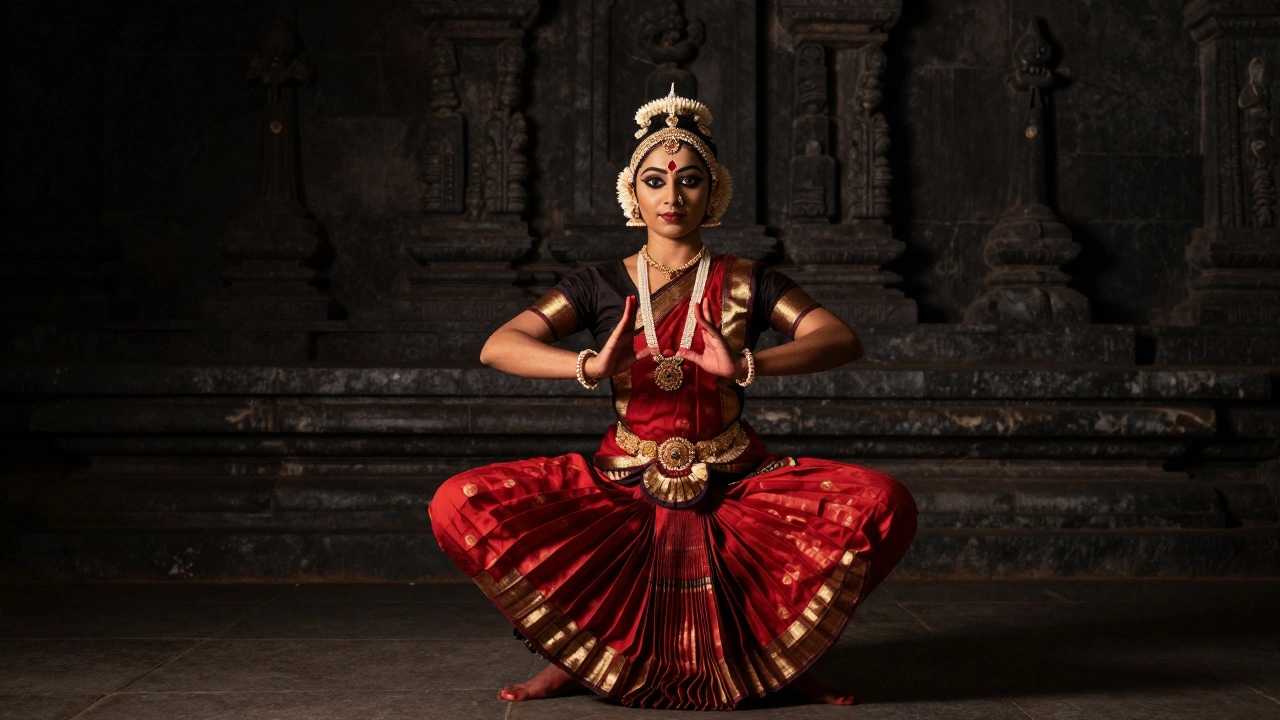
If Kathak is a mental maze, Bharatanatyam is a South Indian classical dance form originating from Tamil Nadu, known for its sculptural poses, geometric patterns, and spiritual themes is a physical sculpture. Originating in the temples of Tamil Nadu, this dance form demands extreme flexibility, core strength, and joint stability.
The foundation of Bharatanatyam is the Aramandi is the basic semi-seated stance in Bharatanatyam where knees are bent outward and heels are lifted, requiring significant leg strength. Dancers spend hours in this position. Unlike ballet, where you rise onto toes, here you stay low. Your thighs burn, your ankles twist, and your back stays perfectly straight. Maintaining Aramandi for an hour-long performance requires endurance comparable to a powerlifter.
Bharatanatyam also features complex geometric patterns. Dancers move in sharp angles, creating triangles and squares with their bodies. Every finger movement, every eye glance, is codified. There is no room for "approximate." If your hand gesture (Mudra is symbolic hand gestures in Indian classical dance used to represent objects, animals, or concepts) is slightly off, the meaning changes completely. This precision, combined with the physical strain of staying in a deep squat, makes it physically one of the hardest dances to sustain.
Western Comparison: The Pain of Ballet
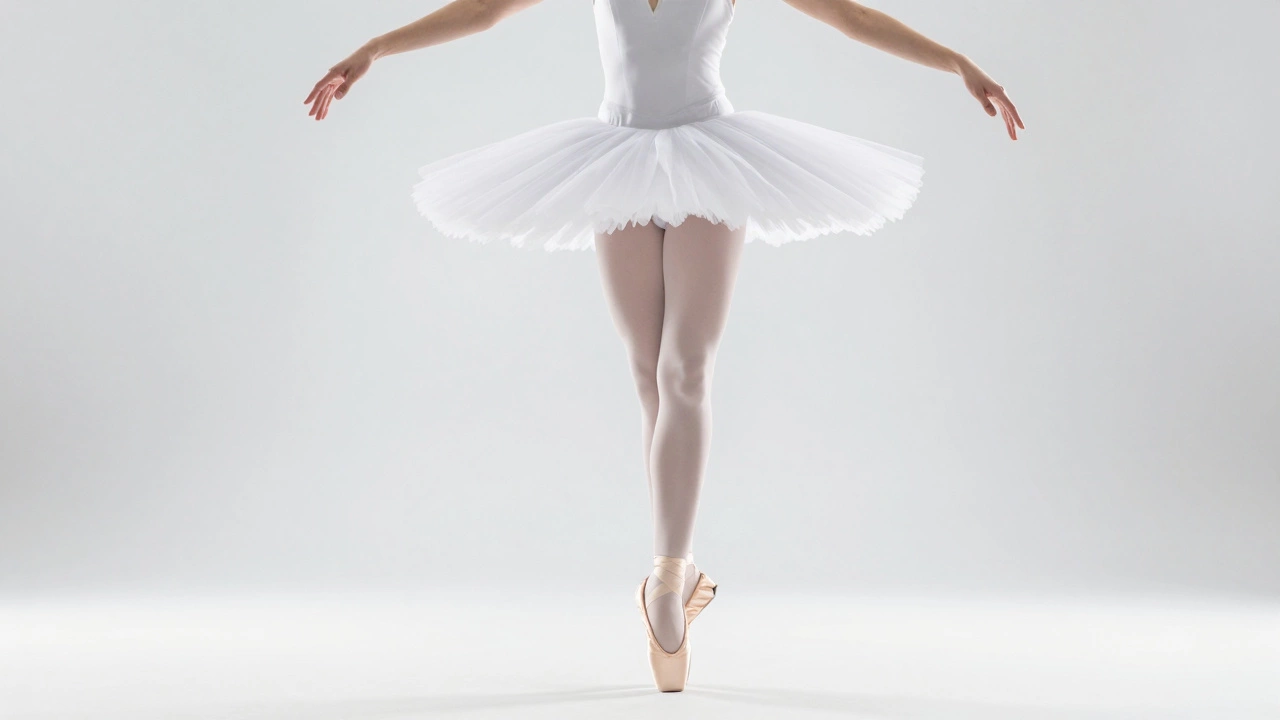
We cannot discuss dance difficulty without mentioning Ballet is a Western classical dance style characterized by precise movements, turnout, and pointe work. For many, the image of a ballerina on pointe is the ultimate symbol of dance hardship. And rightly so. Dancing en pointe involves balancing your entire body weight on the tips of your toes. This places immense pressure on the metatarsals and can lead to chronic injuries if not done correctly.
Ballet requires a level of anatomical alignment that goes against natural human posture. The "turnout"-rotating legs outward from the hips-is essential. Doing this correctly prevents injury, but achieving it requires flexible hips and strong muscles. Many dancers train for decades to perfect a simple pirouette.
However, compared to Indian classical dances, ballet has a more standardized curriculum. Once you learn the five positions, you apply them everywhere. In contrast, Indian classical dances vary significantly by region and guru (teacher). This lack of standardization can make the learning curve steeper for beginners who switch teachers or styles.
Comparing the Challenges: A Side-by-Side Look
To understand which is truly the "hardest," we need to compare the specific demands of each style. Here is how they stack up against each other in terms of physical and mental requirements.
| Dance Form | Primary Challenge | Physical Demand | Mental Load | Learning Curve |
|---|---|---|---|---|
| Kathak | Rhythmic Calculation & Spins | High (Core & Legs) | Very High (Math + Expression) | Steep (Improvisation needed) |
| Bharatanatyam | Posture & Precision | Extreme (Endurance) | High (Memory & Gesture) | Gradual but rigorous |
| Ballet | Alignment & Balance | Extreme (Joints & Toes) | Medium (Muscle Memory) | Long (Years for basics) |
| Odissi | Flexibility & Torso Movement | High (Spine & Hips) | Medium (Flow & Rhythm) | Moderate |
As you can see, Kathak is a North Indian classical dance form known for its intricate footwork, spins (chakkars), and storytelling through gestures scores highest on mental load due to the need for real-time rhythmic calculation. Bharatanatyam is a South Indian classical dance form originating from Tamil Nadu, known for its sculptural poses, geometric patterns, and spiritual themes wins on physical endurance. Ballet is a Western classical dance style characterized by precise movements, turnout, and pointe work is the hardest in terms of joint stress and anatomical correction.
The Role of Age and Genetics
It is important to note that "difficulty" is subjective. Starting ballet at age six is vastly different from starting at twenty. Younger bodies adapt faster to the extreme flexibility required. Similarly, Indian classical dances benefit from early training because the muscle memory for complex footwork develops naturally over time.
Genetics also play a role. Some people naturally have hypermobile joints, making splits easier. Others have a natural sense of rhythm, making Tala easier to grasp. However, talent alone doesn’t make a dancer. Discipline does. The hardest part of any dance is not the step itself, but the thousands of hours of repetitive practice required to make it look effortless.
Which One Should You Choose?
If you love logic, patterns, and storytelling, Kathak is a North Indian classical dance form known for its intricate footwork, spins (chakkars), and storytelling through gestures might be your challenge. It engages your brain as much as your body. If you prefer structure, spirituality, and building raw strength, Bharatanatyam is a South Indian classical dance form originating from Tamil Nadu, known for its sculptural poses, geometric patterns, and spiritual themes offers a profound physical journey. If you dream of elegance and verticality, ballet is worth the pain.
Remember, the hardest dance to learn is the one you give up on. Consistency beats intensity. Whether you choose Kathak, Bharatanatyam, or Ballet, the reward is not just the performance, but the transformation of your mind and body.
Is Kathak harder than Bharatanatyam?
It depends on your strengths. Kathak is generally considered harder mentally due to the complex rhythmic calculations (Tala) and improvisation required during performances. Bharatanatyam is physically more demanding due to the sustained semi-seated posture (Aramandi) and strict geometric precision. Both require years of dedicated practice.
Can adults learn Indian classical dance?
Yes, absolutely. While children may pick up flexibility faster, adults often have better discipline and understanding of the cultural context. Many gurus specialize in adult classes, focusing on proper technique and enjoyment rather than competitive performance.
What is the most difficult dance move in the world?
There is no single "most difficult" move, but moves like the Grand Jeté in ballet, the Chakkar in Kathak, and the Adavus in Bharatanatyam are considered highly advanced. These moves require a combination of strength, flexibility, balance, and timing that takes years to master.
How long does it take to become proficient in Kathak?
Proficiency varies, but typically it takes 5-7 years of consistent training to perform a full recital confidently. Mastery, including improvisation and deep Abhinaya, can take 10-15 years or more under a skilled Guru.
Do I need to be flexible to start learning dance?
No, you do not need to be flexible to start. Flexibility is developed through consistent stretching and practice as part of the training regimen. Starting with good technique is more important than initial flexibility to prevent injuries.