Hindu Festival Scale & Impact Calculator
Configuration
Analysis Results
Select a festival and budget to see the estimated scale and economic impact.
Imagine a city where every street turns into a river of color, or a neighborhood that shuts down completely for ten days of devotion. If you ask someone on the ground in India what the biggest festival is, you might get three different answers depending on which state they are from. But if we look at the numbers-participation rates, economic impact, and geographic spread-one name stands out as the undisputed heavyweight champion.
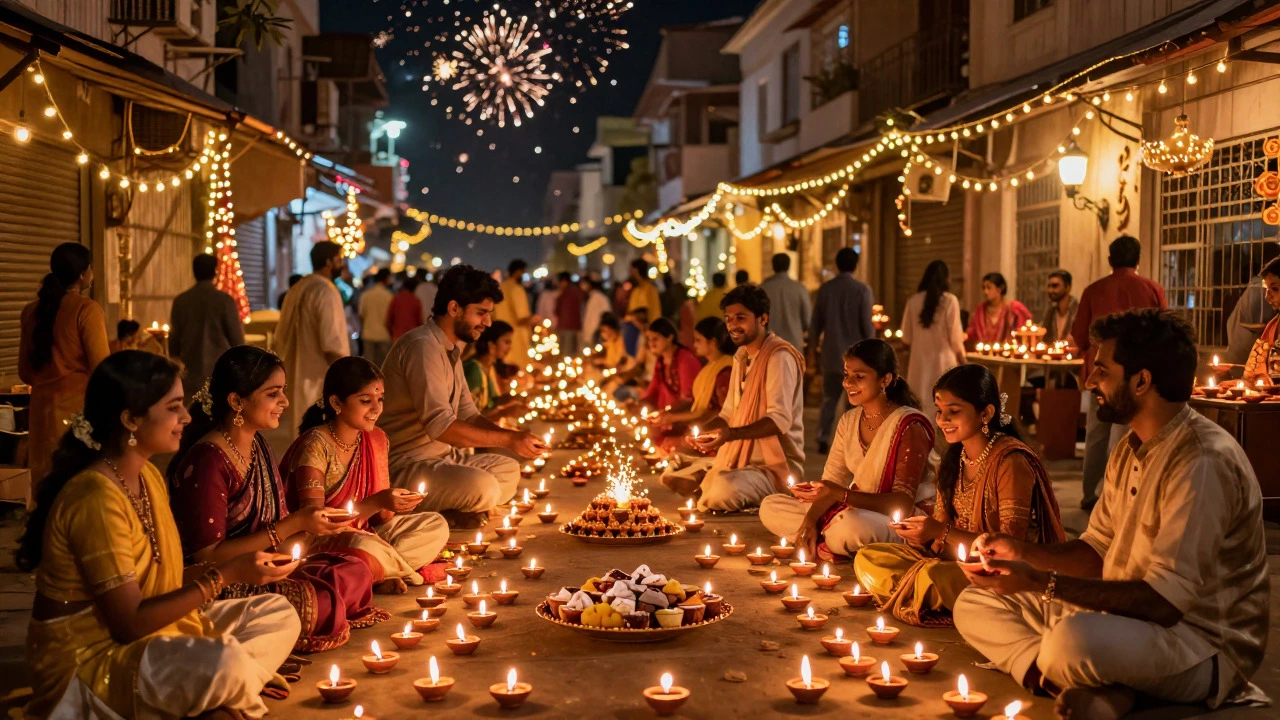
The answer to what is the largest Hindu festival is generally considered to be Diwali, also known as Deepavali. It is celebrated by over a billion people across the Indian subcontinent and the global diaspora. However, calling it just "big" doesn't do justice to the scale. To understand why Diwali holds this title, and why festivals like Durga Puja and Holi are fierce contenders, we need to break down what "largest" actually means in the context of Indian culture.
Defining "Largest": Participation vs. Intensity
When we talk about size, we usually mean two things: how many people show up, and how much effort (and money) goes into it. Diwali wins on pure participation. It is celebrated not just in India, but in Nepal, Sri Lanka, Singapore, Malaysia, Fiji, and increasingly in major cities like London, New York, and Toronto. It cuts across caste, class, and regional lines. A farmer in Punjab and a tech worker in Bangalore both light lamps on the same night.
However, intensity tells a different story. In West Bengal, Durga Puja isn't just a religious observance; it is a civic identity. For ten days, the entire state essentially pauses. The cultural weight here is heavier than anywhere else for any other festival. Similarly, Holi sees massive physical gatherings in places like Mathura and Vrindavan, drawing millions of pilgrims who would never attend a temple service otherwise. So, while Diwali is the widest net, Durga Puja is the deepest dive, and Holi is the most visceral experience.
Why Diwali Takes the Crown
Diwali symbolizes the victory of light over darkness and knowledge over ignorance. Its dominance comes from its universal appeal and its role as a reset button for financial and social life. Here is why it edges out the competition:
- National Reach: Unlike regional festivals, Diwali is pan-Indian. Every state has its own mythological reason for celebrating it-Rama’s return to Ayodhya in the North, Krishna defeating Narakasura in the South, and Vishnu waking up from his cosmic sleep in some traditions. This shared narrative creates a unified national holiday.
- Economic Engine: Diwali drives the Indian economy more than any other event. Retail sales spike by nearly 30% during the festive season. From buying gold coins to renovating homes, the spending habit is ingrained in the culture. In 2025 alone, online shopping platforms reported record-breaking traffic during the Diwali window.
- Diaspora Impact: Because it is visual and celebratory rather than strictly ritualistic, Diwali translates well globally. City halls in London, Paris, and Sydney light up orange. This global visibility reinforces its status as the face of Hinduism worldwide.
The preparation starts weeks in advance. Cleaning houses, buying new clothes, and making sweets are non-negotiable tasks. It is less about a single day of worship and more about a month-long cycle of renewal.
The Contender: Durga Puja in West Bengal
If Diwali is the king of breadth, Durga Puja is the queen of depth. Celebrated primarily in West Bengal, Tripura, Assam, and Odisha, this festival honors Goddess Durga’s victory over the buffalo demon Mahishasura. While the number of participants is lower than Diwali’s billion-plus, the density of engagement is unmatched.
In Kolkata, the capital of West Bengal, the city transforms into an open-air art gallery. Neighborhood associations, called pandals, compete to build the most elaborate temporary structures housing idols of the goddess. These aren't just shrines; they are architectural marvels using bamboo, paper-mache, and eco-friendly materials. In recent years, themes have ranged from climate change awareness to social justice, showing how the festival evolves with contemporary issues.
The economic impact is staggering locally. During the ten-day festival, Kolkata’s tourism revenue can exceed that of the rest of the year combined. People travel from Mumbai, Delhi, and even abroad just to see the idol immersion (Visarjan). The emotional connection is profound; for Bengalis, missing Durga Puja feels like missing Christmas for Americans. It defines their cultural calendar more than any other event.
Holi: The Festival of Colors and Chaos
Then there is Holi, the spring festival marking the triumph of good over evil through the legend of Holika and Prahlad. Holi is unique because it breaks social barriers. For one day, age, gender, and status differences dissolve in clouds of colored powder.
While Diwali is solemn and family-oriented, Holi is public and chaotic. The largest gatherings occur in Mathura and Vrindavan, where thousands of devotees gather to play with colors and sing devotional songs. The famous Lathmar Holi in Barsana, where women playfully beat men with sticks, draws huge crowds. However, Holi’s "size" is limited by geography and weather. It is predominantly celebrated in North India, whereas Diwali and Durga Puja have stronger footholds in the South and East respectively.
Despite its smaller geographic footprint, Holi has gained massive popularity due to social media. Videos of colorful celebrations go viral globally, making it arguably the most recognized Hindu festival visually, even if fewer people participate in the traditional rituals compared to Diwali.
Comparison of Major Hindu Festivals
| Festival | Primary Region | Duration | Key Activity | Estimated Participants |
|---|---|---|---|---|
| Diwali | Pan-India & Global | 5 Days | Lamp lighting, Fireworks, Family feasts | >1 Billion |
| Durga Puja | East India (Bengal) | 10 Days | Idol worship, Pandal hopping, Cultural programs | ~100 Million |
| Holi | North India | 2 Days | Color throwing, Bonfires | ~200 Million |
| Kumbh Mela | Rotating Locations | 45+ Days | Ritual bathing in sacred rivers | ~100 Million (per event) |
Note that Kumbh Mela is technically the largest gathering of humans on Earth, but it occurs only once every 12 years at rotating locations (Prayagraj, Haridwar, Nashik, Ujjain). Since it is not an annual recurring festival for the general population, it is often excluded from the "annual largest festival" debate, though its peak attendance dwarfs all others.
The Role of Religion and Mythology
Understanding these festivals requires understanding the stories behind them. Diwali is rooted in the Ramayana and Mahabharata. For most Hindus, it commemorates Lord Rama’s return to Ayodhya after 14 years of exile. In the South, it marks Krishna’s defeat of the demon Narakasura. In Jainism, it marks Mahavira’s attainment of Nirvana. In Sikhism, it marks the release of Guru Hargobind Ji from prison. This multi-religious overlap contributes to its massive scale.
Durga Puja, conversely, is deeply tied to Shaktism, the worship of the Divine Mother. The mythology is specific to the battle between Goddess Durga and Mahishasura. While other sects respect the goddess, the cultural fervor is concentrated among followers of Shaktism and Bengali culture specifically.
Holi connects to the story of Prahlad, a devotee of Vishnu, who survived a fire meant to kill him, thanks to his faith. It also celebrates the divine love of Radha and Krishna. The mythology is playful and romantic, which explains the festive, less rigid nature of the celebrations.
Modern Challenges and Evolution
As India urbanizes, these festivals are changing. Air pollution has become a major concern, especially during Diwali fireworks and Holi colors. Many cities now ban firecrackers, leading to a shift towards "eco-friendly" celebrations. Electric diyas (lamps) and organic colors are becoming the norm in metropolitan areas like Delhi and Mumbai.
Digital connectivity has also changed how we celebrate. Video calls allow families separated by oceans to share meals virtually. E-commerce has made buying gifts and sweets instantaneous. Yet, the core essence remains: coming together, resetting relationships, and celebrating community.
For travelers, experiencing these festivals offers a glimpse into the soul of India. Visiting during Diwali means seeing homes lit up like stars. Visiting during Durga Puja means walking through artistic pandals late at night. Visiting during Holi means getting covered in pink and green. Each offers a different flavor of the same vibrant culture.
Conclusion: It Depends on Your Metric
If you measure by total number of people participating annually across the globe, Diwali is the largest Hindu festival. It is the most widespread, economically significant, and culturally unifying event. However, if you measure by cultural intensity and local economic impact within a specific region, Durga Puja rivals it closely. And if you measure by sheer human gathering in one place, the quinquennial Kumbh Mela takes the crown.
But for the average person asking this question, Diwali is the safe and accurate answer. It is the festival that lights up the darkest winter nights, bringing warmth and hope to billions of lives every year.
Is Diwali bigger than Christmas?
In terms of global participation, Christmas is larger because it is celebrated by Christians worldwide, numbering over 2 billion. However, within India and among the Hindu diaspora, Diwali is significantly larger in cultural and economic impact than Christmas. In India, Christmas is a public holiday but is primarily celebrated by the Christian minority, whereas Diwali is a national phenomenon.
Why is Durga Puja so popular in West Bengal?
Durga Puja is deeply intertwined with Bengali identity and history. It evolved from royal court celebrations to community-driven events during the colonial era, becoming a symbol of cultural pride and resistance. Today, it is not just a religious event but a social and artistic festival where communities compete to create the best pandals (temporary structures), fostering a strong sense of local belonging.
What is the difference between Diwali and Deepavali?
There is no difference. Diwali is the shortened form of Deepavali, which means "row of lights" in Sanskrit. Both terms refer to the same five-day festival. The term Deepavali is more commonly used in Southern India, while Diwali is prevalent in Northern and Western India.
How much does India spend on Diwali?
Estimates vary, but Indians spend tens of billions of dollars during the Diwali season. This includes purchases of gold, jewelry, electronics, clothing, home decorations, and fireworks. The retail sector sees a 20-30% surge in sales during this period, making it the most critical time for businesses in India.
Can non-Hindus celebrate Diwali?
Absolutely. Diwali is widely celebrated by people of all faiths in India and around the world. It is seen as a festival of light, hope, and new beginnings. Many non-Hindus light lamps, exchange sweets, and decorate their homes. It is one of the most inclusive festivals, welcoming everyone to join in the joy.