Indian Epics Explorer: Ramayana vs. Mahabharata
Click on an epic to see its detailed statistics.
Ramayana
AdikavyaThe First Poem
Mahabharata
ItihasaThe Longest Narrative
Ramayana Statistics
Why Regional Versions Matter
While the Sanskrit Ramayana is the source, regional adaptations often expanded the narrative with local culture, songs, and subplots. This makes the "collective" Ramayana tradition vastly larger than any single text.
Kamba Ramayanam
TamilWritten by Kambar in the 12th century. Highly revered in South India. Expands on emotional narratives while condensing philosophical debates.
Ramcharitmanas
Awadhi/HindiBy Tulsidas. Not just a translation but a retelling including songs, prayers, and devotional elements. The most popular version among Hindi speakers.
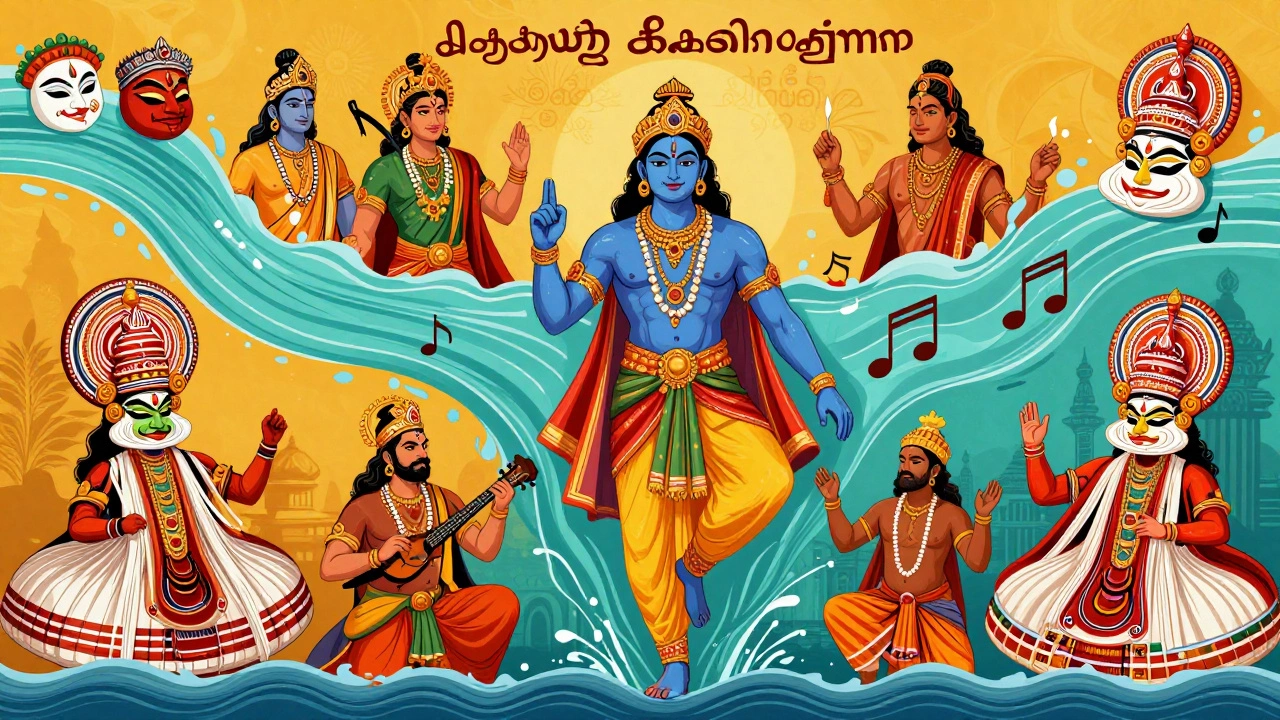
Kathakali Adaptations
KeralaVisual and dramatic expansions of the narrative found in Kerala's performing arts traditions.
Epic Knowledge Check
Which title is given to the Ramayana because it established the standard for Sanskrit epic poetry?
Quiz Complete!
You scored 0 out of 3
When you think of India’s literary heritage, one name usually rises above the rest. You might be wondering if it is the Ramayana or perhaps the Mahabharata. The answer depends on how you measure "length." If we are talking about the number of lines or shlokas, the title belongs to the Ramayana. However, if we look at total word count or narrative scope, the Mahabharata often takes the crown. This article clears up the confusion and explains why the Ramayana is widely considered the longest *epic poem* in its specific poetic structure.
The Contenders: Ramayana vs. Mahabharata
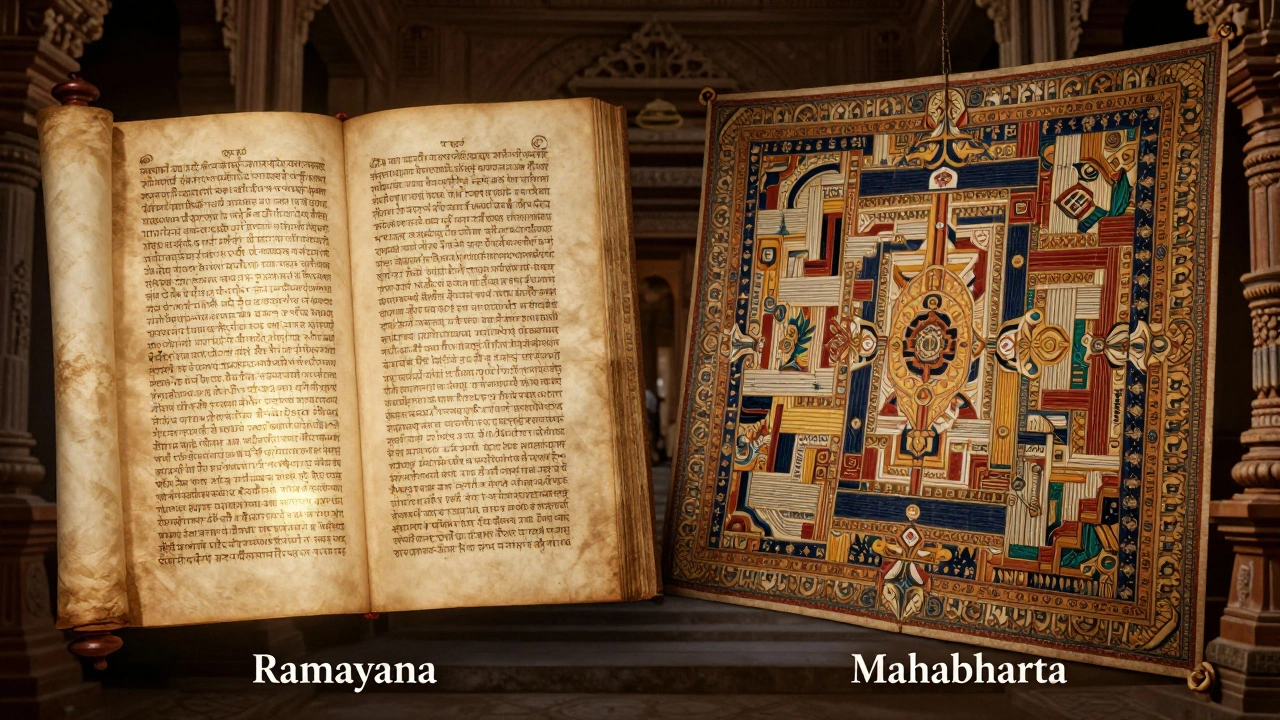
To understand which is the longest, we first need to look at the two giants of Indian epic poetry. These two texts form the core of what scholars call the Itihasa-Purana tradition. They are not just stories; they are cultural blueprints for millions of people across South Asia.
The Valmiki Ramayana is an ancient Sanskrit text. It tells the story of Prince Rama, his wife Sita, and the demon king Ravana. In terms of pure poetic structure, it is composed of roughly 24,000 verses (shlokas). These verses are grouped into 7 Kandas (books) and contain approximately 500 Sargas (chapters). Because it adheres strictly to a metrical poetic form throughout, it is classified as a Kavya (poetry).
On the other hand, the Mahabharata is massive. It contains over 100,000 shlokas. That is more than four times the length of the Ramayana. But here is the catch: the Mahabharata is a mix of poetry and prose. While large sections are poetic, others are narrative prose, philosophical dialogues, and legal codes. Therefore, when critics ask for the longest "epic poem" in the strict sense of a continuous poetic narrative, many point to the Ramayana as the Adikavya (the first poem). However, in popular culture and general knowledge quizzes, the Mahabharata is frequently cited as the longest epic due to its sheer volume of content.
| Feature | Ramayana | Mahabharata |
|---|---|---|
| Approximate Verses (Shlokas) | 24,000 | 100,000+ |
| Structure | Strictly Poetic (Kavya) | Mixed Poetry and Prose |
| Author Tradition | Valmiki | Vyasa |
| Main Theme | Dharma through Idealism | Dharma through Complexity |
| Number of Books (Parvas/Kandas) | 7 | 18 |
Why the Ramayana Holds the Title of "First Epic Poem"
The term "Adikavya" means "first poem." This title is given to the Ramayana because it established the standard for Sanskrit epic poetry. Before Valmiki wrote this text, there was no formal structure for long-form narrative verse in India. He created the meter known as Shloka, which became the standard for all subsequent epic poetry.
If you are looking for the longest work that is consistently written in verse without breaking into prose, the Ramayana is your answer. Its consistency in form makes it a true "poem" in the Western literary sense, whereas the Mahabharata is more like an encyclopedia wrapped in a story. This distinction is crucial for students of literature and history.
The Regional Variations: Length Multipliers
Here is where things get interesting. The Sanskrit Ramayana is just the beginning. Over centuries, this story traveled across India and Southeast Asia, adapting to local languages and cultures. Each adaptation added layers, descriptions, and subplots, making some regional versions significantly longer than the original.
For example, the Kamba Ramayanam in Tamil is a masterpiece of classical Tamil literature. Written by Kambar in the 12th century, it is highly revered in South India. While it condenses some philosophical debates, it expands on emotional narratives and character development. Similarly, the Tulsidas Ramcharitmanas in Awadhi is not just a translation but a retelling that includes songs, prayers, and devotional elements. It has become the most popular version among Hindi speakers.
In Kerala, the Aithihyamala and various Kathakali adaptations expand the narrative further. Some scholars argue that if you combine all the regional commentaries and expansions, the collective "Ramayana" tradition becomes far larger than any single text. This shows how Indian literature is not static but living and breathing.
Other Notable Long Epics in India
While the Ramayana and Mahabharata dominate the conversation, India has other long epics worth mentioning. The Silappatikaram is a classic Tamil epic from the Sangam period. It is shorter than the Ramayana but holds immense historical value. Then there is the Panchatantra, which, while not an epic poem in the traditional sense, is a vast collection of fables that influenced storytelling worldwide.
In modern times, poets like Subramania Bharati wrote long patriotic poems that rival older works in length and impact. However, none match the scale of the ancient Sanskrit epics. When people ask about the "longest," they are almost always referring to the ancient canon.
How to Read These Epics Today
Reading 24,000 verses can seem daunting. You don’t have to read every line to appreciate the depth. Here are practical ways to engage with these texts:
- Start with Summaries: Look for abridged versions that capture the key plot points. Many publishers offer illustrated editions for beginners.
- Choose Your Language: If you speak Tamil, start with Kamba Ramayanam. If you speak Hindi, Tulsidas’ Ramcharitmanas is accessible and rhythmic.
- Listen to Recitations: These texts were meant to be heard. Listening to traditional recitations helps you feel the rhythm and emotion of the verses.
- Focus on One Kanda: Instead of reading the whole book, pick one section, like the Yuddha Kanda (War Book), and dive deep into it.
Common Misconceptions About Indian Epics
A common mistake is assuming that the Mahabharata is always the longest in every metric. While it has more words, the Ramayana is often cited as the longest *pure* epic poem. Another misconception is that these texts are only religious. They are also deeply political, psychological, and philosophical. For instance, the Mahabharata explores moral ambiguity in ways that modern novels do. The Ramayana deals with duty, loyalty, and sacrifice.
Also, many people think these stories are fixed. In reality, they have evolved. Different regions emphasize different characters. In some parts of India, Hanuman is the central figure. In others, Sita’s perspective is highlighted. This fluidity is part of their richness.
Conclusion: Which One Should You Call the Longest?
If you are taking a quiz or writing an academic paper, specify your criteria. For "longest epic poem in verse," the Ramayana is a strong candidate due to its structural purity. For "longest epic narrative," the Mahabharata wins on volume. Both are monumental achievements of human creativity. Understanding this distinction helps you appreciate the diversity of Indian literary traditions.
Is the Mahabharata longer than the Ramayana?
Yes, in terms of total word count and number of shlokas, the Mahabharata is significantly longer. It contains over 100,000 verses compared to the Ramayana's 24,000. However, the Ramayana is often called the first epic poem (Adikavya) because of its consistent poetic structure.
Who wrote the Ramayana?
The Ramayana is traditionally attributed to the sage Valmiki. He is known as the Adi Kavi, or the first poet, because he is credited with creating the Shloka meter used in the text.
What is the difference between Itihasa and Kavya?
Itihasa refers to history or legend, often implying a basis in truth. Kavya refers to poetry or literary art. The Ramayana and Mahabharata are both considered Itihasa, but the Ramayana is also classified as Kavya due to its poetic form.
Are there English translations of the full Ramayana?
Yes, several scholars have translated the entire Ramayana into English. Notable translations include those by Robert P. Goldman and Raj B. Patel. These versions often include extensive notes to explain cultural and linguistic nuances.
Which version of the Ramayana is best for beginners?
For beginners, abridged versions or children's books are great starting points. If you want a deeper dive, the Tulsidas Ramcharitmanas (in Hindi) or the Kamba Ramayanam (in Tamil) are excellent choices due to their lyrical beauty and accessibility.