India's Religious Demographics Explorer
Click on a religion below or view the chart to see detailed statistics about that faith group in India.
79.8%
Hinduism14.2%
Islam2.3%
Christianity1.7%
Sikhism0.7%
Buddhism0.4%
JainismSelect a Religion
Click on a card above or a section of the pie chart to view specific details about that religious group in India.
You might think asking "what is the main religion in India" is a trick question. After all, India is famous for being a melting pot of faiths. But if you look at the hard data from the last national census, there is one clear answer that dominates the landscape. Hinduism is the majority religion in India, practiced by approximately 79.8% of the population according to the 2011 Census of India. That’s not just a plurality; it’s a massive majority. Yet, stopping there misses the point entirely. To understand why this matters, you have to look beyond the headline number.
Why does this statistic matter to you? Maybe you’re planning a trip to Varanasi, trying to understand the politics of New Delhi, or just curious about how such a diverse nation holds together. Knowing that Hinduism is the primary faith helps you decode cultural cues, festival calendars, and social norms. But here’s the twist: while Hinduism is the biggest, India has the world’s third-largest Muslim population and the largest populations of Sikhs, Jains, and Zoroastrians outside their places of origin. It’s a complex tapestry, not a monolith.
The Dominance of Hinduism in Numbers
Let’s get the specifics out of the way first. When we talk about the main religion in India, we are talking about a demographic giant. The 2011 Census recorded over 966 million Hindus. To put that in perspective, that’s more people than the entire population of Europe. If you were to create a country solely of Indian Hindus, it would be the most populous nation on Earth, surpassing China.
But what defines this group? Hinduism is often described as a way of life rather than a rigid dogmatic religion, characterized by beliefs in Dharma, Karma, and Moksha. Unlike Abrahamic faiths, it doesn’t have a single founder or a single holy book. Instead, it’s a collection of traditions, philosophies, and rituals that evolved over thousands of years in the Indian subcontinent. This flexibility is partly why it remains so dominant. It absorbs local customs easily. A village deity worshiped in Tamil Nadu might be seen as an aspect of Vishnu or Shiva, depending on who you ask. This syncretic nature allows it to remain the backbone of Indian identity for nearly four-fifths of the population.
The Second Largest Faith: Islam
If Hinduism is the ocean, Islam is the second-largest religion in India, comprising about 14.2% of the population with over 172 million adherents. This makes India home to the third-largest Muslim population in the world, after Indonesia and Pakistan. You’ll find significant Muslim communities across the country, but they are particularly concentrated in states like Uttar Pradesh, West Bengal, Kerala, and Jammu & Kashmir.
The history here is deep. Islam arrived in India through trade routes in the 7th century and later through political conquests starting in the 12th century. Over centuries, it blended with local cultures. In Kerala, Muslims have lived alongside Hindus for millennia, contributing to a unique culture where Sufi shrines are visited by people of all faiths. In North India, the Mughal era left an indelible mark on architecture, food, and language. Urdu, which many associate with Indian Muslims, is actually a blend of Persian, Arabic, Turkish, and Hindi roots. So, when you ask about the religious makeup, remember that Islam isn’t an "import" in the modern sense; it’s been woven into the fabric of India for over a thousand years.
Christianity, Sikhism, Buddhism, and Jainism
Beyond the two giants, there are smaller but historically vital groups. Christianity accounts for roughly 2.3% of India's population, with strong historical roots in South India and Northeastern states. Contrary to popular belief, Christianity didn’t start in India with the British colonialists. Tradition holds that St. Thomas the Apostle arrived in Kerala in 52 AD, establishing churches long before European missionaries showed up. Today, you’ll see vibrant Christian communities in Goa, Kerala, and the northeastern states like Nagaland and Mizoram, where Christians form the majority.
Sikhism is another major player, making up about 1.7% of the population, primarily concentrated in the Punjab region. Founded in the 15th century by Guru Nanak, Sikhism emphasizes equality, service, and devotion to one God. While Sikhs are a minority nationally, they are the majority in Punjab. Their influence on Indian agriculture, military, and cuisine (think butter chicken and naan) is disproportionate to their numbers.
Then there are the indigenous faiths born on Indian soil. Buddhism originated in India around the 5th century BCE but declined significantly by the medieval period. However, it saw a massive revival in the 20th century due to Dr. B.R. Ambedkar’s conversion movement, bringing millions of Dalits into the fold. Today, Buddhists make up about 0.7% of the population, with large communities in Maharashtra and the Himalayan regions.
Jainism, though tiny at less than 0.4%, wields enormous economic and cultural influence. Jains are known for strict non-violence (Ahimsa), which influences everything from their diet to their business ethics. Despite their small numbers, they control a significant portion of India’s diamond and gemstone trade.
| Religion | Percentage (%) | Population (Approx.) | Primary Regions |
|---|---|---|---|
| Hinduism | 79.8% | 966 Million | Nationwide |
| Islam | 14.2% | 172 Million | UP, West Bengal, Kerala, Kashmir |
| Christianity | 2.3% | 27 Million | Kerala, Goa, Northeast India |
| Sikhism | 1.7% | 20 Million | Punjab, Haryana |
| Buddhism | 0.7% | 8 Million | Maharashtra, Ladakh, Northeast |
| Jainism | 0.4% | 4.5 Million | Gujarat, Rajasthan, Karnataka |
Regional Variations: One Country, Many Faiths
Looking at national averages can be misleading. India is too big and diverse for a single percentage to tell the whole story. If you fly from the north to the south, the religious landscape shifts dramatically.
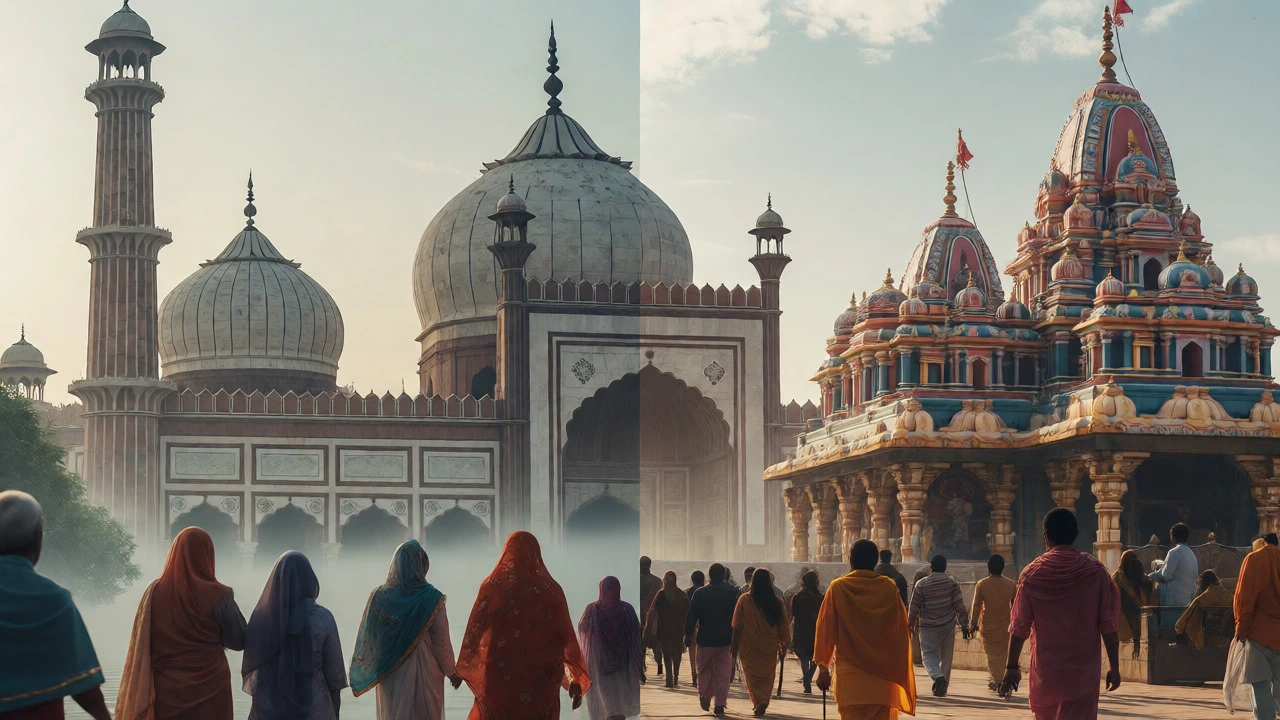
In the northern plains, particularly Uttar Pradesh and Bihar, the Hindu-Muslim dynamic is central to daily life and politics. In contrast, travel to the northeast-states like Meghalaya, Nagaland, and Mizoram-and you’ll find predominantly Christian populations. These areas have distinct cultural identities, closer to Southeast Asian cultures than to the mainland Indian experience.
Kerala offers a different model again. Here, Hindus, Muslims, and Christians coexist in a relatively stable equilibrium. The state is known for its high literacy rates and communal harmony. Festivals like Onam (Hindu), Eid (Muslim), and Christmas (Christian) are celebrated with equal enthusiasm by neighbors regardless of their own faith. This regional nuance is crucial. Saying "India is Hindu" is like saying "The USA is White." Technically true by raw numbers, but it ignores the massive, influential minorities that shape the culture.
Why the Numbers Matter for Culture and Travel
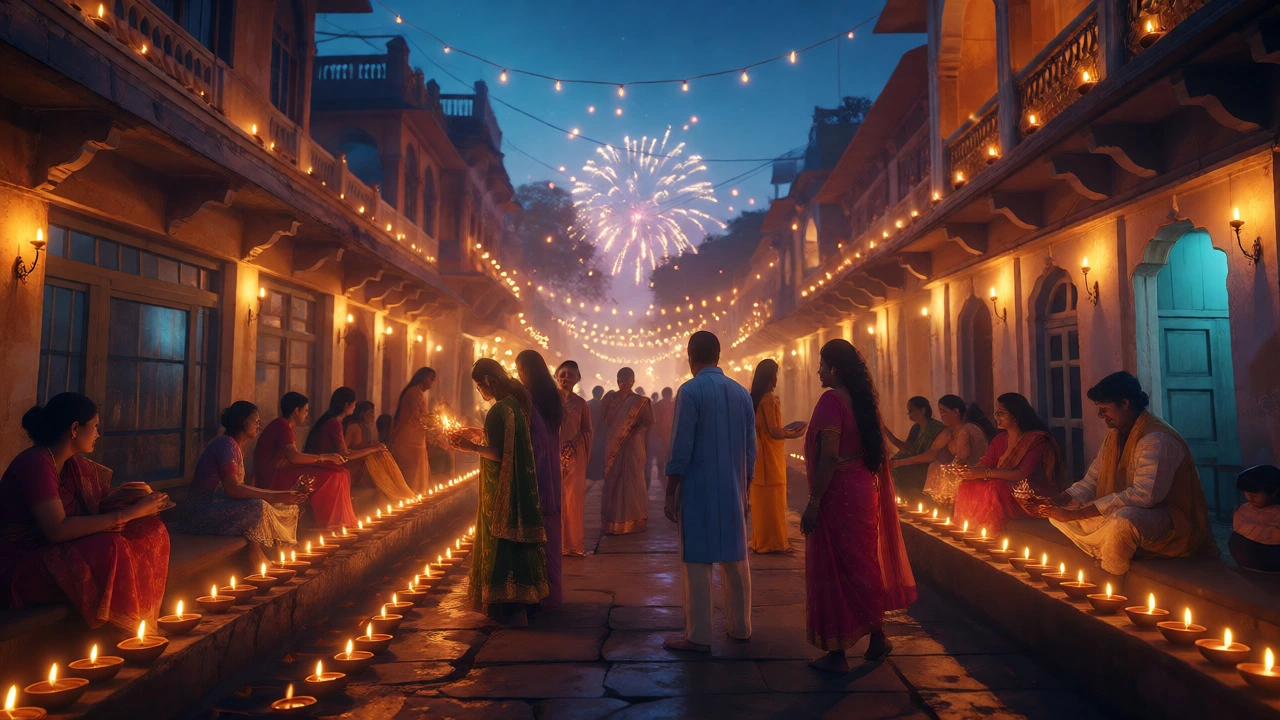
So, why should you care about these percentages? Because religion dictates rhythm. The main religion in India, Hinduism, sets the calendar for most public holidays. Diwali, Holi, Navratri, and Dussehra are nationwide events. Even if you aren’t Hindu, you’ll feel the energy. Streets light up during Diwali; colors fly during Holi.
For travelers, understanding the dominant faith helps navigate etiquette. Entering a Hindu temple usually requires removing shoes and wearing modest clothing. Photography inside sanctums is often restricted. Conversely, visiting a mosque might require covering your head if you’re a woman. Knowing these basics prevents awkward moments and shows respect.
Moreover, religious demographics influence food choices. In Gujarat, a stronghold of Jainism and vegetarian Hinduism, you’ll find strict vegetarian restaurants even in hotels. In Kerala, beef consumption is common among Christians and Muslims, unlike in many northern Hindu-majority states where cows are sacred. Your dining experience changes based on the religious makeup of the city you’re visiting.
Common Misconceptions About Indian Religion
There’s a persistent myth that India is uniformly religious. Reality is messier. Urbanization and education have led to a rise in secularism and atheism, especially among the younger urban elite. While the census counts everyone under a religious label, self-identification is becoming more fluid. Many young Indians identify culturally as Hindu but may not practice rituals regularly.
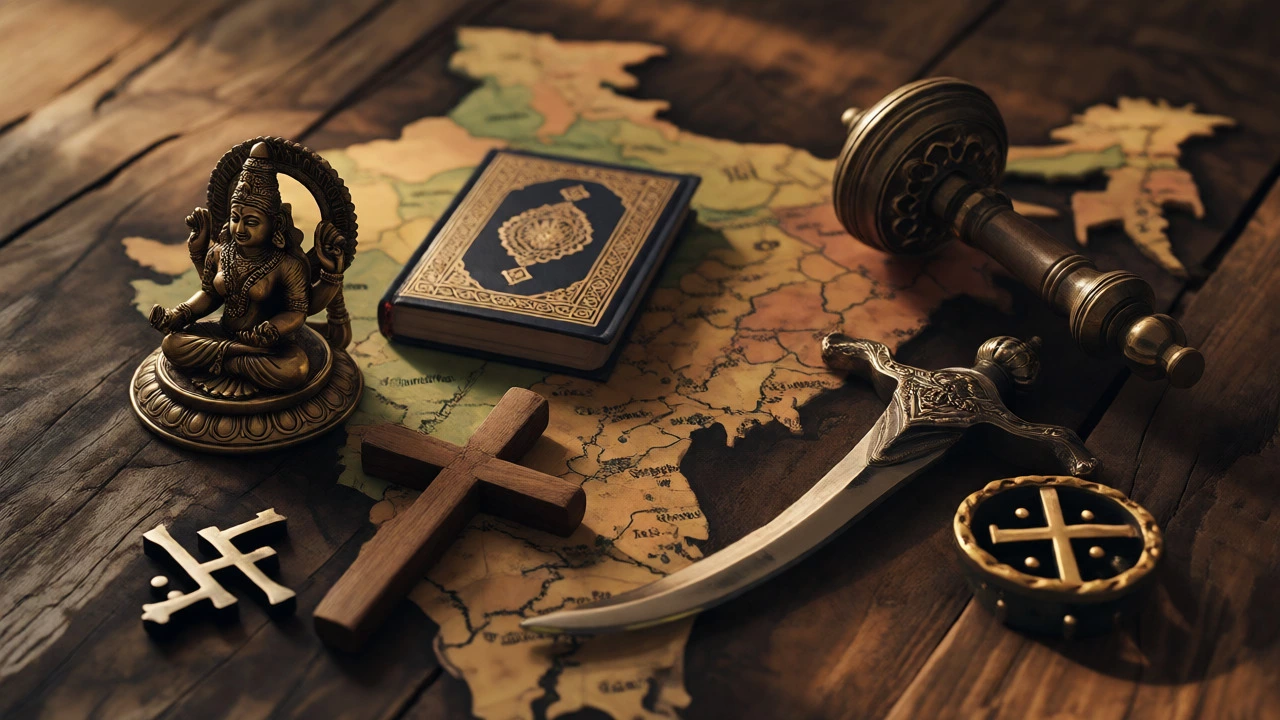
Another misconception is that other religions are "foreign." As mentioned, Buddhism and Jainism are native to India. Even Islam and Christianity have ancient roots here. The idea that India was purely Hindu before invaders arrived is a simplification of complex historical migrations and conversions.
Finally, don’t assume homogeneity within Hinduism. A Brahmin priest in Varanasi practices very differently from a tribal shaman in Odisha or a devotee of a local goddess in Bengal. Hinduism is a umbrella term for a vast array of beliefs. Recognizing this diversity prevents stereotyping.
Key Takeaways
- Hinduism is the majority: Nearly 80% of Indians identify as Hindu, making it the undisputed main religion.
- Significant Minorities: Islam is the second-largest faith (14%), followed by Christianity, Sikhism, Buddhism, and Jainism.
- Regional Differences: Religious dominance varies by state; e.g., Christians dominate parts of the Northeast, while Sikhs are the majority in Punjab.
- Cultural Impact: Religious demographics shape festivals, food habits, dress codes, and social etiquette across the country.
- Ancient Roots: All major religions present in India today, including Islam and Christianity, have histories spanning centuries or millennia within the subcontinent.
Is Hinduism the only religion in India?
No, while Hinduism is the majority religion with nearly 80% of the population, India is home to six officially recognized religions: Hinduism, Islam, Christianity, Sikhism, Buddhism, and Jainism. There are also numerous tribal and folk religions practiced by smaller communities.
Which is the second largest religion in India?
Islam is the second-largest religion in India, comprising approximately 14.2% of the population. This makes India home to the third-largest Muslim population in the world, after Indonesia and Pakistan.
Do all Indians follow Hinduism?
No. While the vast majority do, over 20% of Indians follow other faiths. In some states like Nagaland, Meghalaya, and Mizoram, Christians form the majority. In Punjab, Sikhs are the majority. Religious diversity is a defining feature of the nation.
Is Buddhism still practiced in India?
Yes, although it originated in India, Buddhism declined significantly after the medieval period. It experienced a revival in the 20th century, largely due to the mass conversion of Dalits led by Dr. B.R. Ambedkar. Today, about 0.7% of Indians are Buddhist, with significant populations in Maharashtra and the Himalayan regions.
How does religion affect daily life in India?
Religion heavily influences festivals, dietary habits, marriage customs, and social interactions. For example, vegetarianism is widespread due to Hindu and Jain influences. Public holidays are largely determined by the religious calendar, and many businesses close during major religious festivals like Diwali or Eid.