Yoga Stress Reduction Calculator
Calculate Your Stress Reduction
Research shows secular yoga practice can significantly reduce stress and improve mental health. Enter your practice details below to estimate your potential benefits.
Your Estimated Stress Reduction
Based on research from Harvard Medical School and the University of California, San Francisco, your practice could:
- Reduce cortisol levels by
- Lower blood pressure by
- Improve sleep quality by
When you step onto a yoga mat in a gym in Toronto, Paris, or Sydney, you’re not necessarily praying to Shiva or chanting mantras. You’re stretching, breathing, and holding a pose - and that’s perfectly okay. But if you strip away the spiritual layers of yoga, what’s left? And is it still yoga?
Yoga Was Never Just About Stretching
Yoga began over 2,500 years ago in ancient India as a system for uniting body, mind, and spirit. The word itself comes from the Sanskrit root yuj, meaning "to yoke" or "to unite." The classical text, the Yoga Sutras of Patanjali, written around 400 CE, lays out an eight-limbed path: ethical rules, physical postures, breath control, sensory withdrawal, concentration, meditation, and ultimately, enlightenment. Spirituality wasn’t an add-on - it was the whole point.
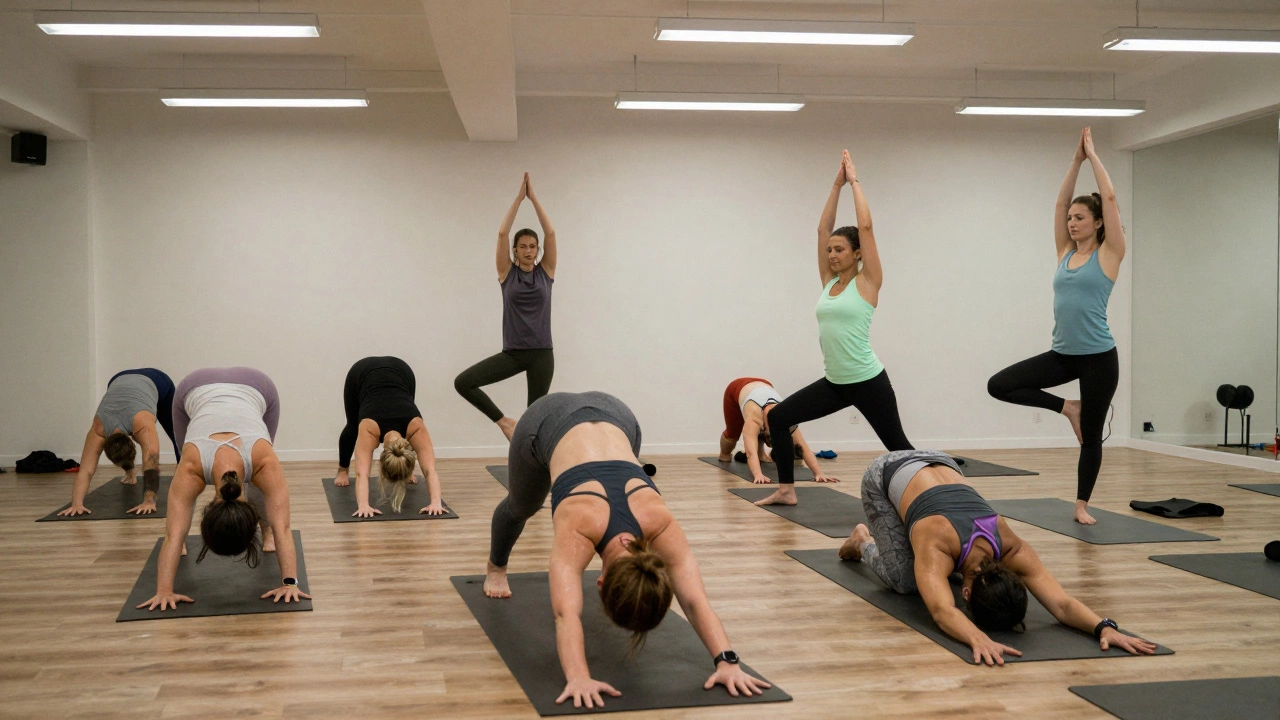
But today, in cities around the world, yoga is often practiced without any reference to its roots. No incense. No Om chanting. No discussion of chakras or karma. Just downward dogs, warrior poses, and sweat. So what do you call that?
The Term: Secular Yoga
There’s no official dictionary definition, but in academic circles and among yoga teachers who’ve made this shift, the term secular yoga is widely used. It refers to yoga practiced purely as physical exercise - a form of movement therapy focused on flexibility, strength, balance, and stress reduction.
Think of it like this: You can eat sushi without knowing it originated in Japan as a method of preserving fish. You can do tai chi without believing in qi energy. Similarly, you can do yoga without ever mentioning the divine.
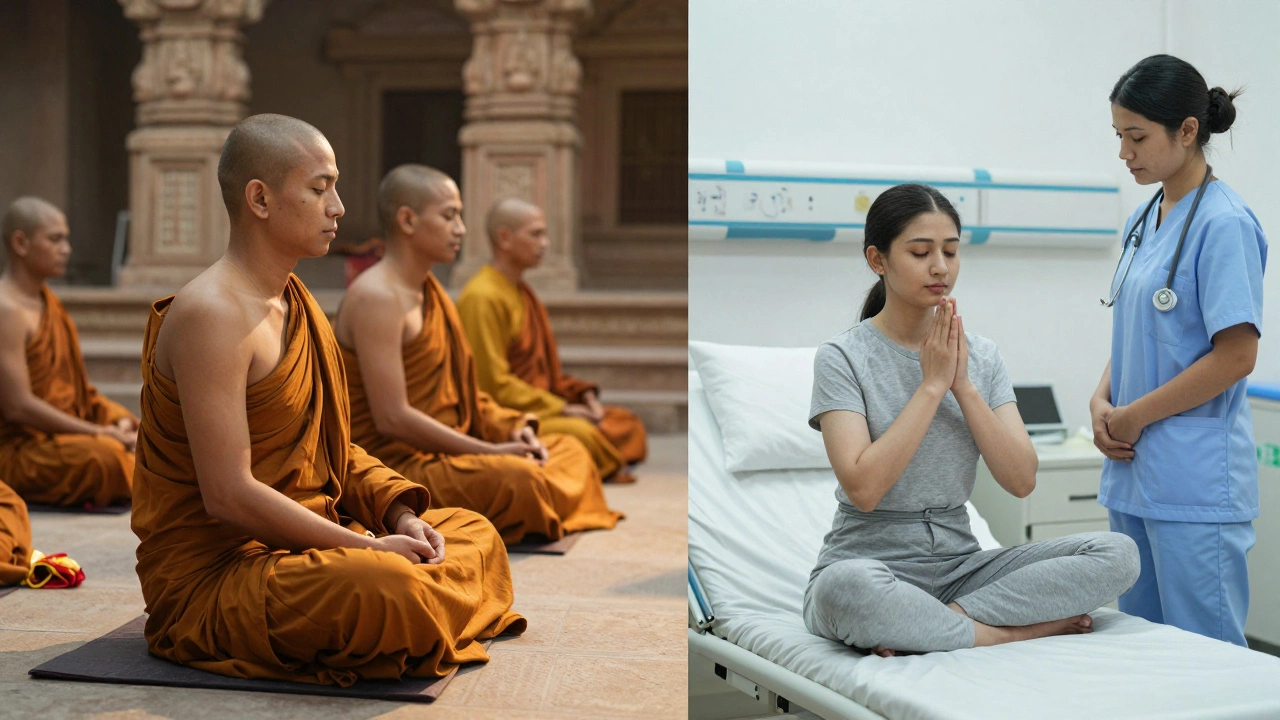
Major institutions have embraced this version. The American College of Sports Medicine lists yoga as a recommended activity for improving mobility and reducing chronic pain. Hospitals in the U.S. and Canada now offer yoga programs for patients recovering from heart surgery or managing anxiety. These aren’t spiritual sessions - they’re clinical interventions.
How Yoga Lost Its Soul (And Why That’s Okay)
Yoga’s global spread didn’t happen overnight. In the late 1800s and early 1900s, Indian teachers like Swami Vivekananda began introducing yoga to the West - but they often downplayed the mystical parts to make it more palatable. Then, in the 1960s and 70s, Westerners like B.K.S. Iyengar and K. Pattabhi Jois developed standardized systems focused on precise alignment and physical sequencing. Their methods became the foundation of modern studio yoga.
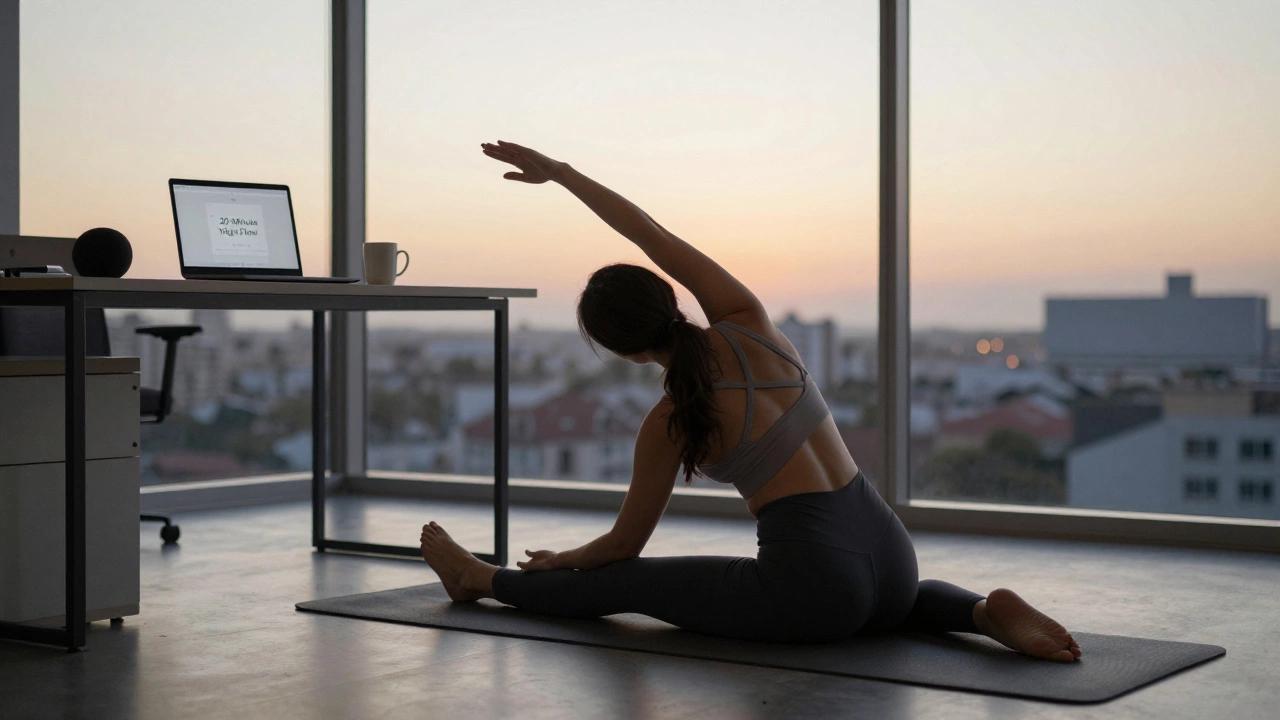
By the 2000s, yoga had become a billion-dollar industry. Brands sold yoga pants, yoga retreats, and yoga-themed coffee mugs. Studios popped up in strip malls. Apps like Down Dog and Peloton offered 20-minute yoga flows with no spiritual context. For many, yoga became just another fitness trend - like Pilates or barre.
Is this a betrayal of tradition? Some traditionalists say yes. Others argue that yoga’s power lies in its adaptability. The same practice that helped monks attain enlightenment can also help a nurse manage burnout after a 12-hour shift.
What You’re Actually Doing
If you’re doing yoga without spirituality, here’s what you’re likely practicing:
- Asanas - the physical postures (like triangle pose or crow pose)
- Pranayama - controlled breathing (often simplified to "inhale through the nose, exhale through the mouth")
- Mindfulness - focusing on movement and breath to quiet mental chatter
- Stretching and strength training - improving range of motion and muscle tone
That’s it. No meditation on the self. No study of ancient texts. No guru. No ritual. Just movement and breath.
Studies from Harvard Medical School and the University of California, San Francisco show that this stripped-down version still delivers real benefits: lower blood pressure, reduced cortisol levels, improved sleep, and decreased symptoms of depression. You don’t need to believe in a higher power to feel better after a yoga session.
The Debate: Is It Still Yoga?
Some traditionalists insist that without the ethical and spiritual components - especially the yamas (restraints) and niyamas (observances) - what you’re doing isn’t yoga at all. They point to Patanjali’s sutra: "Yoga is the cessation of the fluctuations of the mind." That’s not about touching your toes.
But others counter that yoga evolved. Buddhism spread from India to Japan and became Zen. Martial arts moved from China to Korea and became Taekwondo. Yoga didn’t stop evolving just because it crossed oceans.
Here’s the key distinction:
- Traditional yoga: A spiritual path with physical practice as one part.
- Secular yoga: A physical practice with no spiritual framework.
They’re not the same thing - but they’re not opposites either. One is a complete system. The other is a tool. And tools can be used in many ways.
Who Practices Secular Yoga?
It’s not just fitness enthusiasts. You’ll find secular yoga in:
- Corporate wellness programs
- Physical therapy clinics
- Rehab centers for veterans with PTSD
- Senior centers
- Public schools teaching kids how to manage stress
These programs avoid Sanskrit terms, skip spiritual language, and focus on measurable outcomes: "Can you hold a plank for 30 seconds?" "Did your anxiety drop after class?" They’re not trying to transform your soul - they’re trying to help you sleep better.
What’s Missing?
There’s no denying that secular yoga leaves something out. You won’t learn about ahimsa (non-harming), satya (truthfulness), or aparigraha (non-possessiveness). You won’t explore the idea that yoga is meant to quiet the ego, not build it. You won’t dive into the Bhagavad Gita or the Upanishads.
That’s fine - if that’s what you’re looking for. But if you want to understand yoga in its full depth, you’ll need to go beyond the mat.
Can You Go Back?
Many people who start with secular yoga eventually circle back. They notice how the quiet moments between poses feel different from regular stretching. They wonder why they feel calmer after class. They pick up a book. They attend a retreat. They start meditating.
It’s not about abandoning the physical practice. It’s about adding layers. Like learning to cook by following a recipe - then later, understanding the spices, the history, the culture behind it.
Final Thought
Yoga without spirituality isn’t a betrayal. It’s a translation. It’s yoga adapted for a world that doesn’t speak Sanskrit, doesn’t believe in karma, and doesn’t need a guru to feel better. It’s still yoga - just a different version. And that version is helping millions of people breathe easier, move better, and live more calmly.
Whether you call it yoga, movement, or stretching, what matters is this: if it helps you show up for your life - fully, gently, and with more peace - then you’re doing something right.
Is yoga without spirituality still yoga?
Yes, but it’s a different kind of yoga. Traditional yoga is a spiritual path that includes physical postures. Secular yoga is a physical practice without spiritual elements. Both are valid - they just serve different purposes. One aims for enlightenment; the other aims for better mobility and stress relief.
What do you call yoga that’s only physical?
It’s commonly called secular yoga. Some teachers also refer to it as "yoga as exercise," "modern yoga," or "fitness yoga." These terms help distinguish it from traditional, spiritually rooted practices.
Does secular yoga have any benefits?
Absolutely. Research from Harvard, Stanford, and the University of Toronto shows that secular yoga reduces stress, lowers blood pressure, improves sleep, and helps with chronic pain. You don’t need to believe in chakras to feel better after a session. The physical and breathing techniques alone deliver measurable results.
Can secular yoga become spiritual later?
Yes, and many people do. People often start with yoga for fitness or stress relief, then become curious about the philosophy behind it. They begin reading, meditating, or attending workshops. The practice doesn’t change - but their understanding deepens. It’s not about switching paths - it’s about adding depth.
Is secular yoga disrespectful to Indian culture?
It depends on how it’s taught. If yoga is stripped of its roots and sold as a purely Western invention, that’s cultural appropriation. But if it’s presented as an adaptation - with respect for its origins - then it’s evolution. Many Indian teachers today support secular yoga as a way to make the practice accessible, as long as credit is given and traditions aren’t mocked or erased.