Indian Art Form Quiz
Introduction
Test your knowledge of India's rich artistic traditions! This quiz covers classical dances, miniature paintings, stone sculptures, and textiles. Each question has one correct answer. Good luck!
You scored 0 out of 0 correct!
When you think of India’s rich cultural heritage, you don’t just think of spices or temples-you think of color, movement, and detail that’s been passed down for thousands of years. But what art form is truly famous in India? It’s not just one. India doesn’t have a single art form that stands above all others. Instead, it has a constellation of traditions, each as powerful and ancient as the next. From the delicate brushstrokes of miniature paintings to the rhythmic footwork of classical dance, India’s art isn’t just seen-it’s felt.
Classical Dance: Where Movement Becomes Worship
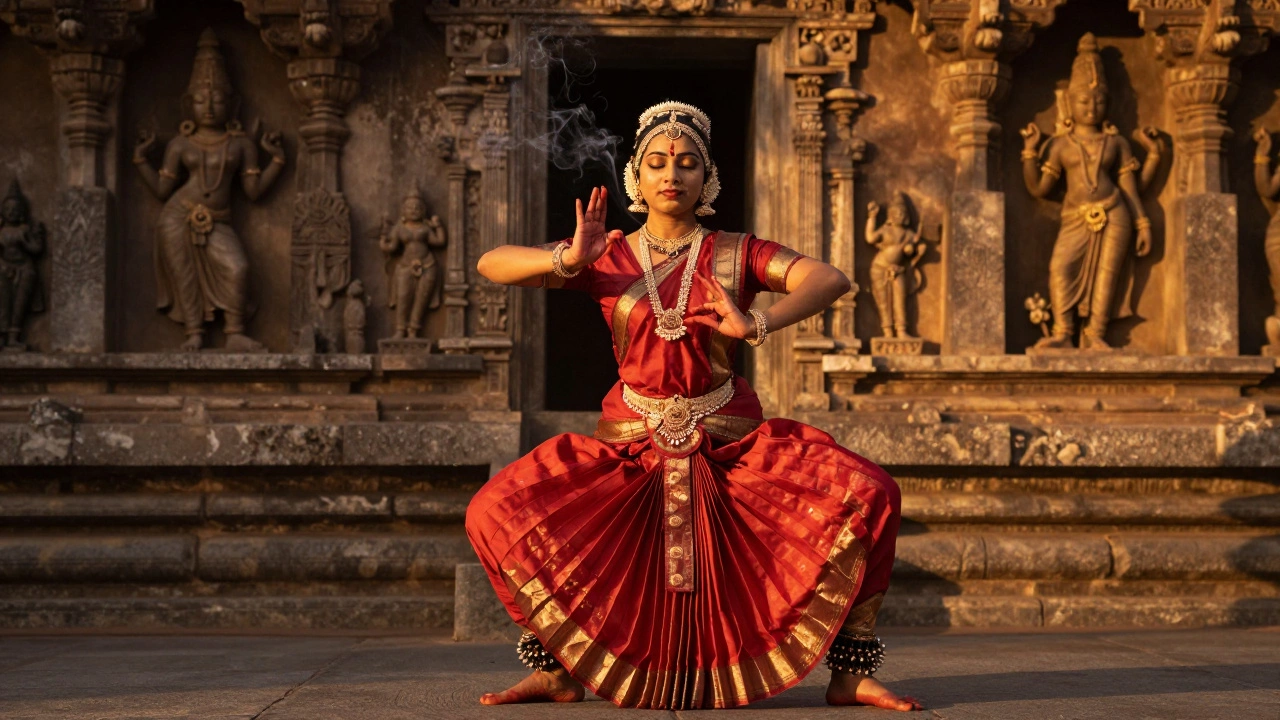
India’s classical dance forms are more than performance. They’re living prayers. Each style comes from a different region, tied to temple rituals, myths, and local gods. Bharatanatyam from Tamil Nadu, Kathak from Uttar Pradesh, Odissi from Odisha, Kuchipudi from Andhra Pradesh-these aren’t just dances. They’re storytelling systems with strict rules for hand gestures (mudras), facial expressions (abhinaya), and body posture.
Take Bharatanatyam, for example. Dancers wear bells around their ankles that chime with every step, syncing with the rhythm of the tabla and mridangam. The dance tells stories from Hindu epics like the Ramayana and Mahabharata. A single movement-a tilt of the head, a curve of the wrist-can mean a goddess descending from heaven or a warrior raising his sword. It’s not performed for applause. It’s performed as devotion. This art form has survived invasions, colonial rule, and modernization because it was never just entertainment. It was sacred.
Miniature Painting: Tiny Worlds, Infinite Detail
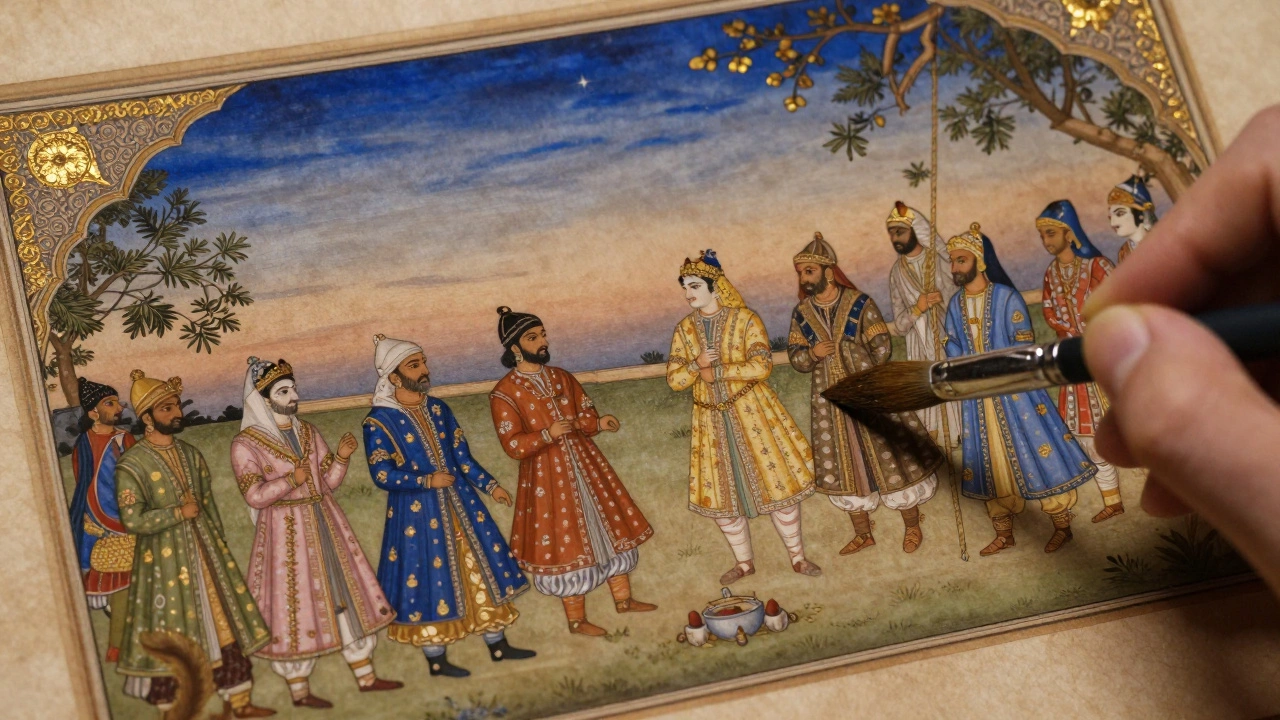
If you’ve ever seen a painting so small you need a magnifying glass to see all the details, you’ve seen Indian miniature art. These paintings flourished between the 16th and 19th centuries under Mughal, Rajasthani, and Pahari courts. Artists used natural pigments-ground lapis lazuli for blue, crushed beetles for red, gold leaf for shimmer-and brushes made from squirrel hair so fine they could paint a single eyelash.
These weren’t just decorations. They illustrated royal court scenes, love stories, religious texts, and even botanical studies. The Kangra school, from the Himalayan foothills, is famous for its soft pastel tones and romantic depictions of Radha and Krishna. The Mughal style, influenced by Persian art, focused on realism-portraits of emperors, hunting scenes, and detailed architecture. A single miniature could take weeks to complete. Today, these paintings are in museums from London to Tokyo, but they still inspire modern Indian artists who use the same techniques.
Sculpture: Stone That Breathes
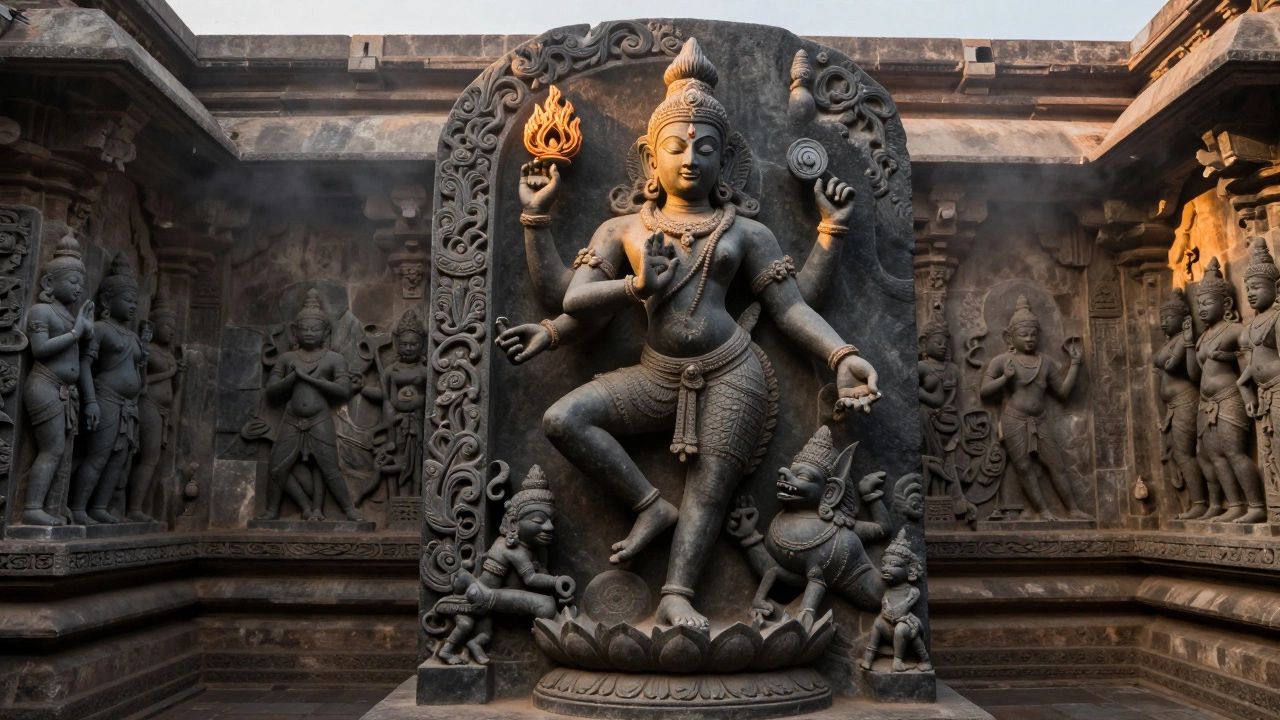
India’s stone sculptures are some of the most advanced in ancient history. From the 3,000-year-old Indus Valley seals to the towering temple carvings of Khajuraho and Konark, Indian sculptors turned rock into living beings. The Nataraja statue of Shiva dancing the cosmic cycle of creation and destruction is one of the most recognized images of Indian art worldwide. His raised hand holds fire; his lowered hand offers peace. One foot crushes a demon; the other floats above the earth. Every curve, every fold of his garment, every twist of his hair carries meaning.
At Khajuraho, temples built in the 10th century are covered in over 800 sculptures-not just gods, but dancers, musicians, lovers, and animals. These weren’t meant to shock. They were meant to show life in all its forms: spiritual, sensual, and sacred. The artists didn’t carve for tourists. They carved for cosmic truth. Even today, artisans in Odisha and Tamil Nadu use the same chisels and methods passed down for over 1,500 years.
Textiles: Threads That Tell Stories
When you think of Indian fabric, you might think of silk saris. But Indian textiles are a language. Each region has its own weave, dye, and pattern. Banarasi silk from Varanasi uses real gold thread woven into floral motifs. Kalamkari from Andhra Pradesh is hand-painted with natural dyes made from plants and minerals. Block printing in Rajasthan uses wooden stamps carved by hand-some over 300 years old.
The Pashmina shawl from Kashmir isn’t just warm. It’s made from the undercoat of Himalayan goats, spun by hand, and takes months to complete. In Gujarat, the intricate mirror work on chaniya cholis reflects light like stars. These aren’t just clothes. They’re heirlooms. A woman in rural Bihar might wear a sari her grandmother wove. The patterns tell her family’s history, her village’s gods, even the season of the year. UNESCO recognizes several of these textile techniques as Intangible Cultural Heritage.
Modern Legacy: Where Ancient Meets Today
These art forms didn’t die with the British. They evolved. Today, you’ll find Bharatanatyam dancers on stages in New York and Tokyo. Miniature painters in Jaipur sell their work online to collectors in Berlin. Sculptors in Chennai use 3D scanning to preserve ancient temple carvings. Textile cooperatives in rural Gujarat train young women in traditional dyeing, giving them income and keeping the craft alive.
Artists today blend old and new. A painter might use the colors of Mughal miniatures but paint modern cityscapes. A dancer might fuse Bharatanatyam with contemporary choreography. The core remains the same: technique passed through generations, meaning rooted in spirituality, and beauty born from patience. India’s art isn’t frozen in time. It’s breathing.
Why These Art Forms Matter
Why do these art forms still matter? Because they’re not about aesthetics alone. They’re about identity. In a country with 22 official languages and hundreds of dialects, art is one of the few things that unites people across regions. A woman in Kerala may not speak Hindi, but she understands the emotion in a Kathakali mask. A child in Punjab may not know Sanskrit, but the rhythm of a dholak in a folk dance feels familiar.
These art forms survived because they were never just about skill. They were about devotion. They were about memory. They were about passing down not just how to paint or dance, but why. In a world that moves too fast, India’s traditional art reminds us that some things take time-and that’s okay.
What is the most famous art form in India?
There isn’t one single most famous art form in India. The country is known for several, each deeply rooted in regional culture. Classical dance forms like Bharatanatyam and Kathak, miniature paintings from Mughal and Rajasthani courts, stone sculptures like the Nataraja, and handwoven textiles such as Banarasi silk and Kalamkari are all globally recognized. Together, they form the backbone of India’s artistic identity.
Is Indian art still practiced today?
Yes, absolutely. Thousands of artists, dancers, weavers, and sculptors still practice these traditions daily. Many learn from family members or in gurukuls (traditional schools). Government and private organizations support workshops, grants, and festivals to keep these arts alive. You can find live performances, artisan markets, and digital exhibitions all over India-and even abroad.
Which Indian art form is the oldest?
The oldest known Indian art form is the Indus Valley Civilization’s seal carving, dating back to 3300 BCE. These small stone seals featured animals, symbols, and early script. Sculpture followed closely, with terracotta figurines from the same era. Dance and music likely existed even earlier, passed orally, but the earliest physical evidence of structured dance comes from temple carvings over 2,000 years old.
Are Indian art forms recognized internationally?
Yes. UNESCO has listed several Indian art forms as Intangible Cultural Heritage, including Kalaripayattu, Chhau dance, and the tradition of Kalamkari painting. Indian classical dance and music are taught in universities worldwide. Museums like the British Museum, the Met, and the Louvre have major collections of Indian miniature paintings and sculptures. These aren’t just historical artifacts-they’re living traditions that continue to influence global art.
Can I learn Indian art if I’m not from India?
Definitely. Many Indian artists and institutions now offer online courses in classical dance, miniature painting, and textile techniques. Cities like Toronto, Berlin, and Sydney have active communities learning Bharatanatyam, Kalamkari, or block printing. The key is finding a trained teacher who respects the tradition. These art forms aren’t closed off-they’re waiting to be shared with those who approach them with respect and patience.