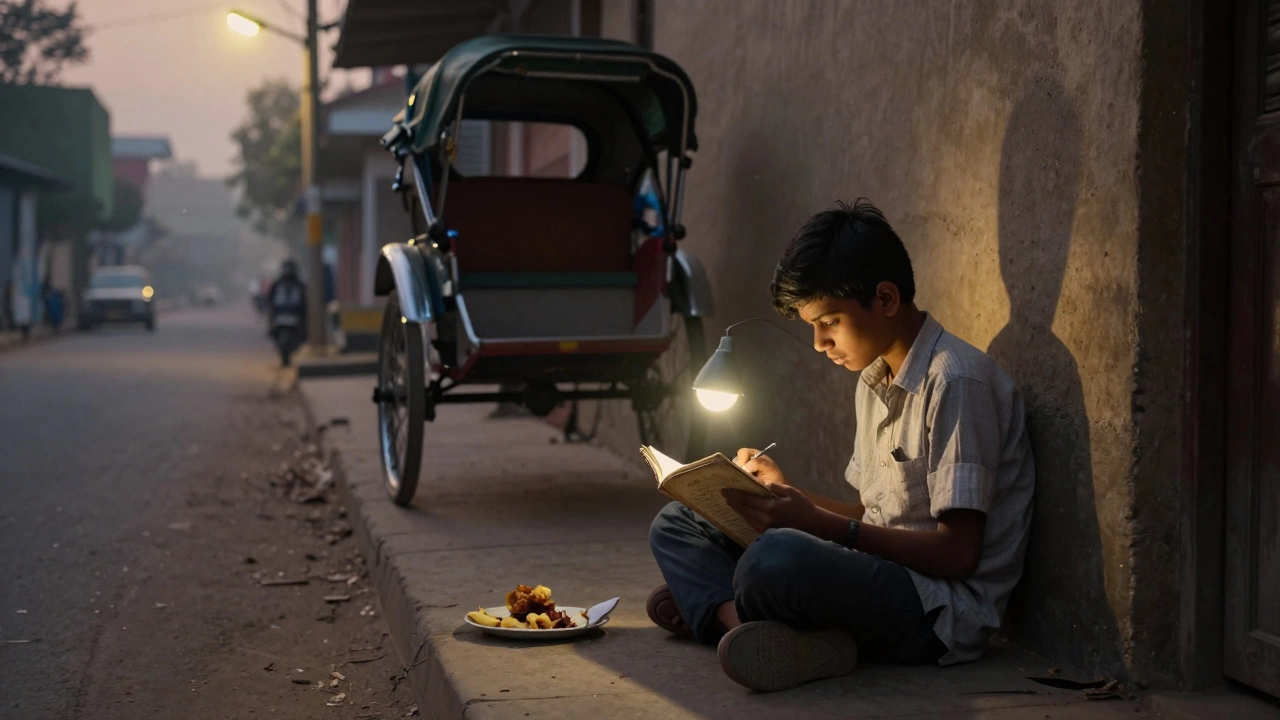
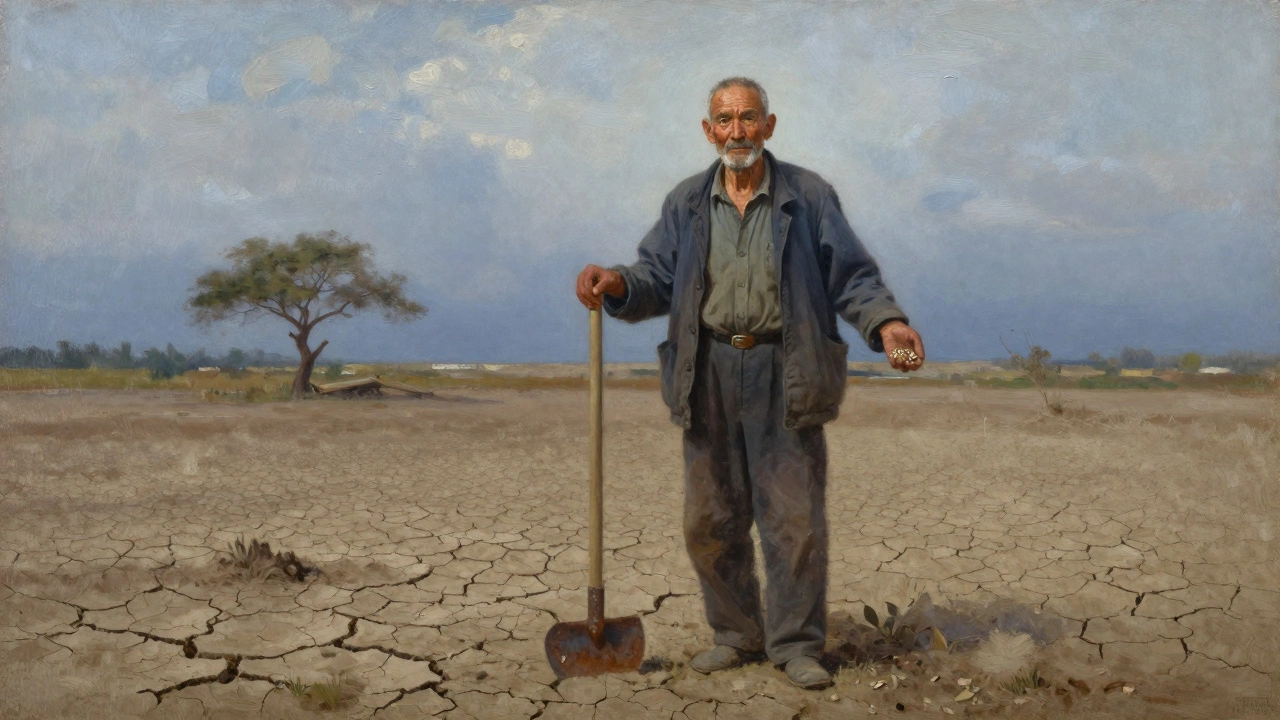
India doesn’t need parades or medals to prove its strength. It shows up in the quiet stubbornness of a mother working three jobs so her child can study. It lives in the farmer who plants seeds after three failed monsoons. It echoes in the student who studies by streetlight because the power went out again. This is the India that makes people proud-not because it’s perfect, but because it refuses to quit.
What Does ‘Proud of India’ Really Mean?
When people ask, "What makes India proud?" they’re not looking for Taj Mahal facts or cricket wins. They’re asking about the spirit beneath the surface. It’s the attitude-the unspoken code that says, "I may have nothing, but I won’t beg for dignity."
Think about the rickshaw driver who wakes up at 4 a.m. to carry strangers to their jobs, then walks home 12 kilometers because he can’t afford bus fare. He doesn’t post about it. He doesn’t ask for sympathy. He just does it. Again. And again. That’s the kind of resilience that builds nations.
Quotes That Carry India’s Soul
Some quotes don’t just inspire-they carry history. Here are the ones that still echo in Indian homes, schools, and street corners:
- "Success is not final, failure is not fatal: It is the courage to continue that counts." - Winston Churchill (often quoted by Indian students preparing for competitive exams)
- "Don’t wait for opportunity, create it." - A. P. J. Abdul Kalam
- "If you want to lift yourself up, lift up someone else." - Booker T. Washington (a favorite among grassroots activists in rural India)
- "They tried to bury us. They didn’t know we were seeds." - Mexican proverb, now widely used in Indian protest movements
- "Do not wait for leaders; do it alone, person to person." - Mother Teresa
These aren’t just words on posters. They’re scribbled on notebook margins, whispered before exams, painted on protest banners, and passed down like family heirlooms. They’re not from famous philosophers. They’re from people who lived them.
The Attitude Behind the Attitude
What separates Indian attitude quotes from others is their grit. They don’t promise easy wins. They don’t say, "Believe and you’ll be rich." They say, "Keep going, even when no one is watching."
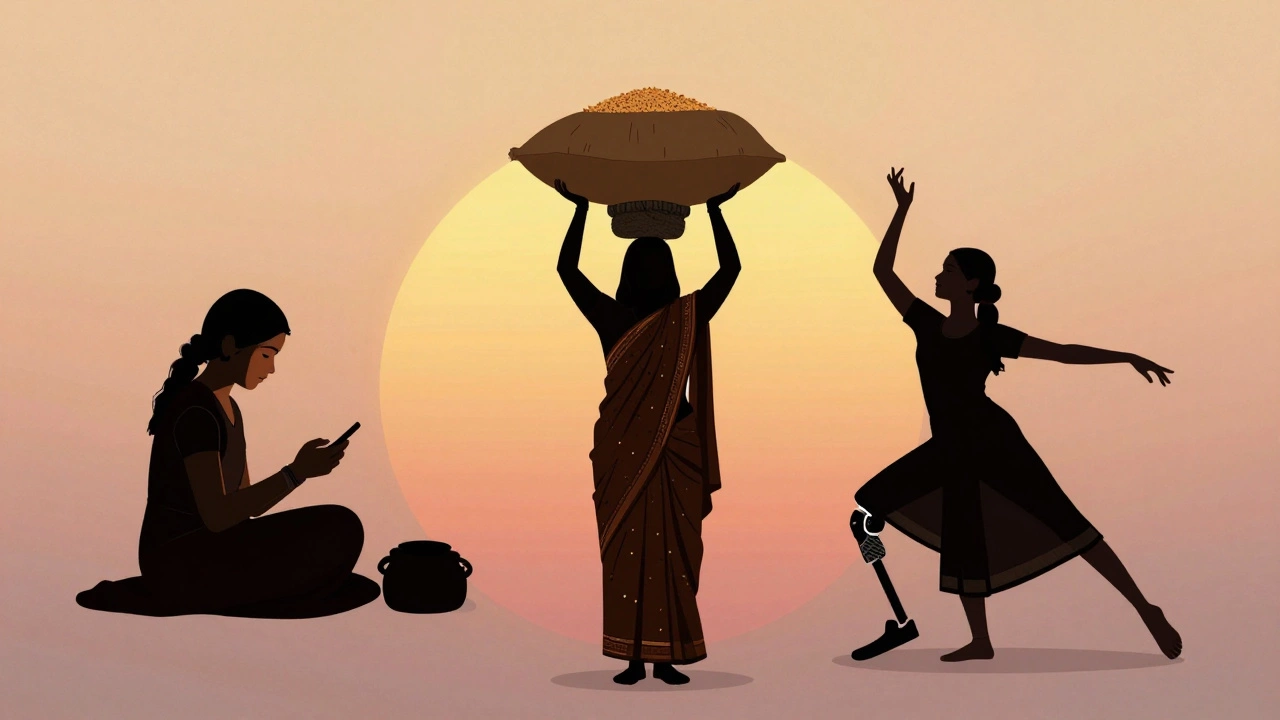
Look at the story of Sudha Chandran, the Bharatanatyam dancer who lost her leg in an accident. She didn’t stop dancing. She got a prosthetic limb made of carbon fiber, trained for two years, and returned to the stage. Today, she’s a national icon. No one handed her fame. She built it-one step at a time.
Or take the tale of the women of Kumbhalgarh, Rajasthan, who once defended their fort with swords when the men were away. No history book calls them soldiers. But local elders still tell their grandchildren: "When the world says you can’t, you become the reason it changes its mind."
That’s the Indian attitude: quiet, fierce, and unshakable.
Why These Quotes Stick
Most motivational quotes come from the West. They’re polished, corporate, and designed for LinkedIn. Indian quotes? They’re raw. They come from kitchens, fields, train stations, and slums. They’re not about climbing ladders. They’re about carrying others up with you.
Consider this quote, often shared on WhatsApp groups in Bihar and Uttar Pradesh:
"They called me a failure because I failed ten times. But they never noticed I stood up eleven."
No one knows who said it. No university teaches it. Yet it’s printed on school notebooks, sung in college rallies, and whispered to depressed teens. Why? Because it’s true.
The Quiet Revolution
India’s pride isn’t in its GDP or space missions (though those matter). It’s in the 14-year-old girl in Odisha who teaches her illiterate mother to read using a free app on a borrowed phone. It’s in the auto-rickshaw driver in Varanasi who saves 50 rupees a day to send his daughter to engineering college. It’s in the migrant worker who sends home his last meal so his family can eat.
These aren’t exceptions. They’re the norm.
When the world talks about India’s challenges-poverty, inequality, corruption-it misses the bigger truth: India’s greatest resource isn’t its population. It’s its refusal to accept defeat as final.
What You Can Learn
You don’t need to be Indian to carry this attitude. But if you’re tired, discouraged, or feel like giving up-look closer.
- Success isn’t about being the best. It’s about being the one who keeps showing up.
- Strength isn’t loud. It’s the silence between breaths when you’re exhausted but still move forward.
- Pride isn’t about what you have. It’s about what you refuse to lose-your dignity, your effort, your hope.
India doesn’t shout. It builds. It teaches. It lifts. And in doing so, it becomes impossible to ignore.
Final Thought
What makes India proud? The same thing that makes any great nation great: people who choose to rise, even when the ground beneath them is cracked.
Not because they were given a chance. But because they refused to wait for one.
What are the most famous attitude quotes from India?
Some of the most powerful attitude quotes from India aren’t from famous leaders-they’re from everyday people. "Don’t wait for opportunity, create it" by Dr. APJ Abdul Kalam is widely quoted. "They tried to bury us. They didn’t know we were seeds" has become a rallying cry in protests. And the unattributed line, "They called me a failure because I failed ten times. But they never noticed I stood up eleven," is shared millions of times across WhatsApp and school walls.
Why are Indian attitude quotes different from Western ones?
Western motivational quotes often focus on individual success, wealth, or confidence. Indian attitude quotes are rooted in endurance, sacrifice, and collective strength. They don’t promise glory-they promise persistence. They’re born from real struggle: power outages, broken systems, and family responsibilities. That’s why they feel heavier, truer, and more personal.
Who are the most quoted Indian figures for attitude quotes?
Dr. APJ Abdul Kalam is the most quoted Indian figure for attitude quotes. His words on discipline, education, and perseverance are taught in schools across the country. Mother Teresa is also widely referenced for her focus on quiet service. But many of the most powerful quotes come from unnamed teachers, farmers, and mothers-people who never wrote a book but lived their message.
Can non-Indians relate to these quotes?
Absolutely. These quotes aren’t about nationality-they’re about human resilience. Anyone who’s ever worked hard with little reward, faced rejection, or kept going when no one was cheering understands them. The Indian context gives them texture, but the emotion is universal. A single mother in Toronto, a factory worker in Vietnam, or a student in Nigeria can all find their own truth in these lines.
Where do most Indian attitude quotes come from?
Most come from oral traditions-villages, classrooms, local newspapers, and family stories. Unlike Western quotes that are often published in books, Indian attitude quotes are passed down through conversation. They’re written on walls, painted on rickshaws, and whispered before exams. Many were never recorded. That’s why they feel so alive-they’re not meant to be remembered. They’re meant to be lived.