Interactive Art Style Explorer
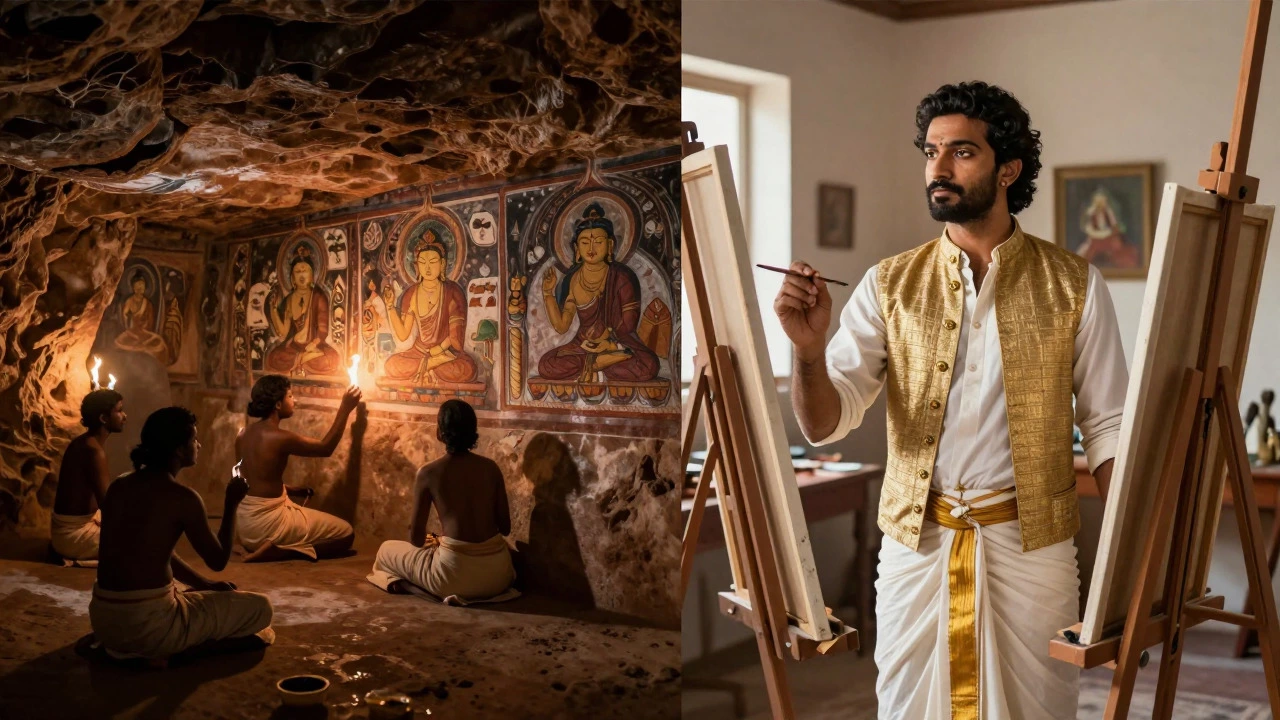
Traditional Miniature/Mural
Ancient techniques with symbolic representation
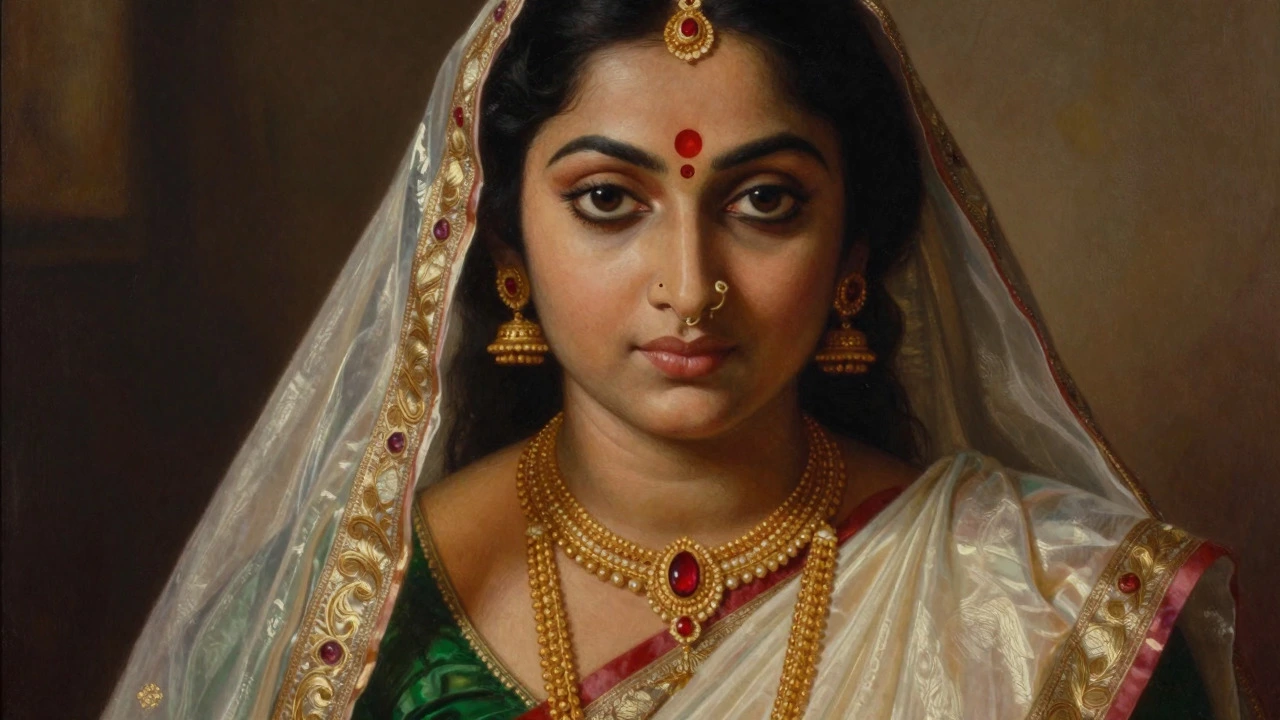
Raja Ravi Varma's Style
European realism applied to Indian themes
Art Style Comparison
Select a style aboveKey Moments in Indian Art Evolution
Pre-Varma Era
Anonymous artists created murals at Ajanta and Ellora caves following strict iconographic rules. Art served religious purposes rather than individual expression.
Medieval Period
Miniature paintings flourished in workshops (karkhanas) where masters guided apprentices. The style mattered more than the individual artist.
Raja Ravi Varma's Revolution
Introduced European oil painting techniques to Indian subjects, creating realistic depictions of mythology that resonated with everyday Indians.
Lithography Innovation
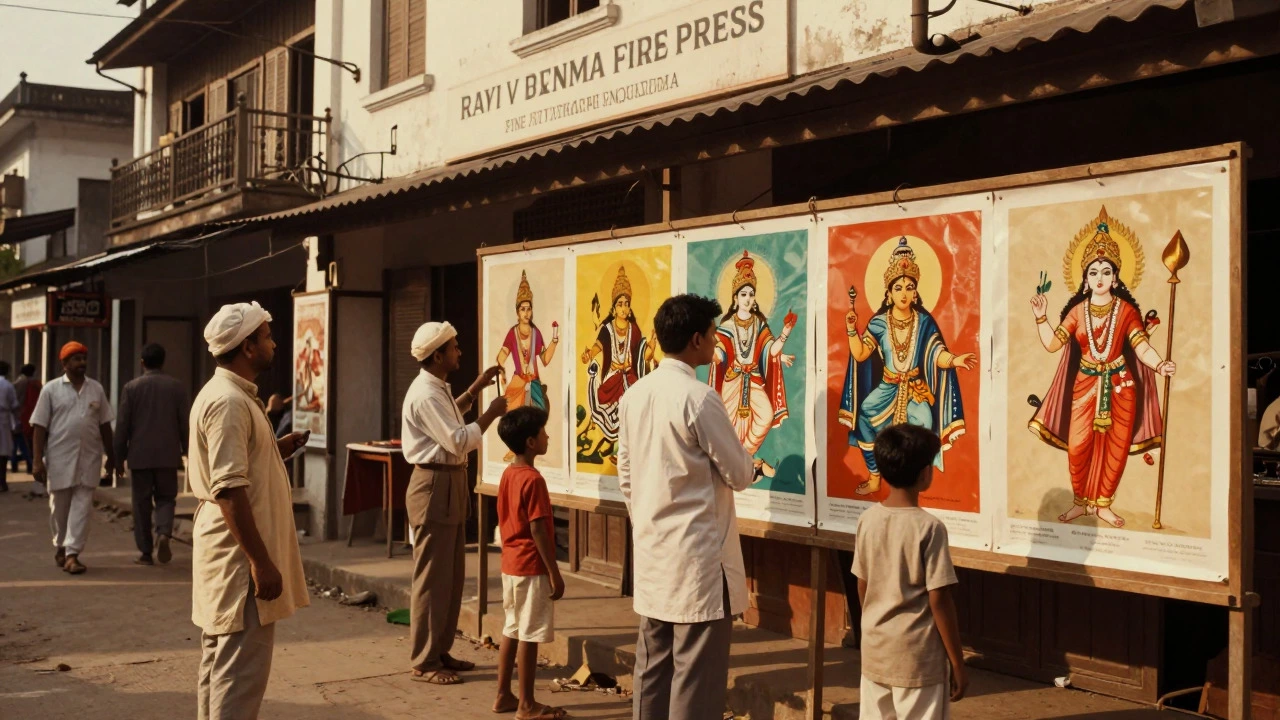
Founded the Ravi Varma Fine Art Lithographic Press in 1894, making high-quality art accessible to masses across India and internationally.
Legacy & Influence
His visual language defined Indian identity for generations, influencing everything from calendar images to contemporary media representations.
When you ask who is the father of Indian art, you are likely expecting a single name from ancient times. You might think of the artists behind the Ajanta Caves or the creators of the intricate sculptures at Khajuraho. But if you look closely at how Indian art evolved into its modern form, one name stands out above the rest: Raja Ravi Varma. While ancient artisans laid the foundation, it was Varma who bridged the gap between traditional Indian aesthetics and Western academic techniques, creating a visual language that defined Indian identity for generations.
The Myth of a Single "Father" in Ancient Contexts
It is important to understand why there isn't just one answer. Indian art spans thousands of years, from the Indus Valley Civilization to the Mughal era. In these early periods, art was often anonymous. Artists were considered craftsmen rather than individual geniuses. Their work served religious, royal, or community purposes. The great murals of Ajanta and Ellora caves were collective efforts by teams of painters working under strict iconographic rules. There was no signature on those walls. No single person claimed credit for the spiritual intensity of those Buddha figures or the grace of the celestial nymphs.
This anonymity continued through the medieval period. Miniature paintings from the Rajput and Pahari schools were produced in workshops (karkhanas) where masters guided apprentices. The style mattered more than the individual hand. So, when we talk about a "father" of art, we are usually talking about the transition to the modern era, where the concept of the individual artist emerged.
Raja Ravi Varma: The Architect of Modern Indian Visual Culture
Raja Ravi Varma was born in 1848 in Kilimanoor, Kerala. He didn't just paint; he revolutionized how Indians saw themselves. Before Varma, Indian subjects were depicted in stylized, flat forms typical of miniature traditions. Varma introduced European oil painting techniques-realism, perspective, and chiaroscuro (the play of light and shadow)-but applied them to Indian themes.
Imagine seeing a depiction of Sita or Draupadi not as symbolic icons, but as flesh-and-blood women with realistic emotions, draped in intricately detailed silk sarees that looked like they could be touched. This was Varma’s genius. He made mythology accessible and relatable. His paintings became the standard reference for how gods, goddesses, and epics should look. If you have ever seen a calendar image of Lord Krishna or Goddess Lakshmi, chances are it is influenced by Varma’s compositions.
The Innovation of Lithography: Art for the Masses
What truly earns Varma the title of the father of modern Indian art is not just his brushwork, but his business acumen. He realized that hanging expensive oil paintings in palaces limited their impact. So, he founded the 1894 Ravi Varma Fine Art Lithographic Press in Mumbai. This was a game-changer. Lithography allowed him to reproduce his paintings cheaply and distribute them across India and even internationally.
Suddenly, a farmer in Punjab or a merchant in Madras could afford a poster of Shakuntala or Nala Damayanti for their home. These prints entered everyday life. They shaped public perception of beauty, devotion, and national identity during a time when India was fighting for independence. Varma democratized art. He moved it from the elite sphere of the court to the living rooms of common people. This mass accessibility is why his influence remains so pervasive today.
Comparison: Traditional vs. Varma’s Style
| Feature | Traditional Miniature/Mural | Raja Ravi Varma’s Style |
|---|---|---|
| Technique | Watercolor, tempera, natural pigments | Oil on canvas, European realism |
| Perspective | Flat, multi-viewpoint, symbolic | Linear perspective, single viewpoint |
| Subject Matter | Religious icons, royal courts, daily life | Mythological narratives, emotional drama |
| Distribution | Manuscripts, temple walls, private collections | Lithographic prints, mass market |
| Emotional Tone | Devotional, static, idealized | Psychological, dynamic, humanized |
Why Not Other Candidates?
You might wonder about other names. What about Abanindranath Tagore? He was a key figure in the Bengal School of Art, which reacted against Varma’s Western influences. Tagore advocated for a return to indigenous Indian styles, drawing inspiration from Mughal miniatures and Buddhist art. While influential, his movement was more of a counter-reaction. Varma had already set the baseline. Even Tagore’s students studied Varma’s compositions before rejecting them.
Then there is Amrita Sher-Gil, often called the "Frida Kahlo of India." She brought modernist sensibilities to Indian art in the 1930s. However, she came decades after Varma. Her work built upon the foundation of portraying Indian rural life and emotion, a tradition Varma helped establish. And what about ancient sculptors like those of the Gupta Empire? They created masterpieces, but without recorded names, they remain archetypes rather than individuals credited with founding a modern discipline.
The Lasting Impact on Contemporary Indian Identity
Today, when we think of "Indian," we often think of the visual tropes established by Varma. The way we depict weddings, festivals, and mythological stories in films, advertisements, and social media owes a debt to his aesthetic. He standardized the look of the Indian deity. He defined the elegance of the Indian woman in traditional attire. His work provided a visual unity to a diverse subcontinent during a fragmented colonial period.
Moreover, Varma’s legacy teaches us that art can be both high culture and popular culture. He proved that technical mastery combined with cultural relevance creates timeless appeal. Museums around the world now hold his works, not just as historical artifacts, but as examples of successful cross-cultural artistic synthesis.
How to Explore Varma’s Work Today
If you want to see this evolution firsthand, visit the Government Museum in Chennai or the Kerala Lalit Kala Akademi in Thiruvananthapuram. Many of his original oil paintings are preserved there. Online, digital archives from the National Gallery of Modern Art in New Delhi offer high-resolution views of his lithographs. Notice how the lighting falls on the faces, how the fabric folds, and how the expressions convey complex emotions. Compare these with contemporary Bollywood posters or festival calendars. The lineage is clear.
Understanding who the father of Indian art is helps us appreciate how our visual culture was formed. It wasn’t a sudden invention, but a careful blending of old souls and new tools. Raja Ravi Varma gave India a mirror in which it could recognize itself, beautifully and realistically. That is why, despite the anonymity of ancient masters, he holds the title in the modern consciousness.
Is Raja Ravi Varma the only candidate for the father of Indian art?
No, but he is the most prominent for the modern era. Ancient art lacks individual attribution. For classical sculpture, figures like those from the Gupta period are revered, but unnamed. For the Bengal School, Abanindranath Tagore is a key founder. However, Varma’s impact on mass visual culture makes him the most recognized "father" of contemporary Indian artistic identity.
What technique did Raja Ravi Varma use in his paintings?
He primarily used oil paints on canvas, employing European academic techniques such as linear perspective, anatomical accuracy, and chiaroscuro. He later adapted his works for lithography, allowing mass reproduction of his images.
Where can I see original Raja Ravi Varma paintings?
Original works are housed in several institutions, including the Government Museum in Chennai, the Raja Ravi Varma Art Gallery in Thiruvananthapuram, and the National Gallery of Modern Art in New Delhi. Some pieces are also in private collections and international museums.
Did Raja Ravi Varma face criticism for his Western style?
Yes, initially. Critics from the nationalist camp argued that his use of Western techniques diluted Indian purity. This led to the rise of the Bengal School, which sought to revive indigenous styles. However, over time, his ability to make Indian themes accessible and emotionally resonant gained widespread acceptance.
How did lithography change Indian art?
Lithography allowed for the cheap and rapid reproduction of artworks. Before this, art was exclusive to the wealthy or religious institutions. Varma’s prints brought high-quality imagery of myths and legends into ordinary homes, shaping public taste and national visual identity across different regions of India.