Respect Impact Calculator
How Your Daily Respect Acts Create Change
Based on Gandhi's philosophy: "The best way to find yourself is to lose yourself in the service of others."
Your Respect Impact
daily acts
weekly impact
Why this matters: Gandhi knew respect isn't about grand gestures. It's about the quiet moments—like asking how someone is, or seeing the person behind the job. These small acts build dignity for everyone.
When people ask who the most respectful person in India is, they’re not really looking for a name on a list. They’re asking who lived respect so deeply that it changed how millions see themselves-and how the world sees India. That person isn’t someone who demanded honor. They earned it by giving it, endlessly, without condition.
The Quiet Strength of Gandhi
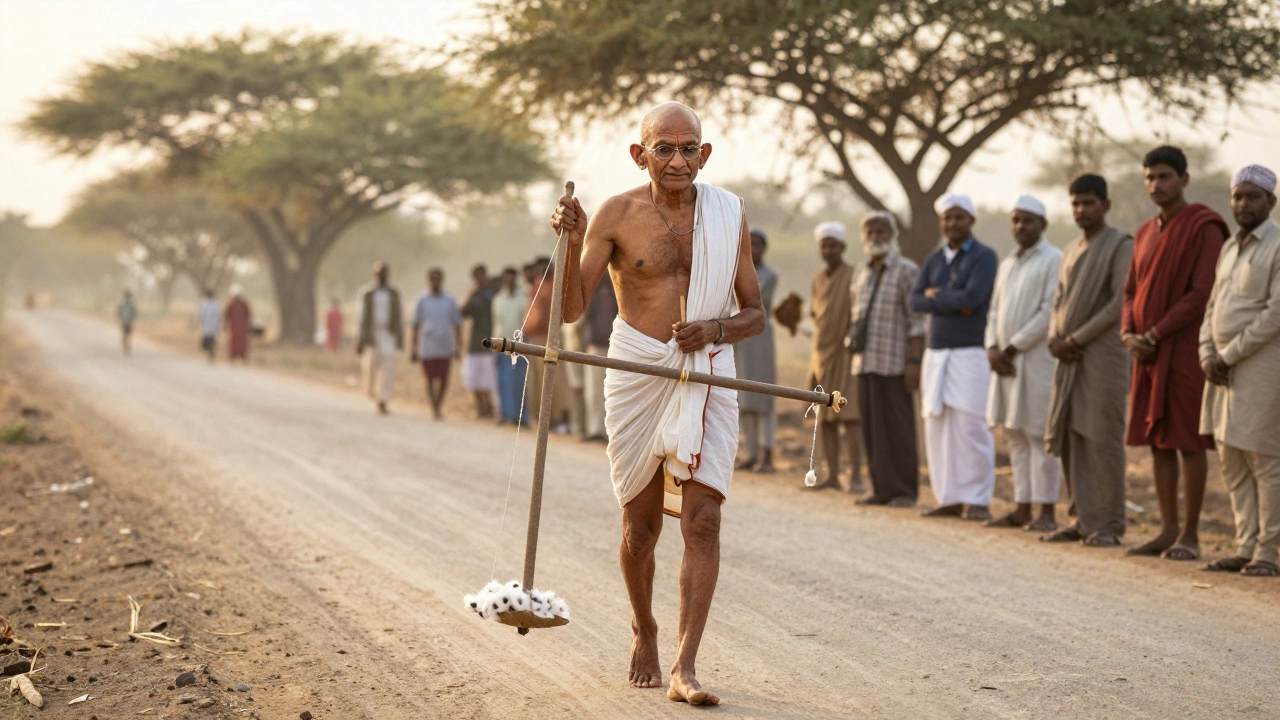
Mahatma Gandhi didn’t wear a crown. He didn’t sit on a throne. He walked barefoot through villages, spun his own cloth, and slept on the floor. Yet, the respect he carried was louder than any title. He didn’t ask people to bow to him. He asked them to stand up-for truth, for dignity, for each other.
His respect wasn’t performative. It was rooted in action. When British officials called him a troublemaker, he called them ‘sir.’ When crowds shouted insults, he sat in silence and prayed. He once said, ‘An eye for an eye only ends up making the whole world blind.’ That wasn’t just a quote. It was his daily rule.
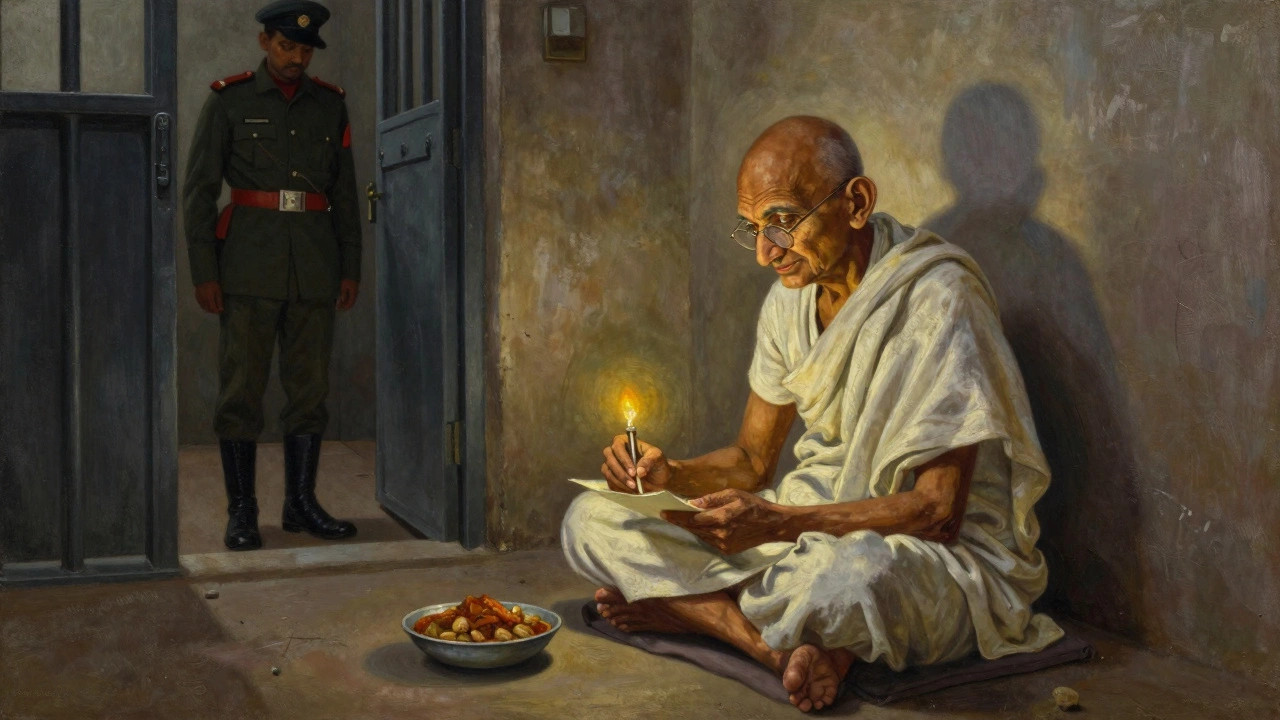
He respected even those who opposed him. He wrote letters to his enemies. He fed them when they were hungry. He sat beside them in jail. He didn’t see them as enemies-he saw them as people who had forgotten their own humanity. That’s the kind of respect that doesn’t fade with time.
Respect as a Spiritual Practice
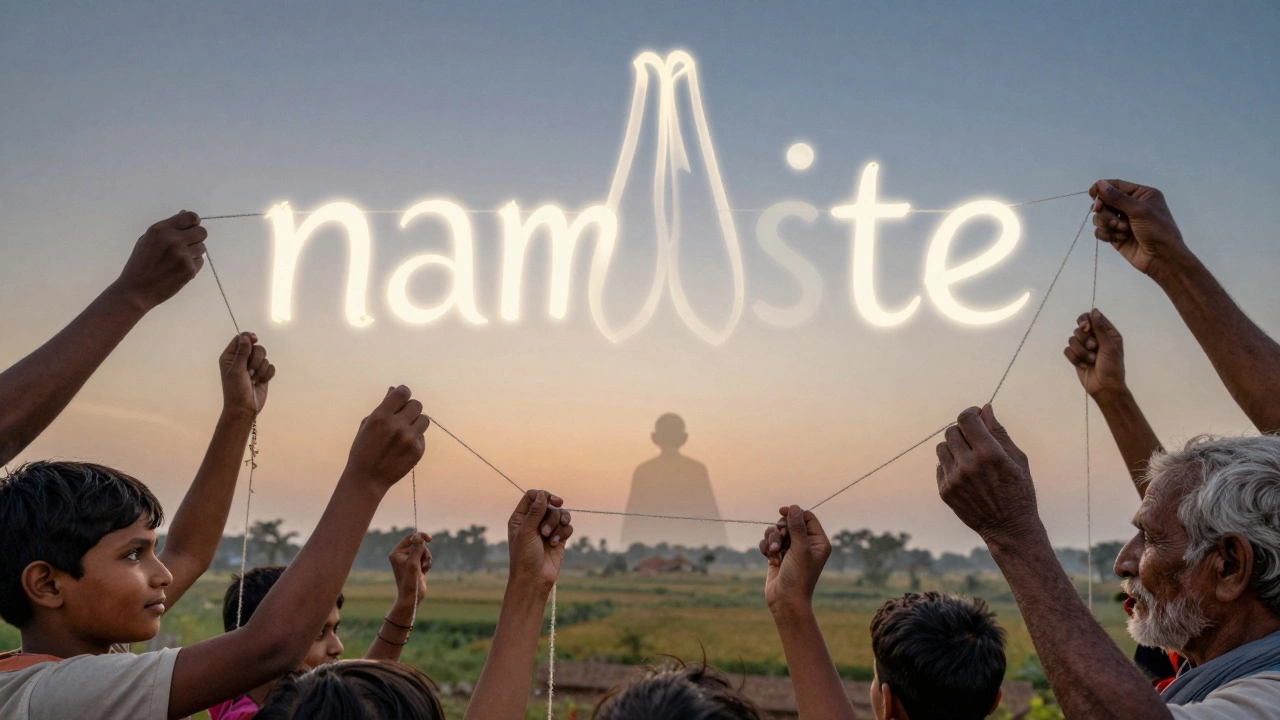
In India, respect isn’t just politeness. It’s woven into the fabric of spirituality. The word ‘namaste’-hands pressed together, head bowed-isn’t just a greeting. It means ‘I honor the divine in you.’ Gandhi lived that. He didn’t just say it. He made it his compass.
He respected the lowest caste as much as the highest priest. He called them ‘Harijans’-children of God. At a time when untouchability was law, he cleaned toilets himself to prove no work was beneath dignity. He didn’t wait for permission to show respect. He showed it, even when it cost him safety, comfort, or approval.
His respect wasn’t about status. It was about seeing the soul. He once said, ‘The best way to find yourself is to lose yourself in the service of others.’ That’s not a quote for a poster. That’s a life. And it’s why, even today, a child in a village in Bihar knows his name-and bows their head when they say it.
Why Not Others? The Silence of True Respect
Some might say Swami Vivekananda, or Mother Teresa, or even Rabindranath Tagore. Each of them carried deep respect. But Gandhi’s respect was different. It didn’t come from a monastery, a lecture hall, or a Nobel Prize. It came from the dirt roads, the crowded trains, the hunger strikes, the prison cells.
He didn’t need a stage. He didn’t need followers to validate him. He didn’t write books to be read by the elite. He wrote letters to the poor. He spoke in simple Hindi and Gujarati. He didn’t ask people to admire him-he asked them to act.
Compare that to modern figures who wear respect like a suit. They tweet about compassion. They post photos with orphans. They speak at global forums. Gandhi lived compassion. He didn’t take pictures of his humility. He lived it, day after day, until it became invisible to him-but unforgettable to everyone else.
What Respect Looked Like in His Daily Life
Here’s how Gandhi practiced respect, in real moments:
- He would wake before sunrise and clean his own latrine, even when servants were available.
- He wrote to his wife, Kasturba, every day-even when they were in the same room-asking if she was well, thanking her for her patience.
- He refused to eat unless his cook, who was from a lower caste, ate first.
- When a man spat on him in a train, Gandhi wiped his face calmly and asked, ‘Did that make you feel better?’
- He once walked 240 miles to the sea to make salt-not to protest, but to show that even the poorest could be free, if they dared to act with dignity.
These weren’t grand gestures. They were quiet, daily acts. And that’s why they stuck. People didn’t remember his speeches. They remembered how he made them feel-seen, valued, worthy.
The Legacy That Still Breathes
Today, in India, you’ll still see a grandmother teaching her granddaughter to touch the feet of elders. You’ll hear a student say ‘sir’ or ‘madam’ to their teacher. You’ll watch a street vendor bow slightly as he hands over change. These aren’t just traditions. They’re echoes of Gandhi’s life.
Even the Indian rupee carries his face. But more than that, his face is in the eyes of the farmer who refuses to take a bribe. In the nurse who stays late to comfort a stranger. In the child who picks up trash without being asked.
Respect isn’t about fame. It’s about consistency. Gandhi didn’t have a team of PR people. He didn’t have a brand. He had one thing: a belief that every human being, no matter how poor, how powerless, how ‘unimportant,’ deserved to be treated like a king.
That’s why, when people ask who the most respectful person in India is, the answer doesn’t need a vote. It’s already written in the silence between words. In the way a mother folds her hands before speaking. In the way a stranger lets you pass first. In the way India still, quietly, bows-not to power, but to presence.
The Real Test of Respect
Here’s the real test: Who do you respect when no one is watching? Who do you honor when they can’t help you? When they can’t give you anything-not money, not influence, not praise?
Gandhi’s life says: respect the quiet ones. The ones who clean, who serve, who wait, who forgive. Not because they’re famous. Not because they’re powerful. But because they’re human.
And that’s the kind of respect that lasts longer than monuments. Longer than laws. Longer than empires.
Why is Gandhi considered more respectful than other spiritual leaders in India?
Gandhi’s respect wasn’t confined to temples, ashrams, or scriptures. While other leaders inspired devotion through philosophy or miracles, Gandhi made respect a daily, physical act. He cleaned toilets, walked with the poorest, and refused to use power to control others. His respect was visible in how he treated people who couldn’t repay him-which made it more powerful than any sermon.
Did Gandhi respect people who disagreed with him violently?
Yes. Even when British officials arrested him, beat his followers, or called him a traitor, he never returned hatred. He wrote letters to them. He fed them during hunger strikes. He called them ‘friends’ in his writings. He believed violence came from fear, not evil. His goal wasn’t to defeat them-it was to awaken their conscience. That’s why even his enemies later admitted they couldn’t hate him.
Is Gandhi’s kind of respect still possible today?
It’s harder, but not impossible. Today, respect is often traded for likes or followers. But you still see it-in the nurse who sits with a dying stranger, the teacher who stays after school for a struggling student, the neighbor who shares food without being asked. Gandhi’s respect didn’t need a crowd. It only needed one person, one moment, one choice to see dignity where others saw nothing.
What’s the difference between respect and reverence in Indian culture?
Reverence is often about hierarchy-bowing to elders, priests, or gods because of their position. Respect, as Gandhi practiced it, is about equality. It’s not about who you are, but who you are toward. You can revere a king and still treat a servant poorly. Gandhi respected the servant as much as the king-because he saw the same soul in both.
Are there living people today who embody Gandhi’s level of respect?
There aren’t many who match his scale, but there are quiet examples. A farmer in Odisha who shares his water with neighbors during drought. A school in Rajasthan that refuses to punish children for being late because they walked miles barefoot. A woman in Delhi who feeds stray dogs and homeless men every day without asking for thanks. These aren’t celebrities. They’re everyday people living Gandhi’s truth-without needing the world to notice.
What Gandhi’s Respect Teaches Us
You don’t need to lead a nation to be deeply respectful. You don’t need to be famous. You don’t need to speak in halls. You just need to look at someone-and see them, fully. Not as a helper, not as a burden, not as a means to an end-but as a person who matters, simply because they exist.
Gandhi’s life says: respect isn’t something you give to the powerful. It’s something you give to the invisible. And when you do, you change the world-not with noise, but with stillness.