Indian Wedding Cost Estimator
Event Details
Estimated Breakdown
Catering
~40%₹0
Venue Rental
~20%₹0
Decor & Flowers
~15%₹0
Photography/Videography
~10%₹0
Other (Music, Gifts, Misc)
~15%₹0
Walk into any major Indian city or even a suburban community abroad, and you will hear the same story from newlyweds. They spent more on their wedding than they did on their house down payment. It sounds like an exaggeration, but for many families, it is a harsh reality. An average middle-class Indian wedding is a multi-day celebration involving complex rituals, lavish hospitality, and significant social expectations that often deplete family savings. But why? Is it just about showing off? Or is there a deeper cultural machinery driving these prices up?
If you are planning to get married in India or within the diaspora, understanding these costs is not just about budgeting-it is about navigating a complex social contract. Let’s break down exactly where the money goes and why cutting corners is harder than it looks.
The Weight of Social Capital and 'Log Kya Kahenge'
The single biggest driver of cost in an Indian wedding is not food or flowers; it is reputation. In Indian culture, your social standing is often measured by how you host your events. This concept is deeply tied to the phrase "Log kya kahenge" (What will people say?). If you throw a modest wedding while your neighbor throws a grand one, you risk being perceived as stingy or financially unstable, regardless of your actual bank balance.
This creates a competitive spiral known as Vivah Dharma is the traditional duty of marriage in Hinduism which has evolved into a public spectacle of familial status and generosity.. Families feel pressured to outdo previous generations and peer groups. You are not just marrying two people; you are merging two clans. The scale of the event signals the strength of the union. When everyone else is booking five-star hotels, booking a banquet hall feels like a downgrade. This psychological pressure forces budgets upward, year after year.
The Multi-Day Marathon: More Days, More Money
In Western cultures, a wedding is often a single day. In India, it is a festival. A typical North Indian wedding spans three to five days, while South Indian weddings can last longer with different ritualistic phases. Each day requires its own venue, catering, decor, and entertainment. You cannot simply skip a day because it saves money; each ceremony has religious and social significance.
| Event | Purpose | Major Cost Factors |
|---|---|---|
| Sangeet/Mehndi | Celebration with music and henna application | DJ/Band, choreographed performances, themed decor, heavy snacks |
| Haldi/Kumkum | Religious blessing using turmeric paste | Protective clothing rentals, floral arrangements, small gathering catering |
| Baraat | Groom's procession to the venue | Decorated vehicles, live dhol players, fireworks, guest transport logistics |
| Reception | Grand dinner party for extended network | Luxury venue, premium catering, high-end photography, bar services |
Every additional day adds a layer of complexity. You need separate invitations, separate outfits for the couple, and separate seating arrangements. The cumulative effect is staggering. A three-day wedding isn't three times the work; it's exponentially more expensive due to logistical overheads like security, parking, and staff wages across multiple shifts.
Catering: The Heart of Hospitality
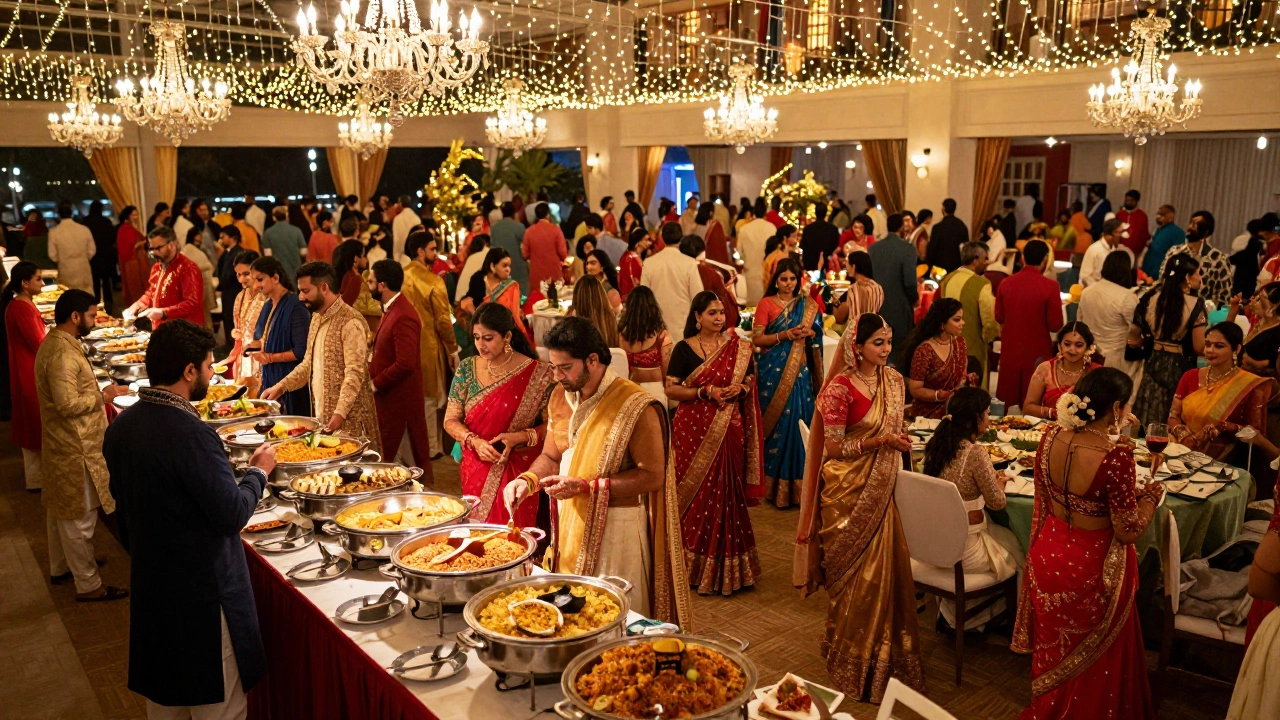
In India, feeding guests well is the highest form of respect. The saying goes, "A full stomach leads to a happy heart." Catering typically accounts for 30-40% of the total wedding budget. But this isn't just about serving rice and curry. Guests expect variety, quality, and presentation.
Modern Indian weddings feature elaborate menus with live counters for pasta, sushi, biryani, and desserts. There is also the issue of quantity. Guest lists routinely exceed 500-1000 people. Even if the per-plate cost is moderate, multiplying it by 1000 guests results in a massive bill. Add to this the demand for premium ingredients-like saffron, dry fruits, and organic meats-and the costs skyrocket. Many couples now opt for "buffet style" to manage costs, but the expectation of abundance remains high. Cutting back on food is seen as a direct insult to the guests' dignity.
Venues and Decor: The Instagram Effect
Before social media, venues were chosen based on availability and tradition. Today, they are chosen based on aesthetics. The rise of platforms like Instagram has turned weddings into visual content factories. Couples want "Instagrammable" moments-backdrops made entirely of fresh flowers, fairy lights stretching across acres of land, and intricate mandap designs.
Wedding Venues are luxury hotels, farmhouses, or heritage sites that charge premium rates for exclusivity, infrastructure, and aesthetic appeal during peak seasons. Popular destinations like Udaipur, Jaipur, or even luxury farms near Delhi and Mumbai command exorbitant fees. During peak season (October to February), prices can double. Decor companies capitalize on this trend, charging thousands for setups that look good for four hours but cost a fortune to install and dismantle. The pressure to create a unique, photogenic experience drives up costs significantly, as couples hire specialized designers rather than relying on standard hotel packages.
Attire and Jewelry: Heirlooms vs. New Buys
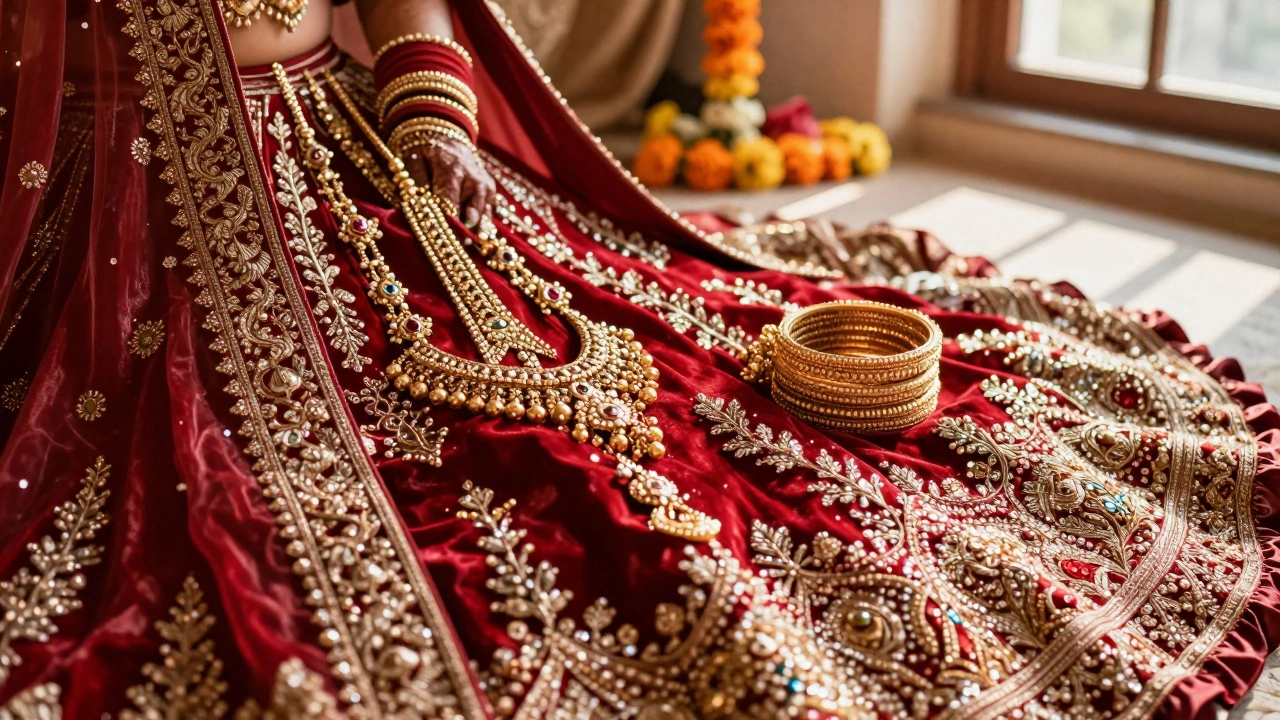
The bride and groom are expected to look impeccable. Traditional Indian attire involves heavy embroidery, silk fabrics, and intricate jewelry. While some families rely on heirlooms, many prefer new outfits to match the theme of the wedding. A bridal lehenga can range from ₹50,000 to over ₹5 Lakhs ($600 to $60,000+ USD) depending on the designer and craftsmanship. Grooms invest heavily in sherwanis and accessories.
Jewelry is another major expense. Gold prices fluctuate, but the expectation of gifting heavy gold sets to the bride remains strong. This is not just fashion; it is considered a financial safety net for the bride. However, in the context of wedding costs, buying new gold jewelry adds a substantial lump sum to the budget. Many couples now rent outfits to save money, but this practice is still gaining acceptance and hasn't fully replaced the desire for ownership.
Hidden Costs: Photography, Travel, and Gifts
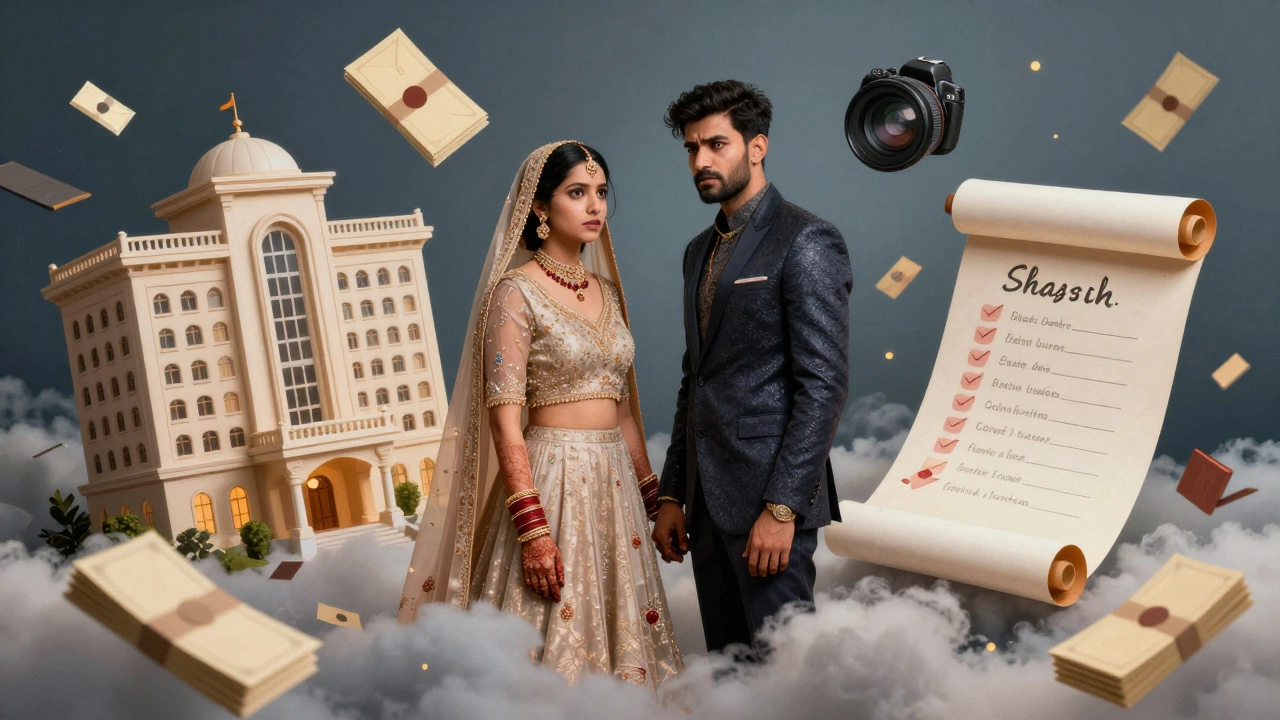
Beyond the obvious expenses, there are hidden costs that catch couples off guard. Professional photography and videography have become essential. Couples hire teams of 5-10 photographers to capture every angle. High-end cinematography packages can cost as much as the catering for a small group. Then there is travel. If the wedding is in a destination city, the couple must pay for accommodation and transport for immediate family members who might number 20-30 people. Plus, the tradition of gifting cash envelopes (Shagun) to relatives and friends adds up quickly. These gifts are obligatory and vary based on relationship closeness, creating a silent drain on the budget.
Can You Have an Affordable Indian Wedding?
Yes, but it requires breaking social norms. The key is prioritization. Decide what matters most-is it the food, the photos, or the number of guests? Most couples try to do everything at once, leading to overspending. Here are practical steps to reduce costs:
- Limit the Guest List: Invite only close family and friends. This is the most effective way to cut costs.
- Choose Off-Peak Dates: Avoid October-January. Summer weddings are cheaper but require indoor venues with good AC.
- Simplify Decor: Use potted plants instead of cut flowers. Opt for elegant minimalism over maximalist themes.
- Local Catering: Choose local cuisines rather than international fusion options which are pricier to execute.
- Rent Attire: Rent bridal and groom outfits from reputable stores to save 70-80% on clothing costs.
It takes courage to tell relatives that you are having a small wedding. But as financial awareness grows, especially among younger couples, the trend is slowly shifting towards "smart weddings"-intimate, meaningful, and financially responsible celebrations.
What is the average cost of an Indian wedding in 2026?
The average cost varies widely by region and scale. A mid-range wedding in a metro city like Delhi or Mumbai can cost between ₹15 lakhs to ₹30 lakhs ($18,000 - $36,000 USD). Luxury weddings can easily exceed ₹1 crore ($120,000+ USD). Rural weddings may cost less but still involve significant relative spending for the household.
Which part of the Indian wedding costs the most?
Catering and venue rental typically consume the largest portion of the budget, accounting for 50-60% combined. Food is non-negotiable in Indian culture, so families prioritize spending here over other areas like decor or entertainment.
Why do Indian weddings have so many events?
Each event serves a specific religious, social, or familial purpose. For example, Sangeet celebrates unity through music, Haldi is a purification ritual, and the Reception acknowledges the broader social circle. Skipping events can be seen as disrespecting traditions or elders.
How can I reduce my Indian wedding budget without offending guests?
Focus on quality over quantity. Serve fewer dishes but make them exceptional. Limit the guest list to close kin. Communicate early that you are having an intimate ceremony. Most modern guests understand financial constraints and appreciate sincerity over spectacle.
Is it common for parents to pay for the wedding in India?
Traditionally, yes. The bride's family often bears the majority of the costs, though this is changing. In urban areas and among dual-income couples, costs are increasingly shared equally between both families or paid by the couple themselves.