US-India Strategic Partnership Calculator
Input Partnership Metrics
Strategic Alignment Score
0
Enter values to calculate your partnership score
How This Works: The calculator weights key partnership metrics based on their significance in the US-India relationship as described in the article.
On the surface, the United States and India seem like an unlikely pair. One is a global superpower with deep roots in Western democracy and military might. The other is a rapidly growing democracy with a billion people, ancient traditions, and a history of non-alignment. Yet, since the early 2000s, their relationship has grown stronger than at any point in history. Why? It’s not because of shared language alone - though English helps. It’s not because of pop culture - though Bollywood and Hollywood now share audiences. It’s because their interests, values, and futures are now deeply aligned.
Shared democratic values
The foundation of the U.S.-India relationship isn’t money or weapons - it’s democracy. Both countries are the largest democracies in the world. The U.S. has had continuous democratic rule since 1789. India has held free elections since 1950, even through wars, famines, and deep social divides. When U.S. leaders talk about defending democracy globally, India isn’t just a symbol - it’s proof that democracy can work in a diverse, developing nation. That’s why American officials routinely call India a "natural partner." It’s not flattery. It’s recognition that India’s survival as a democracy is a win for the entire democratic world.Economic ties that keep growing
Trade between the U.S. and India jumped from $17 billion in 2000 to over $200 billion in 2024. That’s not just numbers - it’s real jobs, real companies, and real innovation. Silicon Valley firms like Google, Apple, and Microsoft have huge operations in India. Indian tech giants like TCS, Infosys, and Wipro employ hundreds of thousands in the U.S. Indian entrepreneurs now run over 1,500 tech startups in the U.S., many of them founded by immigrants who came here for education and stayed to build businesses. The U.S. is India’s largest export market for pharmaceuticals, textiles, and engineering goods. India is the U.S.’s fastest-growing source of IT talent. This isn’t dependency - it’s interdependence.Defense and security cooperation
In the 2000s, the U.S. still had sanctions on India after its nuclear tests in 1998. Today, they’re signing defense deals worth over $20 billion. India buys American fighter jets, helicopters, and missile systems. The U.S. gives India access to advanced military tech - something it rarely does for non-NATO allies. Why? Because both countries see the same threat: an increasingly aggressive China. India shares intelligence with the U.S. on Chinese naval movements in the Indian Ocean. The U.S. helps India build port infrastructure in the Andaman Islands to monitor Chinese activity. They conduct joint military drills like Malabar, which now includes Japan and Australia. This isn’t an alliance against China - it’s a partnership to keep the Indo-Pacific open and stable.
Education and people-to-people ties
More than 250,000 Indian students study in the U.S. every year - more than from any other country. They’re not just paying tuition; they’re building networks. Indian-American professionals now hold top roles in tech, medicine, and government. Over 5 million Indian Americans live in the U.S. - many with strong ties to family back home. They vote, donate, lobby, and influence policy. In 2024, the U.S. Congress had 13 Indian-American members. That’s not coincidence - it’s the result of decades of cultural integration. Meanwhile, American tourists flock to India for yoga, spirituality, and heritage. Over 1 million U.S. citizens visited India in 2024. This isn’t tourism - it’s connection.Climate change and clean energy
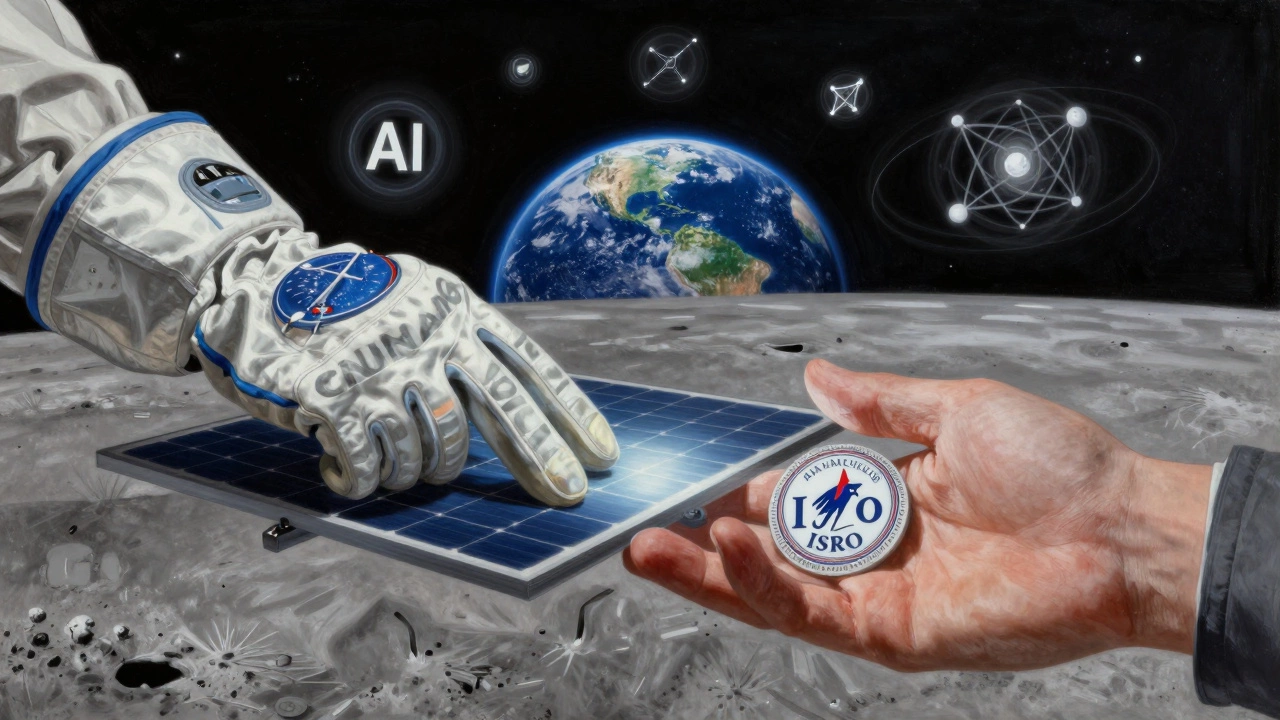
India is the world’s third-largest carbon emitter, but it’s also one of the fastest-growing markets for solar power. The U.S. and India launched the International Solar Alliance in 2015 - now with over 120 member countries. The U.S. is helping India build green hydrogen plants and modernize its power grid. In 2023, the two nations agreed to a $1.5 billion clean energy partnership. Why? Because neither can tackle climate change alone. India needs technology and investment. The U.S. needs a partner that can scale solutions fast. India’s solar farms are now among the largest in the world - and American companies are building them.