Ghazal Meaning: What It Is, Why It Matters, and How It Moves India
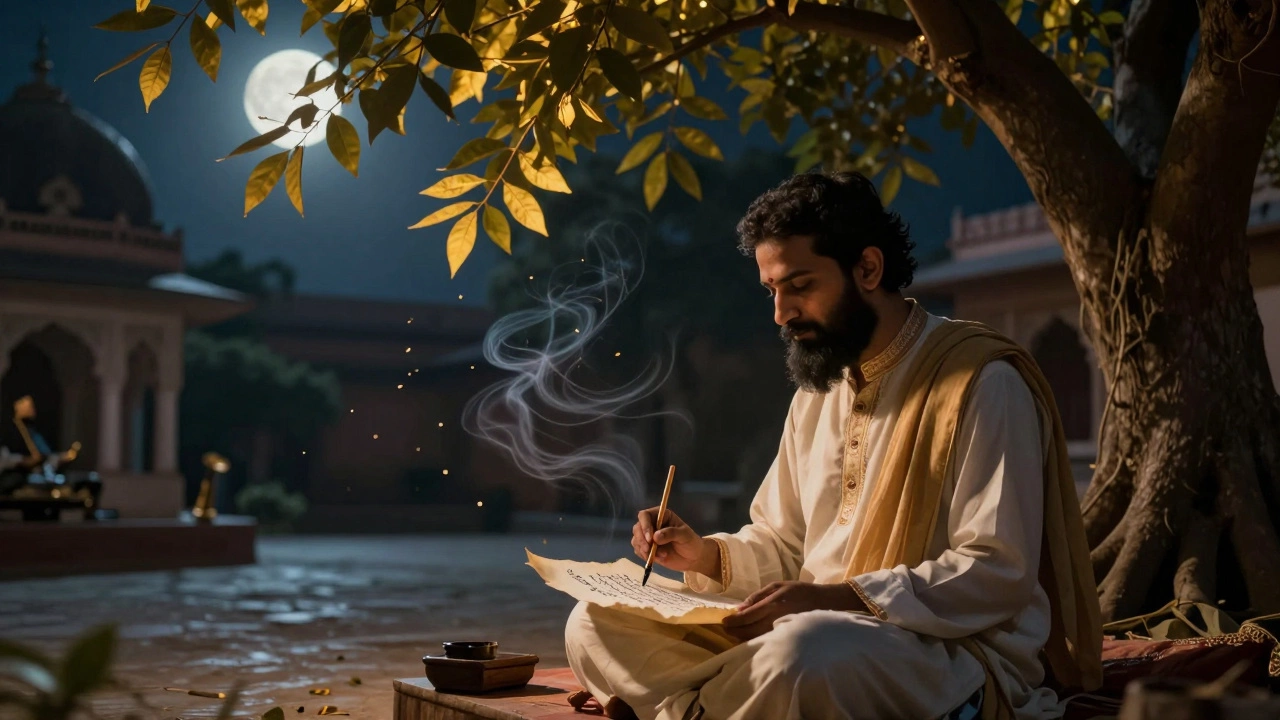
When you hear the word ghazal, a form of lyrical poetry rooted in Persian and Urdu traditions, often centered on themes of love, loss, and longing. Also known as ghazal poetry, it is not just verse—it’s a whispered confession, a cry held in rhythm, and a quiet rebellion against silence. In India, the ghazal isn’t taught in classrooms like math or history. It’s passed down in the hum of a radio at dusk, in the crackle of an old vinyl record, in the way someone looks away when they hear a line that cuts too close to home.
The dard-e-dil, a deep, untranslatable ache for love lost or unspoken, often expressed through ghazal poetry is the soul of the ghazal. It’s not sadness you can name. It’s the kind that sits in your chest after midnight, when the house is quiet and you realize no one will ever understand what you’re feeling. That’s why poets like Mir Taqi Mir, Ghalib, and Faiz Ahmed Faiz didn’t write about happy endings. They wrote about the space between breaths, the silence after a goodbye, the way a name lingers on the tongue long after the person is gone. The Urdu ghazal, a poetic structure with rhyming couplets and a recurring refrain, often used to express spiritual and emotional longing doesn’t need big words. It thrives in simplicity: one line about a lost lover, the next about God. One line about a broken heart, the next about the moon watching it all. That’s the magic—it turns pain into something sacred.
People think ghazals are just about romance. But look closer. The same structure that mourns a lover also mourns a lost homeland, a fading language, a forgotten faith. In India, where identity is stitched together from dozens of tongues and traditions, the ghazal became a bridge. It carried the sorrow of Partition, the quiet dignity of rural women who never learned to read, the unspoken grief of men who worked far from home. It didn’t need to be understood—it needed to be felt. That’s why it still lives. Not in textbooks. Not in festivals. But in the way your aunt hums a line while making chai, or how your grandfather’s eyes get wet when he hears Begum Akhtar sing.
You won’t find ghazals in motivational posts or viral reels. They don’t fit. But they live in the quiet corners of Indian life—in the tears that aren’t wiped away, in the poems scribbled on bus tickets, in the songs that play when no one else is listening. The ghazal meaning isn’t in the dictionary. It’s in the pause after the last line. It’s in the breath you didn’t know you were holding. And if you’ve ever loved someone who left, or lost something you couldn’t name, you already know it.
Below, you’ll find posts that dig into this world—not as scholars, but as people who’ve felt it. From the most haunting sad songs in India to the poetry of broken hearts, from the silent weight of grief to the words that carry it. This isn’t a lesson. It’s a return home.