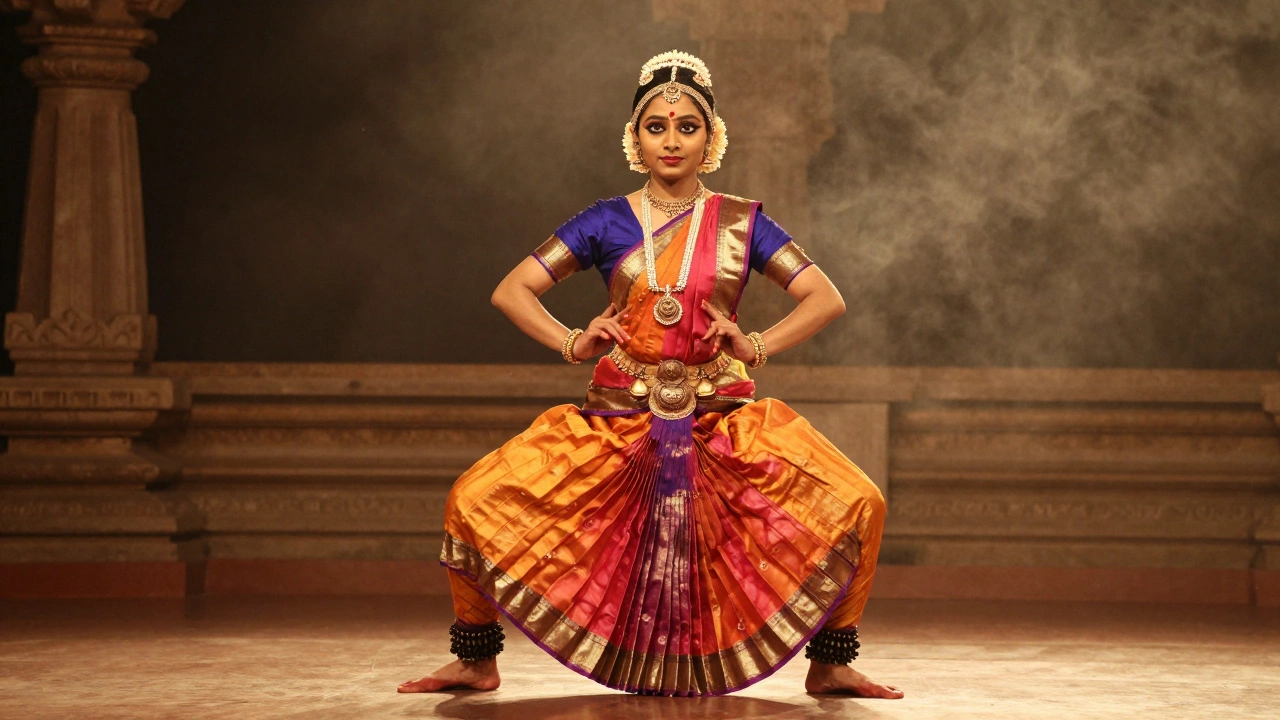
Indian classical dance rhythms: Origins, styles, and emotional power
When you hear the Indian classical dance rhythms, the precise, layered footwork and hand gestures that form the backbone of India’s oldest dance forms. Also known as tala systems, these rhythms are not just time signatures—they’re the heartbeat of stories told through movement. Every clap, every tap of the ankle bell, every pause between beats carries meaning. These rhythms weren’t invented for performance; they were born in temples, in village squares, in the quiet hours between prayer and dawn.
Each major style has its own rhythmic fingerprint. Bharatanatyam, the ancient dance from Tamil Nadu, built on the 108 karanas and 108 tala cycles from the Natya Shastra uses complex patterns like Adi Tala (8 beats) to mirror the cycles of nature. Kathak, from North India, grew under Mughal courts and turned fast footwork into poetry, using Teentaal (16 beats) to mimic the gallop of horses and the whisper of wind. Odissi, from Odisha, flows like water, using Chapu Tala (6 beats) to echo the curves of temple sculptures and the rhythm of monsoon rains. And Kuchipudi, from Andhra Pradesh, blends dance with drama, using Rupaka Tala (7 beats) to tell tales of devotion and defiance. These aren’t just techniques—they’re cultural memory encoded in motion.
What makes these rhythms powerful isn’t their complexity, but their honesty. A dancer doesn’t just count beats—she feels them. The silence between two taals holds as much weight as the notes themselves. This is why these dances still speak to people who’ve never stepped into a studio. They carry the weight of centuries without saying a word. In a world that moves too fast, Indian classical dance rhythms remind us that some things only unfold in their own time. Below, you’ll find posts that explore how these rhythms connect to tradition, emotion, and everyday life in India—from funeral chants that echo the same beats to poetry that sings in tala.