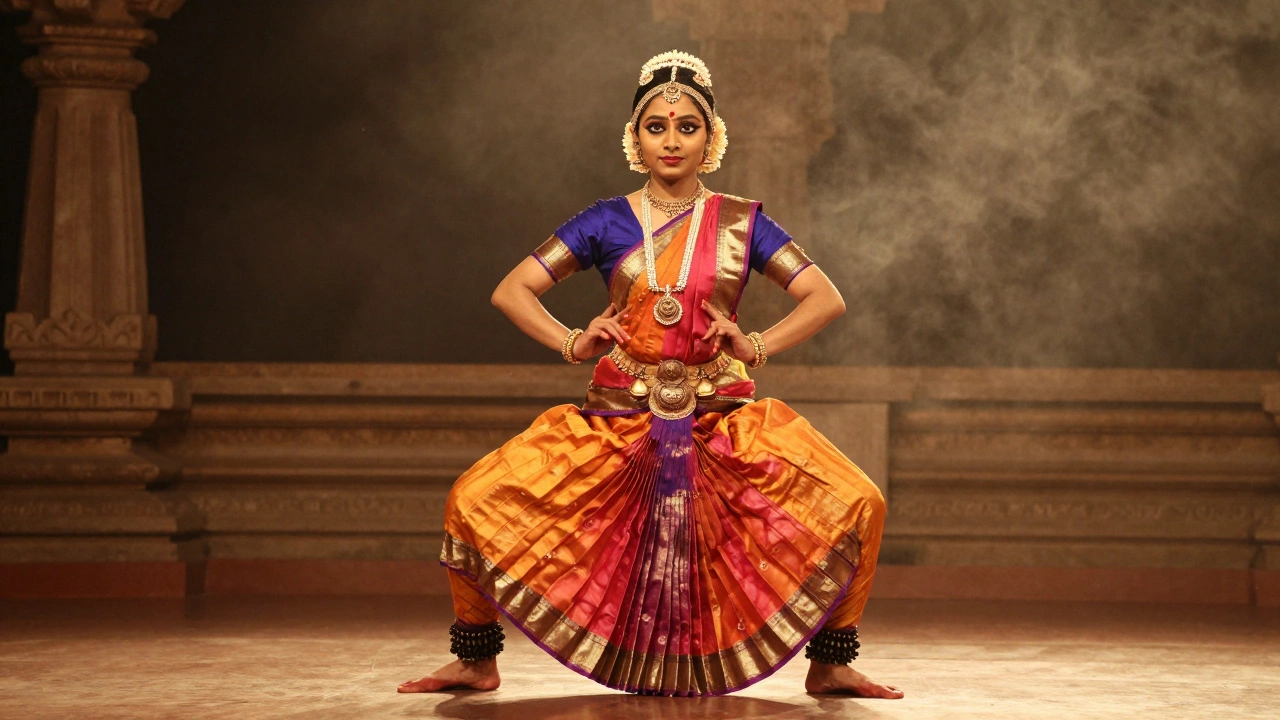
Nadai in Dance: Understanding the Rhythm and Tradition Behind Indian Classical Dance
When you watch a dancer move in perfect sync with the drum, what you’re really seeing is nadai, the rhythmic subdivision that governs the speed and flow of movement in Indian classical dance. Also known as gati, it’s not just timing—it’s the invisible thread that ties footwork, hand gestures, and expression into one living rhythm. Nadai isn’t something you learn from a book. You feel it in your bones when your foot taps the floor in triplets while your hands trace slow circles. It’s the difference between dancing and being danced.
Nadai works hand-in-hand with tala, the cyclical rhythmic framework that structures every performance in Indian classical dance. Think of tala as the calendar and nadai as the clock. One tells you when the cycle begins and ends; the other tells you how fast the seconds tick inside it. In Bharatanatyam, a common tala like Adi Tala has eight beats, but the nadai can make those beats feel like four, six, or even twelve—changing the entire mood of the piece. A slow nadai turns a joyful step into a quiet prayer. A fast nadai turns the same step into a storm.
This isn’t just about technique. In villages across Tamil Nadu and Andhra Pradesh, children learn nadai before they learn their first story. Grandmothers tap their fingers on clay pots to teach the rhythm. Temple dancers used to train for years just to master one nadai pattern. And today, even in modern studios, the best dancers don’t count—they breathe with it. Nadai is where discipline meets soul. It’s why a single movement can carry the weight of centuries.
What you’ll find in the posts below isn’t a list of dance steps. It’s a collection of moments where rhythm became meaning. You’ll read about how a broken heart is danced in silence, how ancient funeral chants echo in footfalls, and how a simple number like 3 to the power of 3 mirrors the slow, steady pulse of a dancer’s heart. These aren’t random posts. They’re all connected by the same truth: in Indian culture, rhythm isn’t just heard. It’s lived.