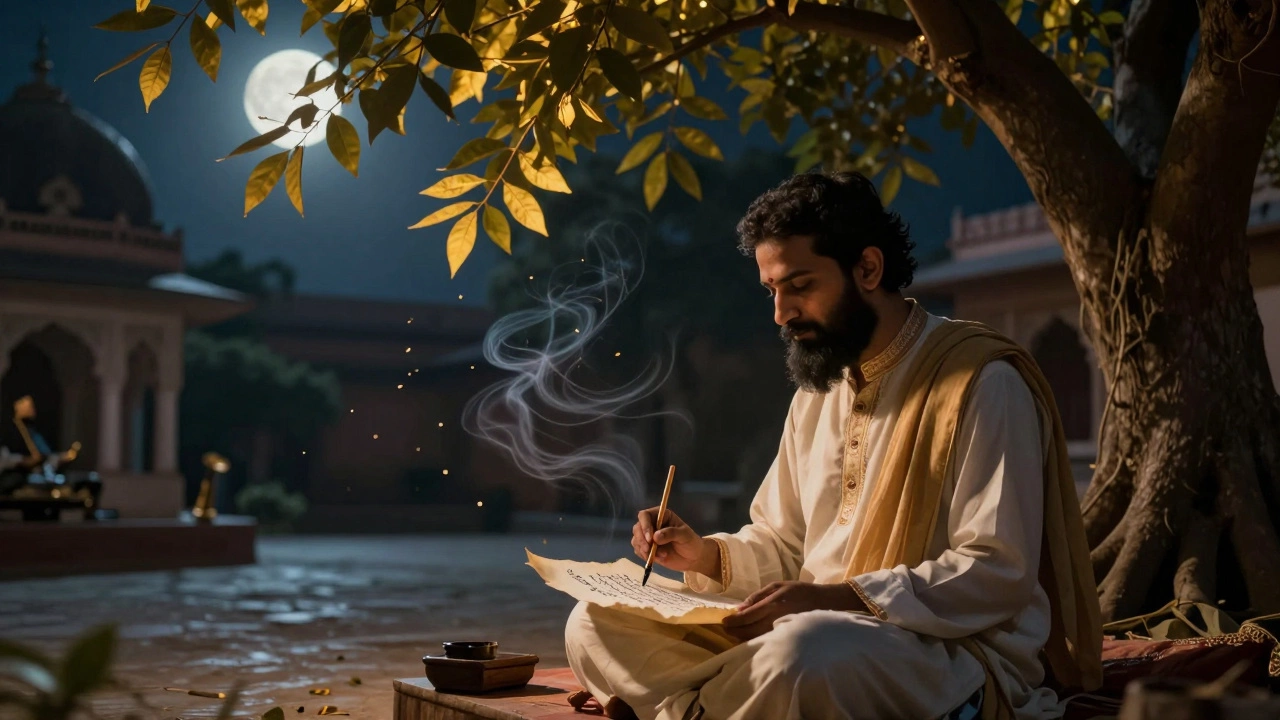
Persian Poetry: Timeless Verses That Shape Indian Soul and Spirit
When you hear a line like Persian poetry, a rich tradition of lyrical verse originating in Iran and Central Asia, known for its emotional depth, mystical themes, and strict metrical forms. Also known as Farsi poetry, it has shaped how millions in South Asia speak of love, loss, and longing, you're not just listening to words—you're hearing centuries of silence speak. This isn’t foreign literature. It’s the root of every dard-e-dil, every tear-stained ghazal sung in Mumbai cafés and Lucknow courtyards. Persian poetry didn’t just influence Indian verse—it became part of its bones.
Think of Rumi, a 13th-century Persian poet whose verses on divine love and inner turmoil resonate across faiths and borders. His words are quoted in yoga studios in Delhi, whispered in Sufi shrines near Ajmer, and recited at midnight by heartbroken students in Chennai. Then there’s Hafez, a master of ambiguity and beauty, whose poetry is used like a oracle in Iran—and in India, where people flip through his Divan for answers when life feels stuck. These poets didn’t write for fame. They wrote to name what silence couldn’t. And in India, where grief is often buried under duty, their verses became safe spaces. You don’t need to speak Farsi to feel the weight of a line like, "The rose is gone, the nightingale is silent." You just need to have loved, lost, or both.
The connection isn’t accidental. When Urdu poetry rose in Mughal courts, it didn’t replace Persian—it absorbed it. Every couplet in a Ghalib ghazal carries a ghost of Hafez. Every sad song you hear on a monsoon evening? It’s built on the same rhythm, the same ache, the same unspoken truth: that pain, when given poetry, becomes sacred. You’ll find this thread in the posts below—not in academic essays, but in real, raw expressions. From broken hearts named in Urdu to the quiet influence of Persian meters on modern Indian lyrics, this collection doesn’t just talk about Persian poetry. It shows you how it still breathes in India’s everyday moments.