Pitru Paksha Songs: Traditional Devotional Music for Ancestral Rituals
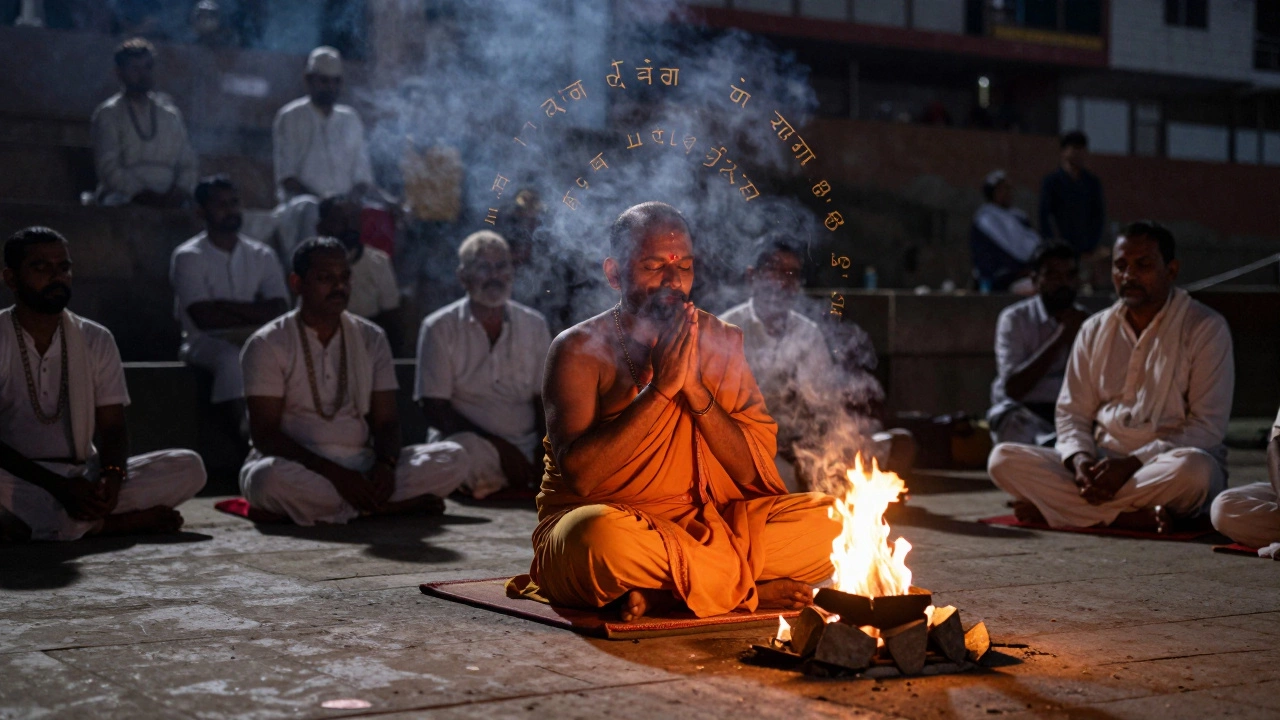
When you hear Pitru Paksha songs, devotional chants performed during the 16-day Hindu period honoring ancestors. Also known as Shraddha music, these songs aren’t meant for entertainment—they’re a quiet bridge between the living and the departed, sung in homes and along riverbanks as families offer rice balls and prayers. This isn’t just ritual. It’s memory made audible.
These songs are tied to Shraddha, the ritual offering made to deceased ancestors in Hindu tradition, and they often include simple, repetitive hymns in Sanskrit or regional languages like Maithili, Bhojpuri, or Odia. You won’t find fast beats or modern instruments. Instead, you’ll hear slow, low tones—voices trembling with grief, elders humming old tunes passed down through generations. The music doesn’t try to fix pain. It holds it. In villages, a single harmonium and a few voices can fill an entire courtyard with silence that speaks louder than words.
Many of these songs come from ancient texts like the Garuda Purana, which describes how offerings and chants help the soul transition. But what you hear today isn’t always from scripture—it’s from lived experience. A grandmother singing the same line her mother sang. A son learning the tune his father hummed before he passed. These aren’t performances. They’re acts of love that refuse to be forgotten.
There’s no single "best" Pitru Paksha song. Some are call-and-response chants. Others are solo laments. Some are sung at the river’s edge during tarpan. Others echo in temple courtyards where priests recite names of the departed. What binds them? They all carry the same quiet truth: those we lost are still part of our rhythm.
What you’ll find in the posts below are real songs, stories, and meanings tied to this sacred time. You’ll hear how these melodies are kept alive—not by scholars, but by mothers, farmers, and daughters who sing them in kitchens and courtyards. You’ll learn why some families avoid music altogether during Pitru Paksha, and why others believe a single note can reach beyond death. This isn’t about tradition for tradition’s sake. It’s about what happens when love outlasts a person—and how sound becomes the last thing we hold onto.