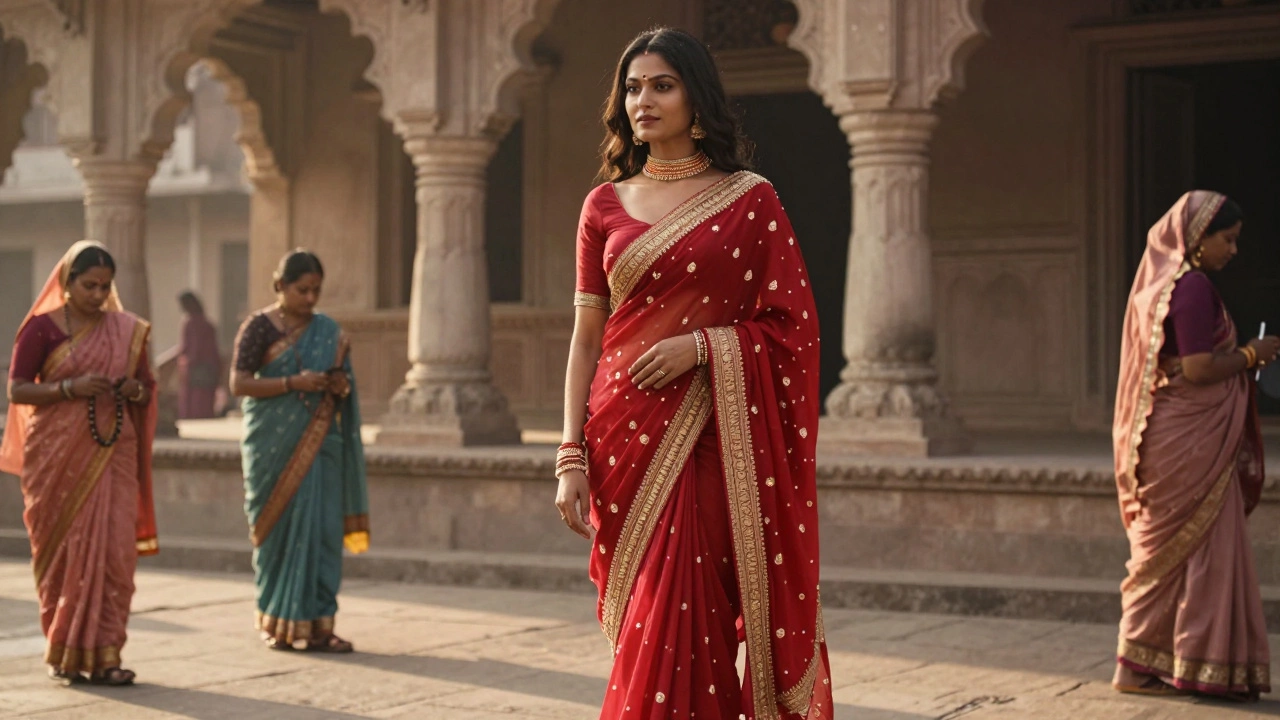
Traditional Indian Attire: Culture, Meaning, and Everyday Wear
When you think of traditional Indian attire, the clothing worn across India for centuries, shaped by region, religion, and daily life. Also known as Indian ethnic wear, it's not costume—it's living culture, passed down through hands that sew, dye, and fold with care. This isn't about fancy outfits for weddings. It's what a woman in Odisha wears to the market, what a farmer in Punjab pulls on before sunrise, what a student in Chennai ties around her waist before class. Each piece has a reason, a rhythm, a history.
saree, a six-yard cloth draped in over a hundred ways across India, tied not just to the body but to identity. Also known as sari, it’s worn by grandmothers in Kerala and college girls in Delhi—with the same quiet dignity. Then there’s the kurta, a loose tunic worn by men and women alike, simple in cut but rich in meaning across North India and beyond. Also known as kameez, it’s the uniform of quiet mornings and festival afternoons. And the dhoti, a wrapped cloth worn by men, especially in villages and temples, unchanged for thousands of years. Also known as mundu in the south, it’s not old-fashioned—it’s practical, breathable, and deeply rooted. These aren’t relics. They’re tools. Tools for work, for prayer, for celebration. They carry scent of turmeric, sound of temple bells, and the weight of generations.
What you’ll find here isn’t a gallery of photos. It’s the real stories behind the fabric—the woman who learned to drape her saree from her mother at age eight, the tailor who still hand-stitches zari thread by candlelight, the young man who wears his dhoti to his IT job because it feels like home. These posts don’t just show what people wear—they show why they wear it, and what it means when they choose to keep wearing it, even now.