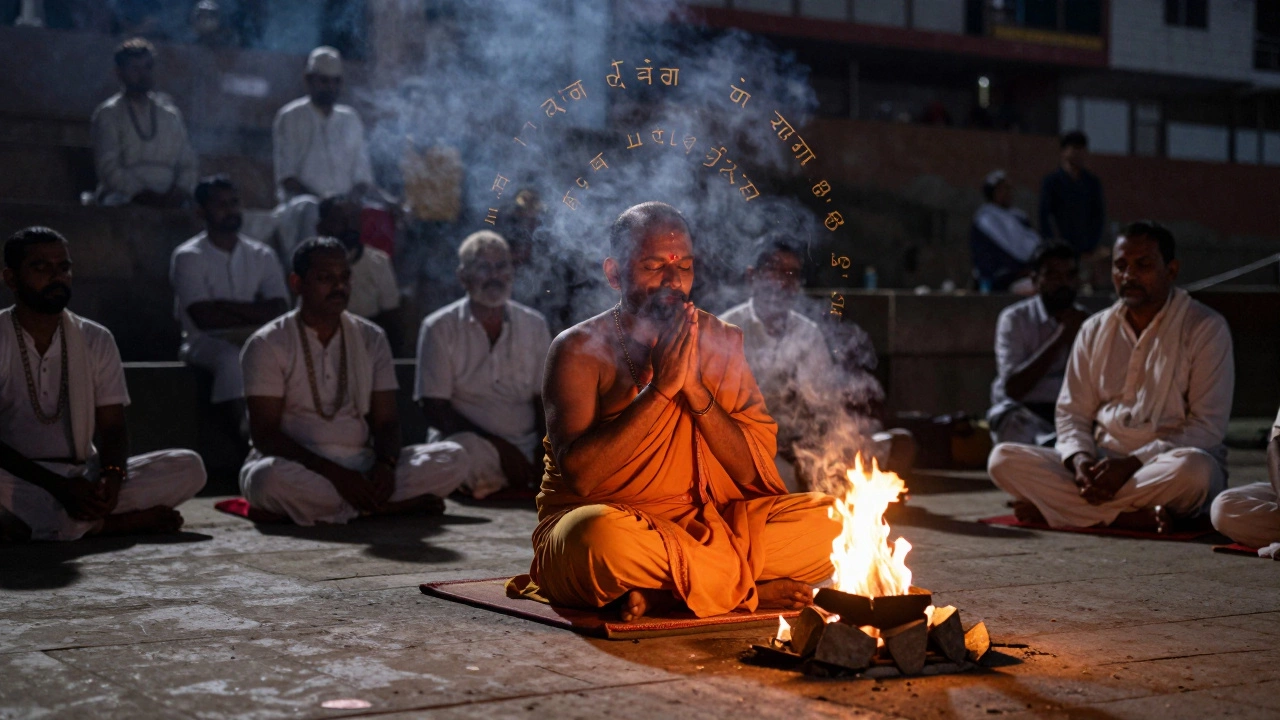
Vedic funeral chants: Sacred sounds of Indian death rituals
When a person dies in a Hindu household, the air fills with the low, rhythmic hum of Vedic funeral chants, ancient Sanskrit hymns recited to escort the soul from the body and into the next stage of existence. Also known as antyeshti, these chants are not mourning—they’re a sacred transition, guided by words passed down for over 3,000 years. This isn’t about grief alone. It’s about duty, belief, and the unbroken chain between the living and the departed.
These chants come from the Vedas, the oldest sacred texts of Hinduism, composed in Vedic Sanskrit and preserved orally for millennia. The most common ones are from the Rigveda and Yajurveda, especially the Mrityunjaya Mantra and the Antyeshti Suktam. They’re not meant to be understood by everyone—only the priest or the eldest son recites them clearly, while others listen in silence. The sound itself carries power. The vibration, the rhythm, the repetition—it’s believed to loosen the soul’s ties to the physical world. This isn’t superstition. It’s a system of belief that treats sound as a spiritual force, much like how yoga treats breath or meditation treats stillness.
What makes these chants different from other funeral traditions? They don’t focus on loss. They focus on release. The body is seen as a temporary vessel. The soul, or atman, the eternal self in Hindu philosophy, distinct from the physical body, continues its journey. The chants help it move toward liberation, or moksha, away from the cycle of rebirth. That’s why you won’t hear wailing in many traditional ceremonies—just steady chanting, the crackle of the pyre, and the quiet steps of family members offering rice and water. It’s solemn, but not despairing. It’s a ritual of trust—in the texts, in the gods, in the unseen path ahead.
Across India, from the ghats of Varanasi to village courtyards in Tamil Nadu, these chants remain unchanged. Even in cities where modernity pushes for simpler ceremonies, families still find a way to include at least one Vedic verse. Why? Because when words are all you have left to say to someone you’ve lost, these are the words that carry the weight of centuries. You won’t find them in self-help books or motivational apps. They live in the hands of priests, in the memory of grandmothers, and in the quiet moments before the fire takes the body.
What you’ll find below are posts that explore related rituals, the meaning behind the words, how these chants connect to broader Indian spiritual traditions, and why they still matter in a world that’s forgotten how to sit with silence. These aren’t just funeral songs—they’re a living thread in India’s deepest spiritual fabric.