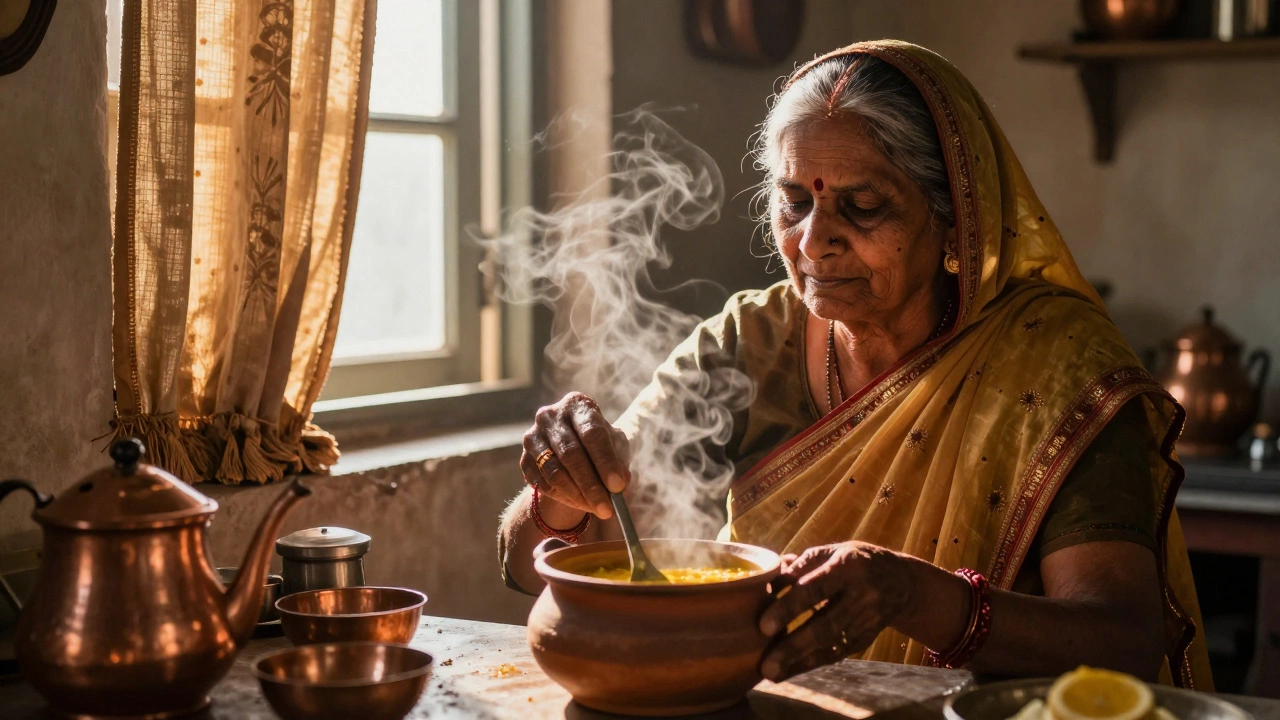
When people ask, "What are the Indian codes?" they’re not talking about zip codes or legal statutes. They’re asking about the unspoken rules, the quiet truths, the sayings passed down through generations that shape how millions live, think, and endure. These aren’t just quotes. They’re cultural operating systems-simple phrases that carry the weight of centuries of observation, struggle, and spiritual insight.
The Indian Code Isn’t Written, It’s Whispered
You won’t find these codes in textbooks or government manuals. You’ll hear them from grandmothers stirring dal, from street vendors waiting for customers, from students cramming for exams at 3 a.m. They’re spoken in Hindi, Tamil, Bengali, Punjabi, Marathi-and translated into English by those who carry them across borders.One of the most repeated: "Jo kuch hoga, dekha jayega"-"Whatever will happen, we’ll see." It’s not resignation. It’s calm acceptance. It’s the belief that outcomes aren’t controlled by frantic effort alone, but by timing, karma, and grace. This isn’t passivity. It’s patience with purpose.
Another: "Chalta hai"-"It goes on." Used when something breaks, when plans fall apart, when the train is late again. It’s not indifference. It’s resilience. It’s the understanding that life doesn’t pause for your frustration. You adapt. You move. You keep walking.
Roots in Ancient Texts, Still Alive Today
These codes didn’t appear out of nowhere. They’re echoes of the Bhagavad Gita, the Upanishads, the teachings of Kabir, and the folk wisdom of village elders. The Gita says, "Karmaṇy evādhikāras te mā phaleṣu kadācana"-"You have the right to perform your duty, but not to the fruits of action." That’s the core of the Indian code: focus on effort, not outcome.Modern Indian life runs on this principle. A mother works three jobs not because she expects to get rich, but because she believes doing her duty matters more than the reward. A small business owner stays open through power cuts and inflation because "kaam karo, phir dekhte hain"-"Work first, then see."
This isn’t fatalism. It’s discipline with detachment. It’s the opposite of Western hustle culture, where success is measured by speed and scale. In India, success is measured by endurance, integrity, and how you treat others when things go wrong.
Common Indian Codes You’ll Hear Every Day
- "Dil se karo, phir koi na karega" - "Do it from the heart, and no one can stop you." This isn’t about ego. It’s about authenticity. When your intention is pure, the universe aligns.
- "Sab kuchh time pe aata hai" - "Everything comes in time." Used when someone is anxious about love, money, or opportunity. It’s not a delay-it’s a rhythm.
- "Bhookha khana khata hai, bhookha koi na dekhta" - "The hungry person eats, but no one sees their hunger." A reminder that suffering is often silent. Compassion isn’t optional-it’s necessary.
- "Ghar ka khaana, ghar ki baat" - "Home food, home talk." Values family, tradition, and belonging over external validation.
- "Jitna karega, utna milega" - "The more you do, the more you get." Not a guarantee of wealth, but a law of effort. Action builds momentum, even slowly.

Why These Codes Still Work in 2026
In a world obsessed with viral trends, instant results, and digital validation, Indian codes feel outdated. But they’re not. They’re the antidote.Think about it: When your phone dies, your Wi-Fi cuts out, your app crashes-what do you do? You breathe. You wait. You find another way. That’s the Indian code in action. It’s not about tech-it’s about mindset.
A 2023 study by the Indian Institute of Management, Bangalore, found that people who regularly used traditional sayings in daily life reported 34% lower stress levels than those who didn’t. Why? Because these phrases reframe suffering. They don’t promise happiness. They promise meaning.
Young Indians in Toronto, London, or Sydney still whisper these codes to themselves before job interviews, after breakups, during family arguments. They’re not clinging to the past. They’re using ancient tools to survive modern chaos.
What These Codes Teach About Suffering
Western culture often treats pain as a problem to fix. Indian codes treat it as a teacher."Paani mein paani mila, dard mein dard badhta hai"-"Add water to water, and pain only grows." This isn’t poetic. It’s psychological. It says: don’t drown in your sorrow. Don’t keep talking about it. Don’t keep reliving it. Let it pass. Let it settle.
Another: "Chhota dard chhupata hai, bda dard chhupata nahi"-"Small pain hides, big pain shouts." That’s why someone with cancer might smile through a family dinner, while someone with a broken heart screams into a pillow. The code teaches: don’t judge suffering by its volume. Some of the strongest people are the quietest.
How to Use These Codes in Your Life
You don’t need to be Indian to live by these codes. You just need to be human.- When you’re overwhelmed, say: "Chalta hai"-and then take one small step.
- When you’re comparing yourself to others, remember: "Har kisi ke ghar mein ek alag rang hai"-"Every home has its own color." Your path isn’t wrong just because it’s different.
- When you feel like giving up, ask: "Kya main apna kaam kar raha hoon?"-"Am I doing my work?" Not the perfect work. Not the rewarded work. Just the next right thing.
These aren’t affirmations. They’re anchors. They don’t change your circumstances. They change how you carry them.
The Real Code: Respect, Not Rules
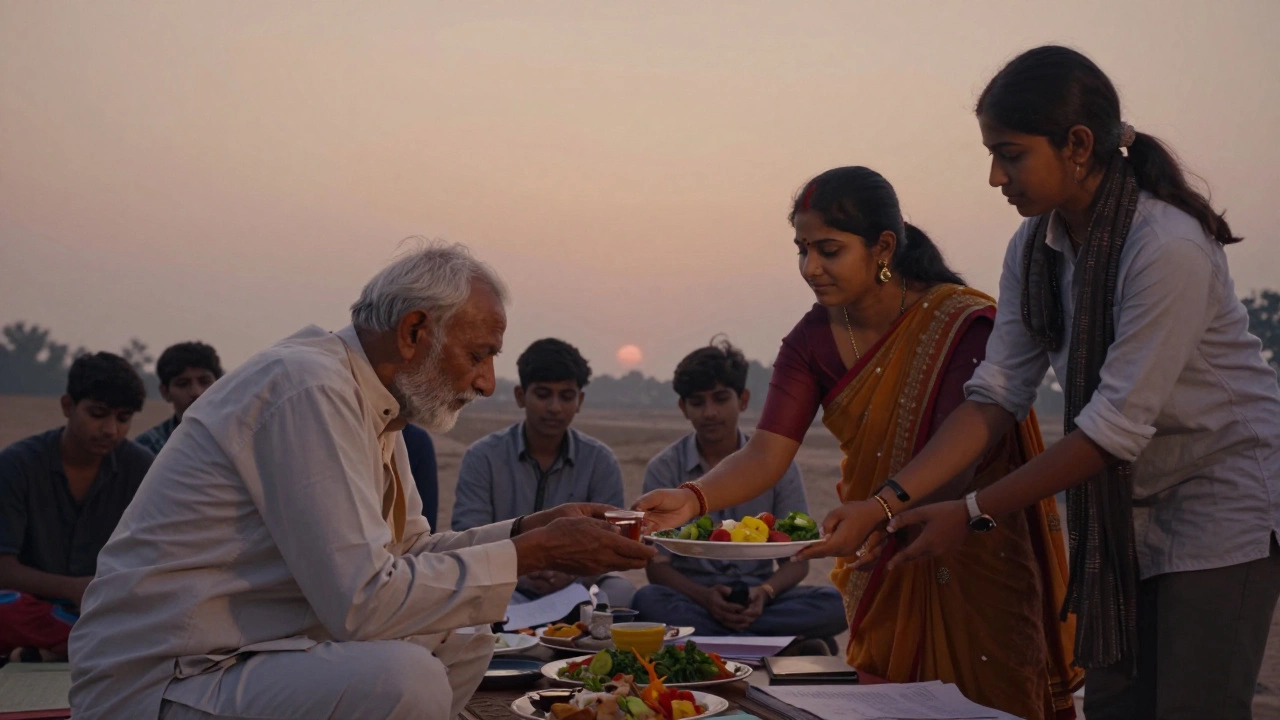
The deepest Indian code isn’t a saying. It’s a practice: respect.Respect for elders, even when they’re stubborn. Respect for strangers, even when they’re rude. Respect for time, even when it’s wasted. Respect for silence, even when noise is easier.
That’s why you’ll see a 70-year-old man in Varanasi bowing to a teenager who just handed him tea. Why a mother in Kerala wakes up at 4 a.m. to cook for her son’s friends before school. Why a student in Delhi stays up all night helping a classmate prepare for an exam-even though they’re rivals.
This is the unspoken code: You don’t have to agree with someone to honor them. You don’t have to like their choices to hold space for their struggle.
That’s the real Indian code. Not the phrases. The presence behind them.
Final Thought: You Already Know This
You’ve felt it. When you held your friend’s hand after they lost someone. When you kept working even though no one praised you. When you stayed calm while everything else fell apart.You didn’t learn that from a book. You learned it from your gut. From your family. From the quiet moments when you realized: life doesn’t reward the loudest. It rewards the steady.
That’s the Indian code. And it’s not Indian at all. It’s human. You just forgot it for a while.
Are Indian codes the same as Indian proverbs?
They overlap, but they’re not the same. Proverbs are often poetic, metaphorical, and meant to teach a lesson. Indian codes are practical, lived truths-used daily to cope, survive, and keep going. A proverb might say, "A stitch in time saves nine." An Indian code says, "Chalta hai," and then you just do the stitch.
Do these codes apply to modern Indian youth?
Yes, more than ever. While young Indians use TikTok and Instagram, they still whisper "Chalta hai" when their startup fails or their relationship ends. They still say "Dil se karo" before a job interview. These aren’t old-fashioned-they’re survival tools adapted to the digital age. The medium changes. The message doesn’t.
Can non-Indians use these codes?
Absolutely. These aren’t cultural property-they’re human wisdom. People in Germany, Brazil, and Canada use phrases like "Everything comes in time" or "Do your work, then see" to get through burnout, grief, or uncertainty. The language changes. The truth doesn’t.
Why are Indian codes so focused on patience?
Because patience isn’t passive-it’s strategic. India’s history is full of slow change: independence took decades. Infrastructure takes years. Relationships take lifetimes. The code teaches: rushing creates mistakes. Patience builds resilience. And resilience is the only thing that lasts.
Is there a single most important Indian code?
Not one. But if you had to pick the most powerful, it’s this: "Karmanye vadhikaraste"-"You have the right to act, not to the results." It’s the foundation of every other code. It frees you from anxiety, comparison, and disappointment. It lets you do your best, then let go.