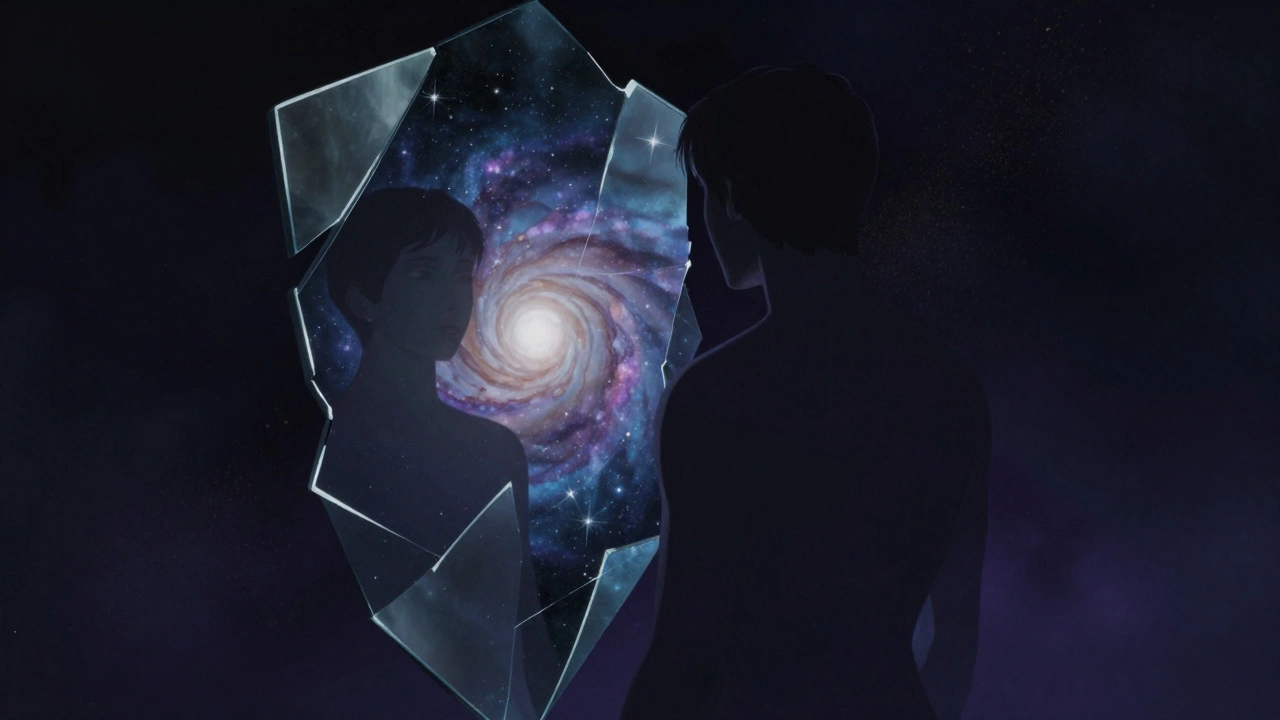
Find Your Deepest Quote
Select the challenge you are currently facing to discover a profound quote that offers clarity and strength.
Have you ever read a sentence that stopped you in your tracks? A line so sharp, so true, that it felt like someone had reached into your chest and rearranged your thoughts? We scroll through thousands of words every day. Most of them are noise. But occasionally, a single phrase cuts through the clutter. It sticks. It changes how you see the world.
You might be asking yourself: what is the deepest quote ever? There is no single answer. Depth isn’t about complexity. It’s about resonance. A deep quote acts like a mirror. It reflects truths you already know but haven’t fully accepted. It simplifies chaos. It gives language to feelings that usually stay trapped inside us.
In this guide, we aren’t just listing famous lines. We’re looking at why certain quotes hit harder than others. We’ll explore the psychology behind memorable wisdom, break down some of the most powerful sayings from history, and show you how to use these insights to navigate your own life with more clarity and less stress.
Why Some Quotes Hit Deeper Than Others
Not all wisdom is created equal. You’ve probably seen generic motivational posters on office walls. "Hang in there." "Dream big." They’re nice, but they don’t change anything. Why? Because they lack specificity. They lack tension.
The deepest quotes usually contain a paradox or a hard truth. They challenge our ego. For example, when Socrates, the ancient Greek philosopher, said, "I know one thing: that I know nothing," he wasn’t being modest. He was describing the starting point of all real learning. Admitting ignorance is terrifying for most people. That’s why the quote lands. It forces you to confront your own arrogance.
Psychologists call this "cognitive dissonance." When a quote contradicts what you think you believe, your brain has to work to resolve the conflict. That mental effort creates a memory hook. The next time you face a similar situation, that quote pops up. It’s not magic. It’s neuroscience. The best quotes are efficient. They pack years of experience into ten words.
The Heavy Hitters: Candidates for the Deepest Quote
If we have to narrow it down, a few contenders consistently rise to the top across cultures and centuries. These aren’t just pretty words. They are tools for survival in a confusing world.
| Quote | Author | Core Lesson | Best Used When... |
|---|---|---|---|
| "The unexamined life is not worth living." | Socrates | Self-reflection is essential for meaning. | You feel stuck or on autopilot. |
| "He who has a why to live can bear almost any how." | Friedrich Nietzsche | Purpose fuels endurance. | You are facing suffering or burnout. |
| "Be the change you wish to see in the world." | Mahatma Gandhi | Action starts with personal responsibility. | You are frustrated by societal problems. |
| "In the middle of difficulty lies opportunity." | Albert Einstein | Reframing failure as potential. | You are afraid to take a risk. |
| "Man is condemned to be free." | Jean-Paul Sartre | We cannot blame others for our choices. | You are making excuses for your life. |
Notice a pattern? These quotes don’t promise happiness. They demand accountability. Socrates tells us we must look inward. Nietzsche tells us we need a reason to suffer. Gandhi tells us to stop waiting for others to fix things. This is why they endure. They address the human condition, not just temporary moods.
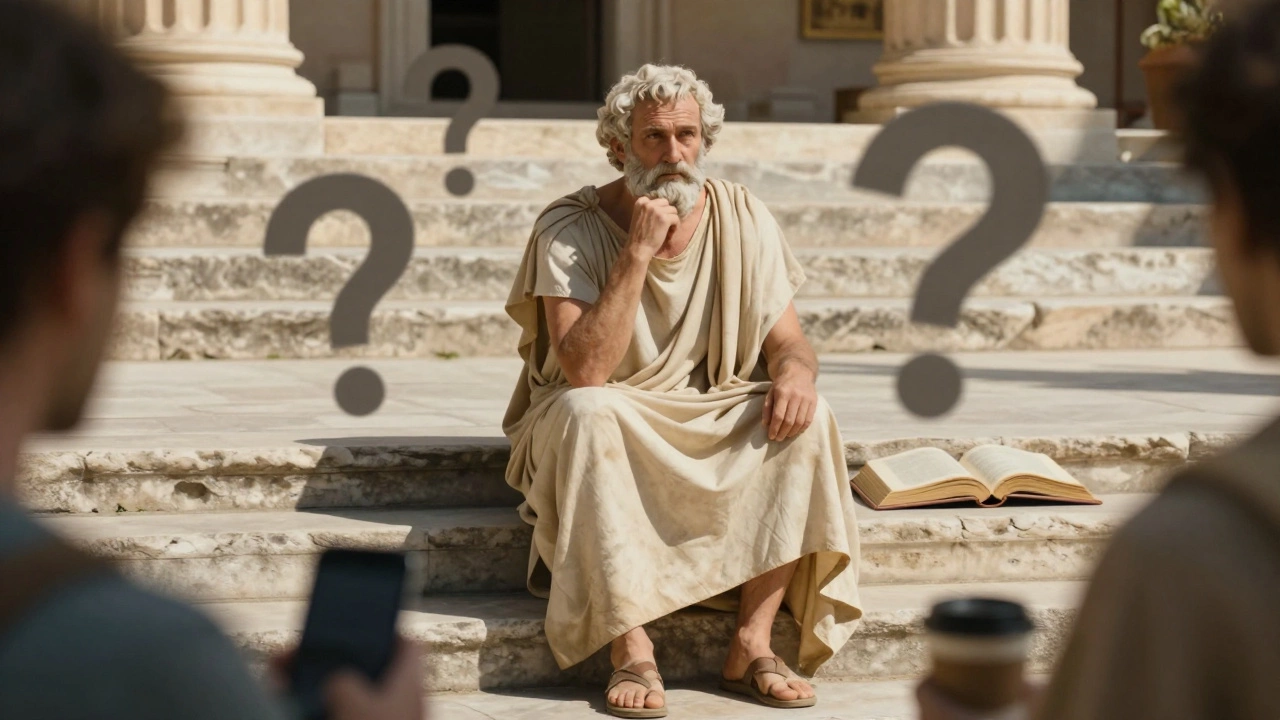
The Power of Simplicity in Wisdom
Complexity often hides confusion. True depth is usually simple. Think about the Taoist philosophy. The Tao Te Ching, attributed to Lao Tzu, is full of short, punchy lines. "Nature does not hurry, yet everything is accomplished."
That sentence alone can cure modern anxiety. We live in a world that worships speed. We multitask. We rush. We check emails at dinner. Lao Tzu reminds us that growth takes time. Trees don’t sprint toward the sky. They grow slowly, deeply, and steadily. When you internalize that, you stop fighting against your own nature. You start trusting the process.
This simplicity is also found in Buddhist teachings. The concept of impermanence-Anicca-is brutal but liberating. Everything changes. Your pain will change. Your joy will change. Your job, your relationships, your health-all temporary. Knowing this doesn’t make life meaningless. It makes it precious. If moments were permanent, they wouldn’t matter. Their fleeting nature is what gives them value.
How to Find Depth in Your Own Life
Reading deep quotes is passive. Living them is active. How do you move from consuming wisdom to applying it? Here is a practical framework.
- Journal the Conflict: When a quote hits you, write down why. Don’t just copy it. Ask yourself: "What part of my life is this challenging right now?" If Gandhi’s quote bothers you, ask: "Where am I blaming others instead of acting?"
- Create Triggers: Place the quote where you will see it during high-stress moments. Put Nietzsche’s line on your fridge if you’re struggling with discipline. Put Lao Tzu’s line on your laptop if you’re rushing too much.
- Test It: Treat quotes like hypotheses. If a quote says "silence is golden," try staying silent for an hour. See what happens. Does it reduce your anxiety? Does it improve your listening skills? Experience validates theory.
Most people treat quotes as decoration. They share them on social media to look smart. That’s fine. But the real power comes when you let the quote judge you. Let it expose your weaknesses. Let it correct your course.

Common Misconceptions About Deep Quotes
We often misunderstand what makes a quote "deep." Here are three traps to avoid.
- Mistaking Obscurity for Depth: Just because you can’t understand a quote doesn’t mean it’s profound. Sometimes authors are just unclear. Good wisdom should become clearer over time, not more confusing.
- Igoring Context: Taking a quote out of context can flip its meaning. Nietzsche is often misquoted by people who want to justify cruelty. His actual philosophy was about self-overcoming and compassion for the weak. Always check the source.
- Seeking Comfort Over Truth: Easy quotes comfort us. Deep quotes disturb us. If a quote only makes you feel good, it’s probably superficial. Look for the ones that make you slightly uncomfortable at first.
Depth requires friction. It rubs against your current beliefs. It asks you to grow. If you’re looking for the deepest quote ever, stop looking for something that agrees with you. Look for something that challenges you.
Creating Your Personal Canon
You don’t need to memorize every philosopher. Build a small collection of five to ten quotes that resonate with your specific struggles. Maybe you struggle with fear. Keep Marcus Aurelius close: "You have power over your mind-not outside events. Realize this, and you will find strength."
Maybe you struggle with loneliness. Keep Rumi: "The wound is the place where the Light enters you."
These aren’t just words. They are anchors. When the storm comes-and it will-you’ll have a rope to hold onto. The deepest quote ever is the one that saves you when you are drowning. And that quote is different for everyone.
Start collecting. Start questioning. Start living. The depth isn’t in the paper. It’s in you.
Is there one single deepest quote in history?
No. Depth is subjective. A quote that resonates deeply with one person may mean nothing to another. The "deepest" quote is the one that aligns with your current life challenges and offers a new perspective that helps you overcome them.
Why do old quotes still feel relevant today?
Human nature hasn't changed much in thousands of years. We still face fear, loss, love, and uncertainty. Ancient philosophers observed these universal experiences. Their insights apply because the core problems of the human condition remain the same, even if technology changes.
How can I use quotes to improve my mental health?
Use quotes as cognitive reframing tools. When you feel anxious or defeated, recall a quote that challenges that negative thought. For example, if you feel overwhelmed, remind yourself of Lao Tzu's teaching on patience. Writing these quotes down and reviewing them daily can rewire your brain to focus on resilience rather than despair.
Are motivational quotes different from philosophical quotes?
Yes. Motivational quotes often aim to inspire immediate action or boost mood temporarily (e.g., "Just do it"). Philosophical quotes aim to deepen understanding and encourage long-term reflection (e.g., "The unexamined life is not worth living"). Both have value, but philosophical quotes tend to be deeper and more enduring.
Who wrote the most influential deep quotes?
Several figures stand out, including Socrates, Friedrich Nietzsche, Marcus Aurelius, Lao Tzu, and Mahatma Gandhi. Each approached life's difficulties from a unique angle-stoicism, existentialism, taoism, and non-violent resistance-providing a diverse toolkit for navigating life's complexities.