Indian Craft Explorer
Walk through any busy market in Paris, Tokyo, or New York, and you’ll likely find Indian handicrafts on display-handwoven textiles, brass lamps, block-printed quilts, and intricate clay pottery. These aren’t just souvenirs. They’re pieces of living history, made by hands that have passed down skills for centuries. So why do Indian handicrafts stand out everywhere? It’s not luck. It’s not marketing. It’s the deep, unbroken connection between culture, craftsmanship, and community.
Centuries of Skill, Not Just Style
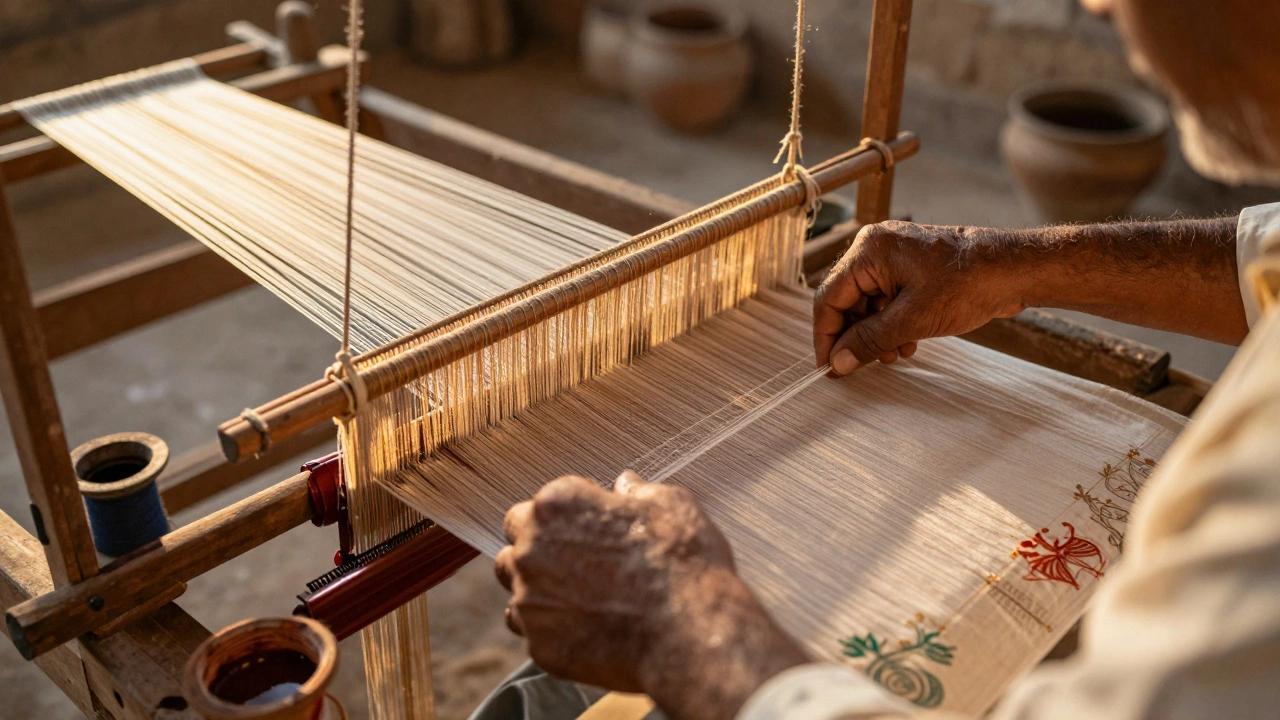
Indian handicrafts didn’t become famous because they looked pretty. They became famous because they were made with a level of detail you simply can’t copy with machines. Take Chanderi silk is a lightweight, sheer fabric woven in Madhya Pradesh using fine silk and zari threads, with patterns that take up to 30 days to complete. A single saree can involve 15 different artisans-spinners, dyers, weavers, and embroiderers-each doing their part by hand. That’s not mass production. That’s heritage in every thread.
Same with Kantha embroidery from West Bengal. It’s stitching done with old saris, using a simple running stitch to create floral motifs, animals, and even stories. No two pieces are alike. Each one carries the memory of the fabric it came from. That emotional weight? You can’t replicate it.
Diversity That No Other Country Matches
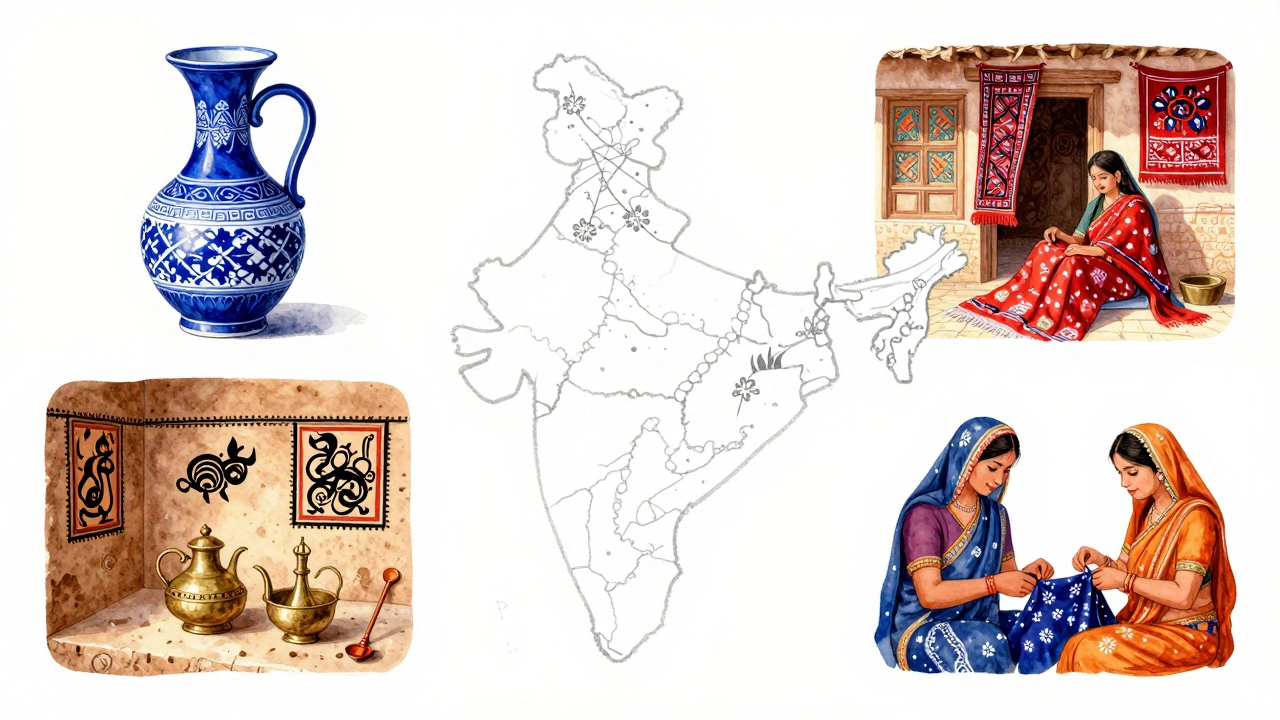
India has 28 states and 8 union territories. Each has its own climate, soil, history, and traditions-and each has its own craft. In Rajasthan, you’ll find Blue Pottery from Jaipur, made with quartz and glass, not clay, and fired at low temperatures to keep its vivid blue glaze. In Odisha, Applique Work on cloth turns temple flags into moving art. In Kashmir, Pashmina shawls are woven from the soft undercoat of Himalayan goats, with each shawl taking up to six months to finish.
And that’s just scratching the surface. There’s Warli painting from Maharashtra, where artists use rice paste and charcoal to draw scenes of daily life on mud walls. Bamboo crafts from Assam are used to make everything from baskets to furniture. Brassware from Tamil Nadu is still made using the ancient lost-wax method, where each piece is sculpted by hand before being poured with molten metal.
No other country has this kind of craft diversity. China makes copies. Indonesia has beautiful woodcarvings. Mexico has colorful pottery. But only India has so many unique, region-specific crafts-all still alive today.
Handmade, Not Mass-Made
Modern factories can churn out 10,000 identical lanterns in a day. But they can’t make a single Madhubani painting from Bihar the way it’s meant to be made. That’s done with natural dyes, brushes made from buffalo hair, and pigments ground from turmeric, indigo, and flower petals. The artist doesn’t follow a template. They draw from memory, from stories passed down through generations.
That’s why global buyers pay more for Indian handicrafts. They’re not buying a product. They’re buying a story. A connection. A piece of a culture that still values time over speed. In a world of disposable goods, Indian crafts are the opposite-they’re meant to last, to be passed on, to be cherished.
Artisans Are the Real Backbone
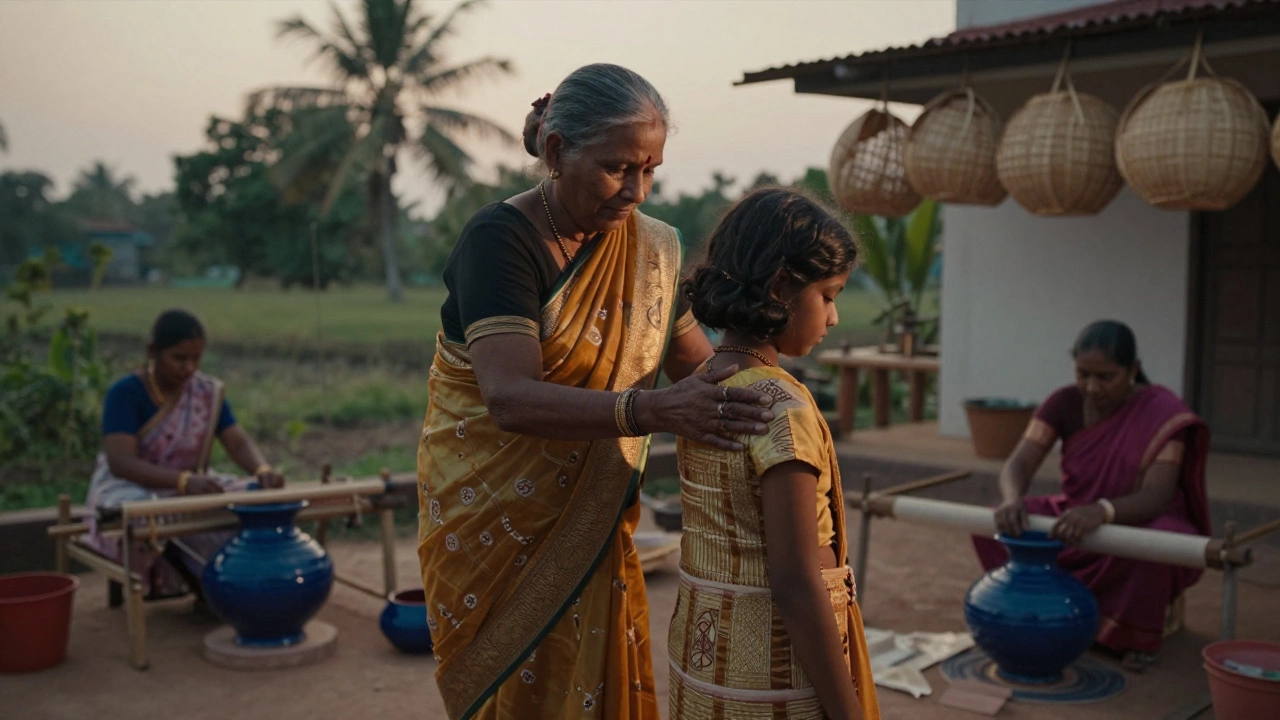
Behind every piece is a family, often working in small villages, with no access to big factories or advertising budgets. Many of these artisans are women-mothers, grandmothers, daughters-who learned their craft from their mothers. In Gujarat, Bandhani tie-dye is mostly done by women in rural areas. In Andhra Pradesh, Kalamkari painters use wooden blocks and natural dyes to tell mythological tales on fabric.
These aren’t factory workers. They’re custodians of culture. And their work survives because communities still value it. When a bride in a village in Odisha wears a handwoven sari, or a child in a Punjab home sleeps under a hand-stitched quilt, they’re not just using a product-they’re honoring a tradition.
Global Demand Comes From Authenticity
Western designers have been borrowing from Indian crafts for decades. Vivienne Westwood used Banarasi brocade in her 1990s collections. Ralph Lauren’s home line features Kutch embroidery. IKEA has sold Indian block-printed cushions for years. Why? Because people are tired of plastic, mass-produced decor. They want something real.
Studies from the World Crafts Council show that handmade items from India have a 68% higher perceived value than machine-made imports. Buyers don’t just like them-they trust them. They know that when you buy a piece of Indian handicraft, you’re not supporting a corporation. You’re supporting a person.
It’s Not Just About Beauty-It’s About Survival
Many of these crafts were nearly lost. In the 1990s, cheap imports flooded markets. Young people left villages for city jobs. Handloom weavers couldn’t compete. But then something changed. A new generation of designers, NGOs, and online platforms began working directly with artisans. They didn’t try to "modernize" the crafts. They preserved them.
Today, platforms like CraftsVilla, Etsy, and even Amazon Handmade have helped small artisans reach buyers in Canada, Germany, and Australia. A weaver in Varanasi now earns more than her father did, because her work is valued. A potter in Rajasthan can afford to send his daughter to college because he sells his Blue Pottery online.
This isn’t just about exports. It’s about dignity. It’s about keeping traditions alive not as museum pieces, but as living, breathing work.
What Makes Indian Handicrafts Irreplaceable?
They’re not just beautiful. They’re unique in four ways:
- Material Source: Natural dyes, hand-spun yarns, locally mined clay, and wild fibers-none of it comes from a factory.
- Technique: Every craft uses methods passed down for 300-500 years, with no machines involved.
- Regional Identity: A Kanchipuram silk sari from Tamil Nadu is different from a Mysore silk sari. They’re not interchangeable.
- Human Connection: Each piece has a maker’s name, a story, and a place it came from.
That’s why, even in 2026, when AI can design patterns and robots can weave fabric, Indian handicrafts still sell out in global markets. Because people aren’t just buying art-they’re buying authenticity.
Why are Indian handicrafts more expensive than mass-produced items?
They cost more because they’re made by hand, using time-intensive techniques that can take days or weeks per piece. A single handwoven Banarasi saree might involve 300 hours of labor. Mass-produced items use machines and synthetic materials to cut costs. Indian handicrafts don’t cut corners-they invest in skill, quality, and heritage.
Are Indian handicrafts sustainable?
Yes, most traditional Indian crafts are inherently sustainable. They use natural, locally sourced materials like cotton, silk, clay, bamboo, and plant-based dyes. There’s little to no plastic, no mass production waste, and no long-distance shipping of raw materials. Artisans often reuse old fabrics or recycle materials, making these crafts some of the most eco-friendly products in the world.
Can I buy authentic Indian handicrafts online?
Absolutely. Many artisan cooperatives and NGOs now sell directly online through platforms like Etsy, CraftsVilla, and even government-backed portals like IndiaHandmade. Look for listings that mention the artisan’s name, village, and craft technique. Avoid products labeled "handmade look" or "inspired by"-those are usually machine-made copies.
Do Indian handicrafts only include textiles and pottery?
No. Indian handicrafts cover everything from metalwork and wood carving to leather goods, beadwork, paper art, and even puppet-making. In Kerala, you’ll find hand-carved teak wood furniture. In Himachal, there are intricate metal lamps. In West Bengal, there’s terracotta toy-making. The range is vast, and each craft has its own regional identity.
How can I support Indian artisans?
Buy directly from platforms that work with artisan collectives. Avoid cheap imitations sold on big marketplaces without clear sourcing. Share stories about the crafts you buy. Tell others where they came from. Even small purchases help sustain entire communities. When you choose handmade, you’re not just buying a product-you’re helping keep a tradition alive.
Indian handicrafts aren’t famous because they’re exotic. They’re famous because they’re real. In a world chasing speed and efficiency, they remind us that beauty lives in patience, in care, and in the quiet strength of hands that refuse to let go of the past.